

Key Takeaways
Option A
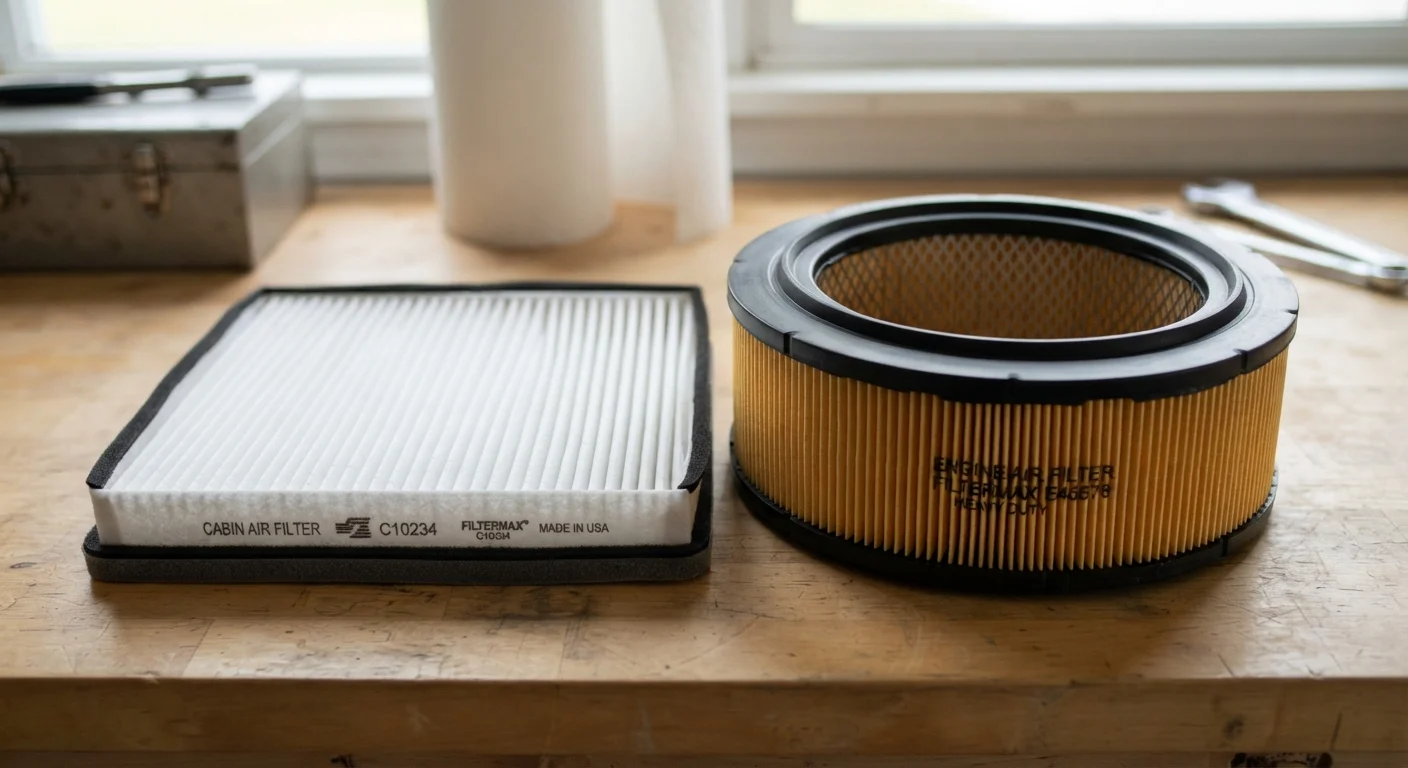
Cabin Air Filter
The air quality guardian for passengers inside the vehicle.
Best for: Drivers or passengers who want cleaner, fresher air inside the car - especially those with allergies or sensitivities.
Option B
Engine Air Filter
The engine's first line of defense against debris and damage.
Best for: Protecting engine performance and fuel efficiency by keeping dirt and contaminants out of the combustion system.
If you want to improve interior air quality and HVAC performance
Cabin Air Filter
Replacing a dirty cabin filter directly improves the air you and your passengers breathe and restores proper airflow from your heating and air conditioning system.
If your vehicle feels sluggish or fuel economy has declined
Engine Air Filter
A restricted engine air filter limits airflow to the engine, which can reduce power output and cause the engine to consume more fuel to compensate.
If you drive in dusty, rural, or high-pollen environments
Cabin Air Filter
High-particulate environments accelerate cabin filter loading, making more frequent inspection and replacement especially important for air quality inside the vehicle.
If you want to protect long-term engine health
Engine Air Filter
The engine air filter is the primary barrier between outside contaminants and your engine's cylinders, making it critical for long-term mechanical reliability.
What Each Filter Actually Does
The word "air filter" appears on two completely separate components in your vehicle, and confusing them can lead to overlooking a maintenance need that actually matters to you. Let's be precise about what each one handles.
The cabin air filter screens the air that flows through your vehicle's HVAC (heating, ventilation, and air conditioning) system before it enters the passenger compartment. It captures pollen, dust, mold spores, road debris, and other airborne particles - keeping them out of the air you breathe while driving. Many modern cabin filters also include an activated-carbon layer that helps reduce odors from traffic exhaust.
The engine air filter, by contrast, sits in the engine bay and filters air before it enters the engine's intake system. Combustion engines require a precise mixture of air and fuel to run; that incoming air must be clean and free of dirt, dust, and debris that could damage internal engine components like cylinders and pistons. Without this filter, abrasive particles would accelerate engine wear significantly.
In short: one protects you, the other protects your engine. Both matter, but for completely different reasons.
| Criterion | Cabin Air Filter | Engine Air Filter |
|---|---|---|
| Primary purpose | Cleans air entering passenger cabin | Cleans air entering engine intake |
| Location | Behind glove box or under dashboard | Engine bay, inside air intake housing |
| What it captures | Pollen, dust, mold spores, exhaust particles | Dirt, debris, insects, road dust |
| Effect when clogged | Reduced HVAC airflow, poor air quality | Reduced power, lower fuel economy |
| Typical replacement interval | 15,000-25,000 miles | 15,000-30,000 miles |
| DIY accessibility | Usually tool-free, behind glove box | Generally accessible with basic tools |
| Who it protects | Vehicle occupants | Engine internals |
How to Tell When Each Filter Needs Replacing
Both filters give fairly clear signals when they've reached the end of their useful life, though the symptoms are quite different.
Signs Your Cabin Air Filter Is Due
- Reduced airflow from vents - If your fan feels noticeably weaker even on the highest setting, a clogged cabin filter is often the culprit.
- Musty or unpleasant odors inside the cabin when the HVAC runs.
- Increased dust buildup on your dashboard and interior surfaces.
- Allergy symptoms worsening during drives - more pollen is passing through a saturated filter.
Signs Your Engine Air Filter Is Due
- Noticeable drop in fuel efficiency - a restricted air filter forces the engine to work harder.
- Reduced acceleration or sluggish throttle response.
- Rough idling or occasional misfires in severe cases.
- Check Engine light - in some vehicles, a severely restricted filter triggers diagnostic codes related to the mass airflow sensor.
When to Ask a Mechanic
While both filters are generally accessible for DIY inspection and replacement, some vehicle designs make access more involved - particularly cabin filters on certain luxury or European models. If you're unsure about your specific vehicle's layout, a mechanic can inspect both filters during a routine service visit. Never assume a filter is fine simply because it hasn't been changed in a while.
Visual inspection is often the easiest check: pull the filter out and hold it up to light. Heavy grey-black loading, compressed pleats, or visible debris embedded in the media are reliable signs replacement is overdue. Consult your owner's manual for your vehicle's specific replacement intervals, which vary by make, model, and driving conditions.
Replacement Intervals and What Affects Them
General guidance puts cabin air filter replacement at roughly every 15,000 to 25,000 miles, while engine air filters are typically recommended every 15,000 to 30,000 miles - though your owner's manual is always the authoritative source for your specific vehicle.
15,000-25,000 mi
Typical cabin air filter replacement interval
This range reflects general industry guidance; always verify the interval in your vehicle's owner's manual.
Up to 10%
Potential fuel economy loss from a restricted engine filter
The U.S. Department of Energy has noted that fixing a clogged air filter on older carbureted engines can meaningfully improve fuel economy, though effects on modern fuel-injected vehicles vary.
Several factors can shorten these intervals considerably:
- Driving environment
- Dusty roads, dirt trails, agricultural areas, and high-traffic urban corridors all increase filter loading faster than typical highway or suburban driving.
- Seasonal pollen levels
- In high-pollen regions, cabin filters may need attention more frequently during spring and fall.
- Vehicle age
- Older vehicles with degraded seals may allow more unfiltered air bypass, making filter condition even more important to monitor.
If you're curious how filter ratings and materials compare across applications - for instance, how automotive filtration relates to home HVAC filtration - our guide to home air filter ratings explains the rating scales used in residential systems, which share some underlying principles.
This article is for general informational purposes only. Always consult your vehicle's owner's manual and, where needed, a qualified mechanic before performing maintenance.