

Key Takeaways
Start With a Wardrobe Audit
Before you spend a single dollar, open your closet. A wardrobe audit — a systematic review of what you already own — is the single most effective budget move you can make. Pull everything out, try items on, and sort them into three groups: works well, needs repair or tailoring, and no longer fits or serves you.
You may discover workhorses you'd forgotten: a well-cut blazer buried under casualwear, trousers that need only a simple hem, or a button-down that's one steaming away from looking polished. Identifying gaps honestly is also part of this step — make a list of specific missing items rather than shopping by impulse.
If your closet feels chaotic across seasons, our guide on rotating clothes without chaos can help you bring order before you build further.
Try Before You Buy Anything New
Before shopping, list every professional occasion you need to dress for in the next three months. Then check your existing wardrobe against that list. Many people find they already own 60–70% of what they need — they just haven't organized it intentionally.
Define Your Workplace Dress Code
"Professional" looks very different across industries. A hospital administrator, a graphic designer at a tech startup, and a paralegal all need polished appearances — but the specific pieces are not interchangeable. Buying a full traditional business wardrobe for a creative office wastes money on clothes that won't see regular wear.
Take an honest look at what colleagues in your role actually wear. Most workplace dress codes fall into three broad categories: business formal (suits, blazers, structured dresses), business casual (neat trousers, blouses, clean chinos, smart shoes), and smart casual (dark jeans, polished tops, minimal sneakers). Building toward the category your workplace actually uses — rather than one tier above it — keeps spending purposeful.
For readers facing a specific near-term situation, our article on getting dressed for a job interview without a suit offers practical guidance on looking professional without a major purchase.
~$1,700
Average annual U.S. household clothing spend
According to the U.S. Bureau of Labor Statistics Consumer Expenditure Survey, American households spend roughly this amount on apparel and related services each year.
30%
Clothes worn rarely or never after purchase
Research from several closet-behavior studies suggests roughly a third of wardrobe items go largely unworn — a pattern intentional buying can help break.
Build Around Versatile Core Pieces
A budget wardrobe lives or dies on versatility. Prioritize pieces that work across multiple outfits and settings rather than anything that can only be worn one way. Classic neutrals — navy, charcoal, white, camel, and black — pair easily with almost anything and resist looking dated. Our editorial deep-dive on how neutrals work and why stylists rely on them explains exactly why this approach holds up season after season.
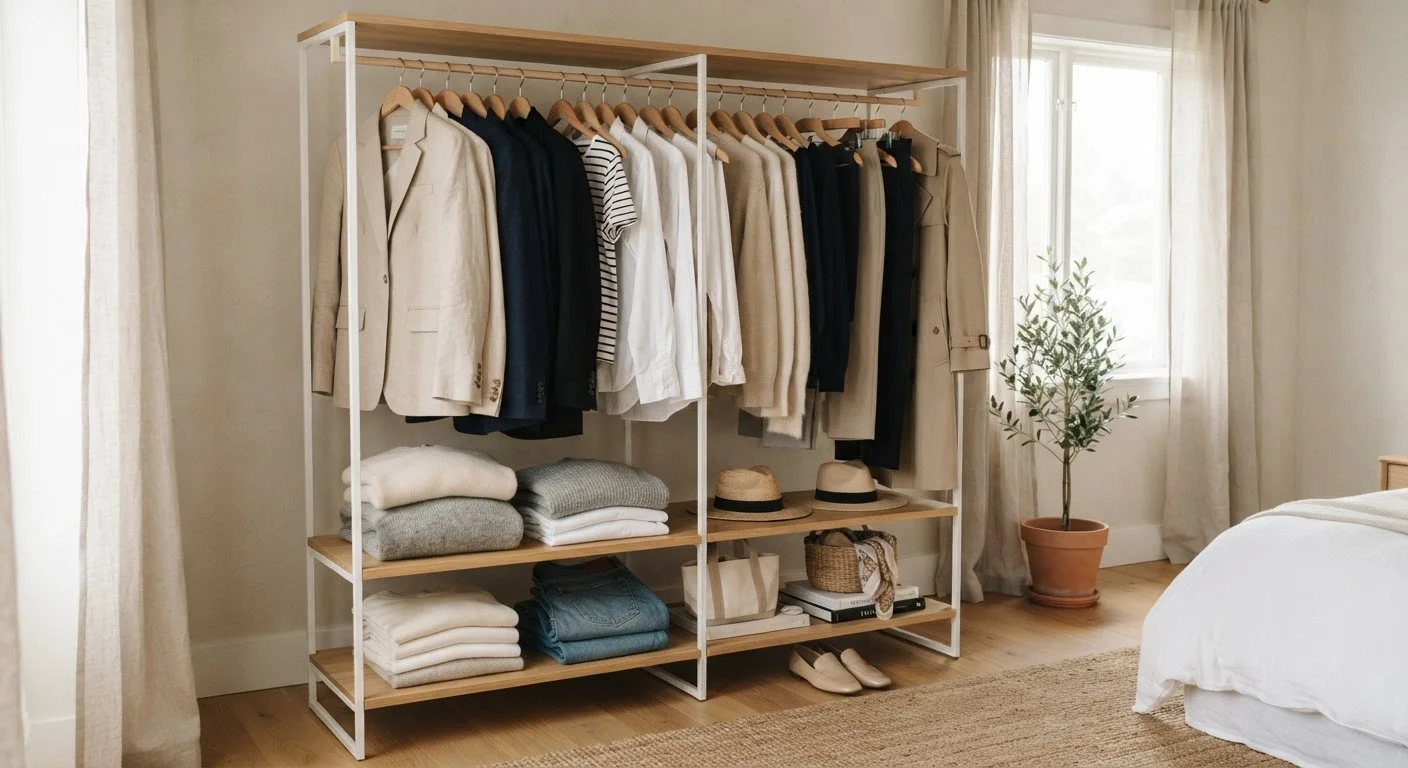
A practical starting framework for most business-casual environments might include: two or three pairs of well-fitting trousers or structured skirts, three to five tops in solid or simple patterns, one blazer or structured cardigan, one pair of comfortable dress shoes, and one versatile bag. Each item should work with at least three others in the set.
For a deeper framework on this approach, the capsule wardrobe guide walks through building a coordinated closet without overspending. Understanding which pieces are worth a little more versus which trend-driven items to skip is equally important — our article on classic vs. trendy pieces breaks it down clearly.
When budget is tight, spend more on fit than on fabric. A well-fitting mid-range piece will always look more polished than an expensive one that doesn't sit right on your body.
Fit is the single factor most visible to others and most directly under your control — and alterations on key pieces are often less expensive than buying a new item.
Build outward from one 'anchor piece' — typically a well-fitting blazer or versatile trouser — and only add items that directly complement it.
This approach prevents the common pitfall of accumulating pieces that don't coordinate, which forces you to keep buying to fill the gaps they create.
Smart Shopping Habits That Stretch Your Dollar
Once you know your gaps, shop with a written list and a firm ceiling. Browsing without a list reliably leads to impulse purchases that don't coordinate with what you already own. A well-structured shopping list does more than keep you on track — it reduces the mental load of decision-making in the moment.
Secondhand sources — consignment shops, thrift stores, and resale apps — are genuinely useful for professional clothing. Office wear is often donated in near-new condition because dress codes change or people leave jobs. The trade-off analysis between secondhand and fast fashion in our article thrift store shopping vs. fast fashion is worth reading before you decide where to shop.
End-of-season sales — when retailers reduce inventory before a new season arrives — are another reliable opportunity to find quality basics at lower prices. For broader strategies on getting more value from everyday shopping, everyday strategies for stretching a household budget at the store offers practical, non-restrictive approaches that apply here too.
It also helps to keep wardrobe spending as its own budget line. The Budgeting Basics hub offers a solid foundation for anyone building or refining a monthly budget that can accommodate planned clothing purchases without derailing other priorities.
Avoid the 'Bargain Trap'
A deeply discounted item that doesn't fit your existing wardrobe or your dress code isn't a saving — it's a sunk cost. Before purchasing anything marked down, ask: does this work with at least three things I already own? If not, pass on it regardless of the price.
Care and Longevity: Protecting Your Investment
Even modest clothes last significantly longer when cared for properly. Read garment labels — washing on too-high a temperature or machine-drying items labeled air-dry is one of the most common ways good clothes deteriorate prematurely. Washing work clothes less frequently (spot-treating instead of full washes when possible) also extends their life.
Hang structured pieces like blazers and trousers immediately after wearing. Fold knitwear rather than hanging it to prevent shoulder distortion. A fabric shaver (a small, inexpensive tool that removes pilling) can revive knit tops and trousers that look worn but are otherwise structurally sound.
Simple repairs — replacing a lost button, re-hemming trousers, or stitching a small seam — are low-cost fixes that extend garment life considerably. Many dry cleaners and tailors offer minor repairs at modest prices, and basic hand-sewing is a learnable skill. Thinking about clothing as a long-term investment — even on a tight budget — shifts the calculus away from quantity toward quality and care.
This article is for general informational purposes. Financial circumstances vary widely; for personalized budgeting guidance, consider consulting a certified financial planner or credit counselor.