

| Primary limitation | Flexibility: muscle length. Mobility: joint control + strength. |
| Best warm-up stretch type | Dynamic stretching (General exercise physiology consensus) |
| Best post-workout stretch type | Static stretching (General exercise physiology consensus) |
| Mobility training components | Flexibility + strength + neuromuscular control |
| Can flexibility improve without mobility? | Yes - passive range can increase without gaining active control |
Why the Terms Get Mixed Up
Ask most people what flexibility and mobility mean and they'll likely use the words interchangeably. That's understandable - both involve how your body moves through a range of motion. But they describe distinct physical qualities, and the difference matters when you're thinking about how to train or why something feels tight.
Stretching adds another layer of confusion because it's often treated as a synonym for both. In reality, stretching is a practice - a collection of techniques that can support flexibility, mobility, or neither, depending on how and when you use it.
This is similar to how related concepts that seem identical turn out to have meaningful differences on closer inspection - much like the distinction explored in mindfulness vs. meditation.
Flexibility
The passive ability of a muscle or group of muscles to lengthen through a range of motion. It reflects tissue length and pliability, typically measured without active muscular effort.
Mobility
The active ability of a joint to move through its full functional range of motion under muscular control. It encompasses flexibility, joint health, and neuromuscular coordination.
Static Stretching
A stretching technique in which a position is held for a sustained period - typically 20 to 60 seconds - to gradually lengthen the target muscle. Best suited for post-exercise or recovery contexts.
Dynamic Stretching
Controlled, repetitive movements that take a joint through its range of motion without holding a fixed position. Commonly used in warm-ups to prepare muscles for activity.
Range of Motion (ROM)
The extent of movement possible at a joint, measured in degrees. ROM can be passive (assisted) or active (self-controlled), and the two don't always match.
PNF Stretching
Proprioceptive Neuromuscular Facilitation - an advanced stretching method that alternates muscle contraction and relaxation to increase range of motion. Often performed with a partner or therapist.
Flexibility, Mobility, and Stretching - Defined
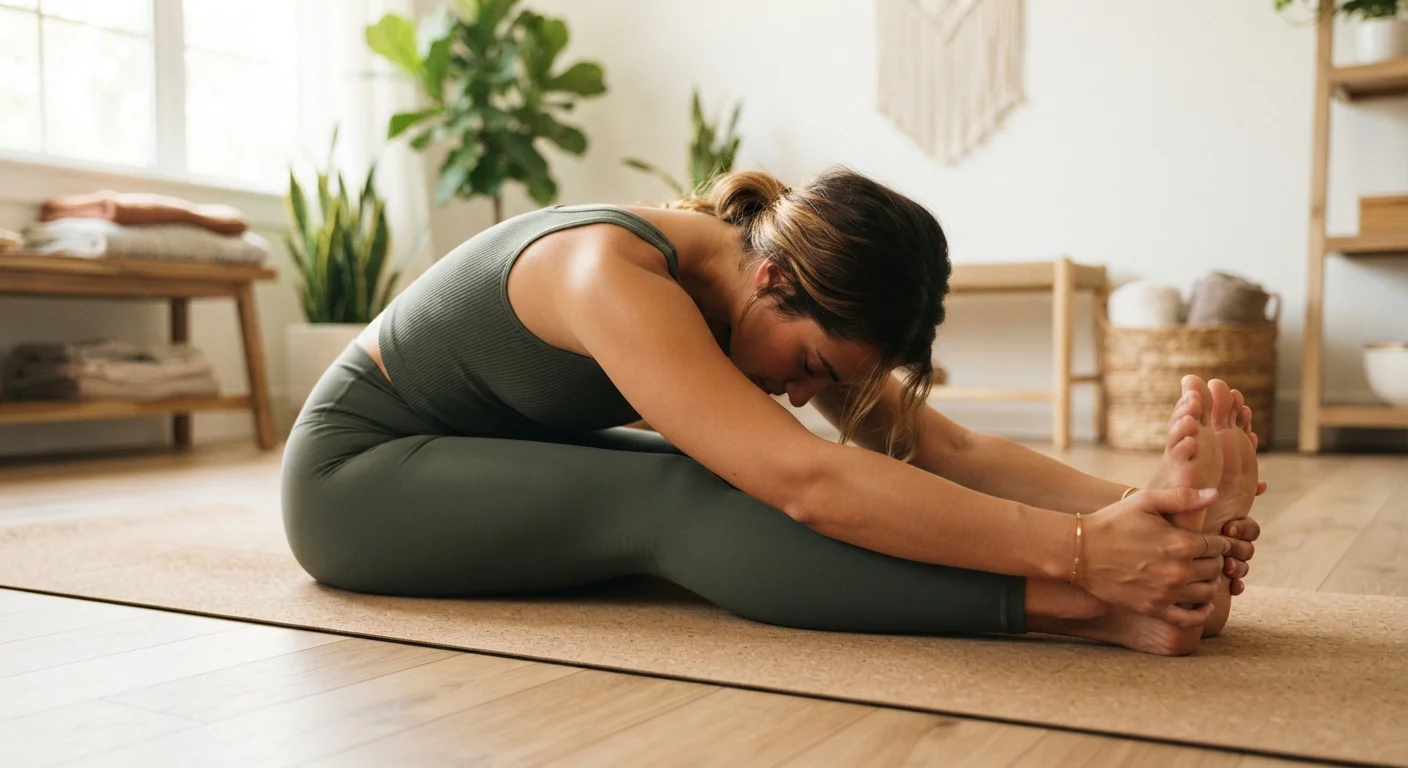
Flexibility refers to the ability of a muscle or muscle group to lengthen passively through a range of motion. When someone touches their toes with help from gravity or a partner applying gentle pressure, that's flexibility at work. It's largely a property of the muscle tissue itself - how long and pliable it is at rest.
Mobility is broader. It's the ability of a joint to move actively through its full, functional range of motion under its own muscular control. Mobility involves not just the muscles but also joint capsules, ligaments, neuromuscular coordination, and motor control. You can have excellent passive flexibility but poor active mobility - for example, being able to push your leg high with assistance but struggling to hold that same height on your own.
Stretching covers any technique that temporarily or chronically elongates soft tissue. Static stretching (holding a position), dynamic stretching (moving through a range), and proprioceptive neuromuscular facilitation (PNF) are common methods. Each has different effects on flexibility and mobility depending on timing, volume, and training context.
| Primary limitation | Flexibility: muscle length. Mobility: joint control + strength. |
| Best warm-up stretch type | Dynamic stretching (General exercise physiology consensus) |
| Best post-workout stretch type | Static stretching (General exercise physiology consensus) |
| Mobility training components | Flexibility + strength + neuromuscular control |
| Can flexibility improve without mobility? | Yes - passive range can increase without gaining active control |
What Each One Actually Affects
Improving flexibility alone doesn't automatically improve mobility. A person who stretches consistently may gain longer muscle length without developing the strength or neuromuscular control to use that range during movement. This is why some highly flexible individuals are still prone to injury - passive range without active control can leave joints less stable.
Mobility training, by contrast, typically combines flexibility work with strength and motor control - think controlled articular rotations, loaded stretching, or yoga flows that require you to actively move into and out of positions. These approaches build functional range that translates to everyday movement and athletic performance.
For most people, a balanced approach is practical: use dynamic stretching as a warm-up, add mobility-focused movement to build active range, and reserve static stretching for post-activity or recovery. This kind of varied, accessible movement aligns well with broader low-impact exercise practices that suit a wide range of fitness levels.
Flexibility and Age: What to Expect
Passive flexibility tends to decrease with age as connective tissue becomes less pliable, but mobility can be maintained or even improved through consistent, targeted movement. Older adults, those managing chronic conditions, and anyone returning from injury should seek guidance from a physical therapist or qualified fitness professional before significantly changing their movement routine.
This article provides general health and wellness information only and is not a substitute for advice from a qualified healthcare or fitness professional. If you have an injury, chronic condition, or specific movement concerns, consult a licensed provider before beginning a new stretching or mobility routine.