

Key Takeaways
Stress Response
The stress response is your body's automatic reaction to a perceived threat or demand. It triggers a cascade of hormonal and physical changes designed to help you respond quickly to danger. While short-term stress can sharpen focus, chronic stress - stress that persists over weeks or months - can wear down nearly every system in the body.
The stress response is primarily mediated by the hypothalamic-pituitary-adrenal (HPA) axis and the sympathetic nervous system, both of which regulate the release of cortisol and adrenaline.
The Fight-or-Flight Response: Your Body's Alarm System
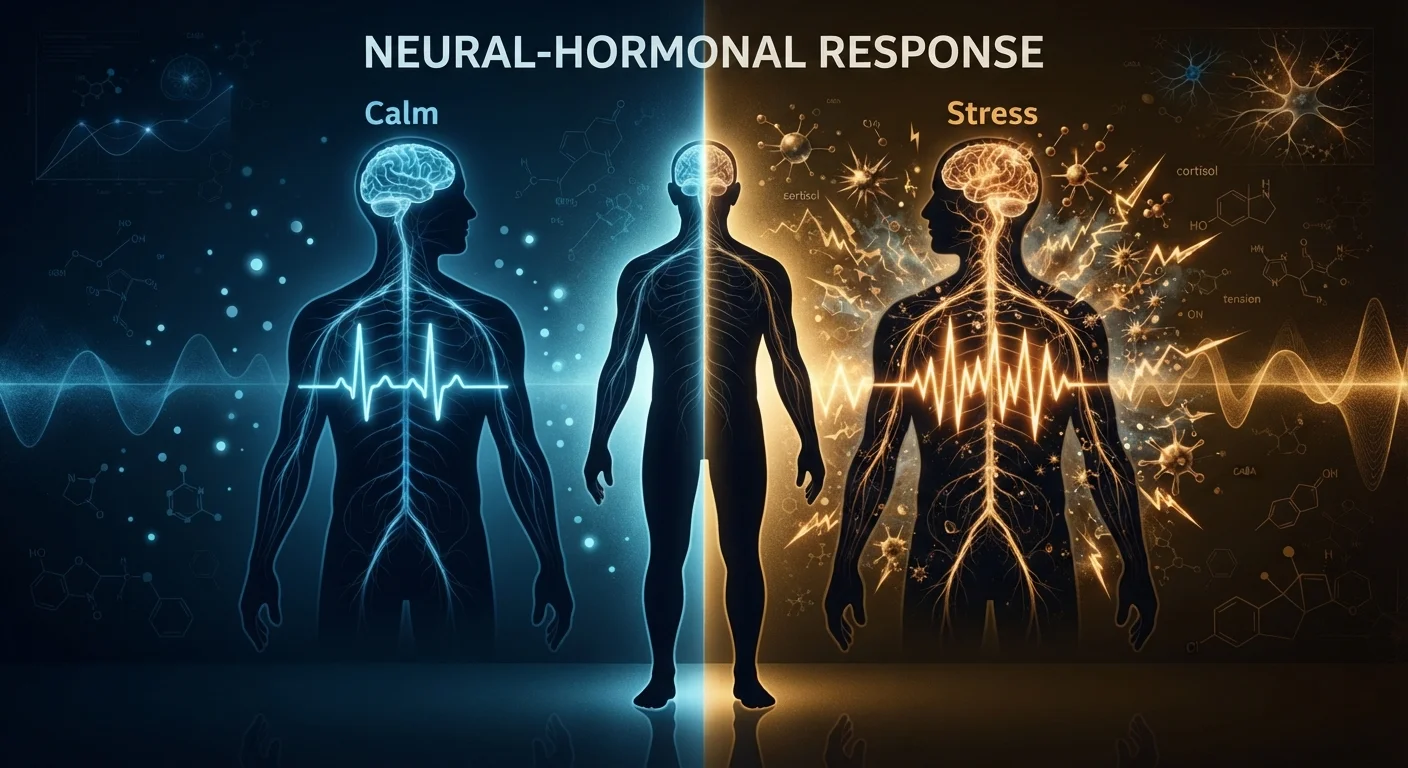
When your brain detects a threat - whether it's a near-miss in traffic or a difficult conversation with a supervisor - it activates a rapid chain of events. The amygdala, the brain's threat-detection hub, signals the hypothalamus to put the body on high alert. Within seconds, the sympathetic nervous system floods your body with adrenaline (epinephrine), causing your heart rate to rise, your breathing to quicken, and your muscles to tense.
This is the classic fight-or-flight response. It evolved to help humans escape physical danger, and in short bursts, it does exactly that. Blood is redirected away from digestion toward the muscles and brain. Pupils dilate. Senses sharpen. The body is primed to act.
The problem is that this system can't always distinguish between a lion and a looming work deadline. Modern stressors - financial pressure, relationship conflict, information overload - can keep this alarm ringing for hours, days, or even months at a time.
Not All Stress Is the Same
Researchers distinguish between acute stress (short-term and often resolved quickly) and chronic stress (persistent and potentially damaging). They also recognize eustress - positive stress associated with excitement or challenge - which can actually enhance performance. The health concerns discussed in this article primarily relate to chronic, unmanaged stress rather than everyday moments of pressure.
Cortisol: The Slow-Burn Stress Hormone
While adrenaline drives the immediate spike, cortisol sustains the stress response over a longer arc. Released by the adrenal glands as part of the HPA axis, cortisol keeps blood sugar elevated, suppresses functions the body deems non-urgent (including digestion, reproductive processes, and some immune activity), and influences how the brain processes memory and emotion.
In a healthy stress cycle, cortisol rises in response to a stressor, then gradually returns to baseline once the threat passes. Chronic stress disrupts this cycle. Persistently elevated cortisol has been associated with:
- Weight gain, particularly around the abdomen
- Disrupted sleep and difficulty falling asleep
- Impaired working memory and concentration
- Increased blood pressure over time
- A weakened immune response
Understanding this hormonal picture is central to what the comprehensive overview of everyday mental wellbeing explores in greater depth.
77%
Adults reporting physical stress symptoms
According to the American Psychological Association's Stress in America survey, roughly three in four adults report experiencing physical symptoms they associate with stress.
3x
Increased cardiovascular risk with chronic stress
Research published in cardiology literature suggests chronically high stress levels are associated with significantly elevated cardiovascular risk factors, including blood pressure and inflammation markers.
50%
Of adults cite work as a significant stressor
Workplace pressures consistently rank among the most commonly cited stressors in national health surveys across the United States.
What Chronic Stress Does to the Brain
Stress doesn't just affect the body - it physically reshapes the brain over time. Research in neuroscience has shown that prolonged exposure to stress hormones can reduce the volume of the prefrontal cortex, the region responsible for decision-making, emotional regulation, and impulse control. At the same time, the amygdala - the brain's alarm center - can become more reactive, creating a feedback loop where the brain becomes increasingly sensitive to perceived threats.
This partly explains why people under chronic stress often report feeling overwhelmed by situations that would otherwise seem manageable. The brain becomes less capable of calibrating its own response.
“The brain is the organ of stress. When we understand how the brain responds to threat, we begin to understand why stress feels so consuming - and why the path through it requires more than willpower.”
— Robert Sapolsky, Neuroendocrinologist and author of 'Why Zebras Don't Get Ulcers'
Stress also interferes with hippocampal function, the area critical for forming and retrieving memories. This is why stress commonly presents as forgetfulness, difficulty concentrating, or a sense of mental fog - symptoms that are physiological in origin, not a personal failing.
Recognizing Stress in Your Daily Life
Stress manifests differently from person to person. Some common physical signals include persistent headaches, jaw clenching, digestive discomfort, fatigue, and frequent illness. Emotional and cognitive signs can include irritability, difficulty making decisions, a sense of dread, or feeling emotionally numb.
Recognizing these signs early creates the opportunity to respond before stress compounds. A simple weekly habit - checking in with how you're sleeping, how your body feels, and where your mood has been trending - can help you catch escalating stress before it becomes entrenched. The weekly mental health check-in offers a structured way to do exactly that.
Track Your Stress Signals Weekly
Rather than waiting until you're overwhelmed, build a brief check-in habit at the end of each week. Note your sleep quality, energy level, and any physical symptoms like headaches or tension. Patterns over time often reveal stress triggers you might otherwise overlook.
This article is for general informational and educational purposes only and is not a substitute for professional medical or mental health advice. If you are experiencing symptoms that concern you, please speak with a qualified healthcare provider.