

| IP Rating Standard | IEC 60529 (International Electrotechnical Commission) (IEC standard, established 1989, regularly updated) |
| Common Smartphone RAM Range | 6 GB - 16 GB (mainstream models) (General market observation, varies by segment) |
| USB-C Adoption Mandate (EU) | Required for most portable devices sold in EU from 2024 (European Parliament directive, 2022) |
| Wi-Fi 6E Frequency Bands | 2.4 GHz, 5 GHz, and 6 GHz (Wi-Fi Alliance specification) |
| Bluetooth 5.0 Range (theoretical) | Up to 800 feet in open space (Bluetooth SIG specification; real-world range is lower) |
Why Electronics Labels Feel Like a Foreign Language
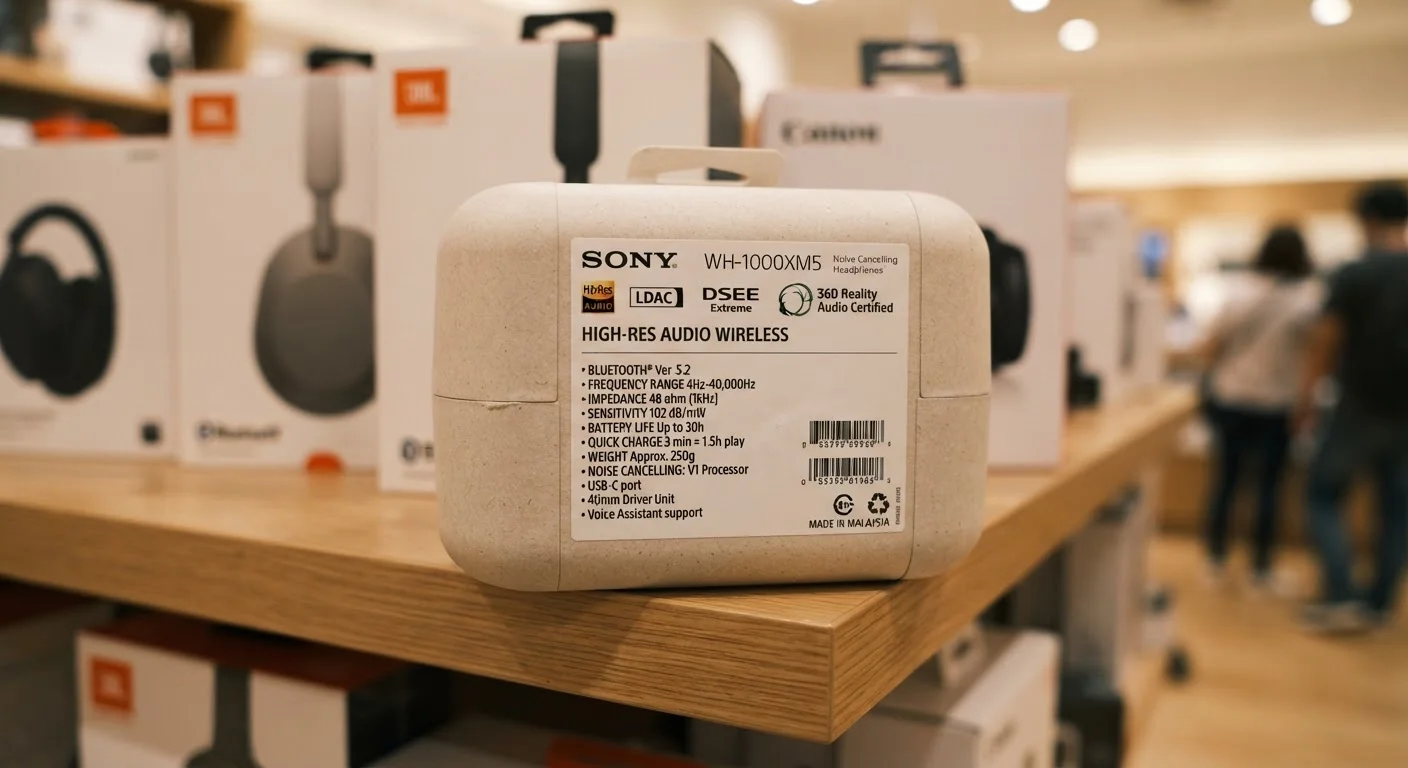
Pick up any electronics box and you'll be hit with a wall of abbreviations - GHz, mAh, IP68, USB-C, OLED, Wi-Fi 6E. Manufacturers assume a baseline technical literacy that most shoppers reasonably don't have, and the result is guesswork at the shelf. This glossary cuts through that noise with plain definitions you can actually use.
If you're also wrestling with screen terminology specifically, our guide to resolution, refresh rate, and panel types goes deeper on display specs. And if you're equipping a first home, this practical starting point for new households is worth a read alongside this one.
| IP Rating Standard | IEC 60529 (International Electrotechnical Commission) (IEC standard, established 1989, regularly updated) |
| Common Smartphone RAM Range | 6 GB - 16 GB (mainstream models) (General market observation, varies by segment) |
| USB-C Adoption Mandate (EU) | Required for most portable devices sold in EU from 2024 (European Parliament directive, 2022) |
| Wi-Fi 6E Frequency Bands | 2.4 GHz, 5 GHz, and 6 GHz (Wi-Fi Alliance specification) |
| Bluetooth 5.0 Range (theoretical) | Up to 800 feet in open space (Bluetooth SIG specification; real-world range is lower) |
The Core Spec Terms, Defined
The following terms appear on packaging across nearly every electronics category - phones, laptops, speakers, cameras, and more. You don't need to memorize every number; you just need to know what each label is measuring.
GHz (Gigahertz)
A measure of processor clock speed - how many billions of cycles per second a chip can execute. Higher GHz can mean faster performance, but chip architecture and number of cores matter equally. Don't use GHz alone as a quality indicator.
RAM (Random Access Memory)
Temporary working memory a device uses to run active apps and processes. More RAM generally means smoother multitasking and fewer slowdowns when switching between apps. It does not affect how much you can store permanently.
mAh (Milliamp-Hour)
The capacity of a battery - how much charge it can hold. A higher mAh rating means more potential run time, though real-world battery life also depends heavily on the software, screen, and radios in use.
Storage (GB / TB)
The permanent space available for files, apps, photos, and the operating system. Gigabytes (GB) are the common unit for phones and tablets; terabytes (TB) for laptops and desktops. One TB equals roughly 1,000 GB.
IP Rating
Ingress Protection - a two-digit code indicating resistance to dust (first digit, 0-6) and water (second digit, 0-9). IP67 means dust-tight and water-resistant to 1 meter for 30 minutes under test conditions; IP68 indicates a higher specified immersion depth or duration.
USB-C
A reversible oval-shaped connector standard used for charging and data transfer across phones, laptops, and accessories. The port shape is consistent, but speeds and power delivery vary - a USB-C cable doesn't guarantee fast charging unless the device and charger both support it.
Wi-Fi 6 / Wi-Fi 6E
Generations of the Wi-Fi standard. Wi-Fi 6 offers faster speeds and better performance in crowded environments than its predecessors. Wi-Fi 6E adds access to the 6 GHz band, reducing interference further - but your router must also support it.
Bluetooth Version
Indicates which generation of Bluetooth wireless technology a device uses. Higher versions (e.g., 5.3 vs. 4.2) generally mean better range, faster pairing, and lower power consumption. Most current devices are on version 5.x.
Hz (Refresh Rate)
How many times per second a screen redraws its image. A 60 Hz display refreshes 60 times per second; 120 Hz looks noticeably smoother for scrolling and video. Higher refresh rates consume more battery on portable devices.
Codec (Audio)
The algorithm used to compress and transmit audio wirelessly between devices. Common Bluetooth codecs include SBC (standard), AAC (common on Apple devices), and aptX. Better codecs can improve audio quality over wireless connections when both devices support the same one.
One category that trips up many shoppers is IP ratings, which appear on phones, earbuds, and outdoor gear. An IP (Ingress Protection) rating is always two digits: the first rates dust resistance (0-6), the second rates water resistance (0-9). A device rated IP67 is fully dust-tight and can survive submersion up to 1 meter for 30 minutes under controlled test conditions. IP68 means the manufacturer has specified a deeper or longer submersion - but read the fine print, since exact specs vary by brand. These ratings reflect lab conditions and don't guarantee performance after drops or normal wear.
IP Ratings Are Lab Results, Not Lifetime Guarantees
Water and dust resistance ratings are measured under controlled test conditions on new devices. Over time, wear, drops, and port usage can degrade seals. Most manufacturer warranties do not cover liquid damage even on IP-rated devices, so check your specific policy before assuming full protection.
For a look at hidden ongoing costs - accessories, energy draw, subscriptions - that the label never mentions, see The Hidden Costs of Owning Electronics Beyond the Sticker Price.
Putting It All Together at the Shelf
Labels tell you potential, not experience. A 5,000 mAh battery lasts longer in theory, but software, screen brightness, and wireless radios all drain it faster in practice. A processor with a higher GHz clock speed isn't automatically faster for every task - the number of cores and the chip architecture matter just as much.
The most useful habit is to decide which two or three specs actually matter for how you plan to use the device, then compare only those. For most people, battery capacity and storage matter more on a phone; RAM and processor generation matter more on a laptop; IP rating and range matter most on wireless earbuds used outdoors.
IP67 / IP68
Most Common Water Resistance Ratings on Flagship Phones
These two ratings have become the dominant water-resistance standard across mid-range and premium smartphone lines as of recent product generations.
~40%
Battery Life Reduction from Screen-On Usage vs. Idle
Screen brightness and always-on displays are consistently cited as the largest contributors to battery drain in consumer device testing.
This glossary is part of a broader effort to help you shop across all kinds of categories with more confidence. If you find label-decoding useful, the same approach applies in other aisles - for example, our practical glossary of skincare ingredients uses the same plain-language format for beauty products.