

Key Takeaways
Periodontal Disease in Pets
Periodontal disease is a progressive infection of the structures supporting a pet's teeth — including the gums, ligaments, and jawbone. It begins with plaque buildup and, if left untreated, can lead to tooth loss and damage to internal organs. It is considered one of the most common health conditions diagnosed in dogs and cats.
The disease is classified in four stages by veterinary professionals, ranging from mild gingivitis (Stage 1) to severe bone loss and tooth loss (Stage 4). Each stage reflects increasing irreversibility and systemic risk.
How Dental Disease Starts — and Why It Moves Fast
Within hours of eating, bacteria in your pet's mouth begin forming a sticky film called plaque on the tooth surface. Without removal, plaque hardens into tartar (also called calculus) within days — a mineral-dense deposit that brushing alone cannot remove.
Tartar accumulates along and below the gumline, creating an environment where bacteria thrive. This triggers inflammation in the gum tissue, known as gingivitis — the earliest and only fully reversible stage of periodontal disease. At this point, the gums may appear red or puffy, and breath may worsen, but no permanent damage has occurred yet.
If gingivitis is not addressed, bacteria begin migrating below the gumline into the periodontal pocket — the space between tooth and gum. From there, infection attacks the ligaments and bone holding the tooth in place. This is Stage 2 and beyond, where damage begins to compound and cannot be fully undone.
Start Brushing Early for Best Results
Puppies and kittens that are introduced to tooth brushing early are far more accepting of the habit as adults. Even a few seconds of gentle contact with a soft brush or finger brush — paired with pet-safe toothpaste — begins building tolerance. Adult pets can also learn to accept brushing with consistent, patient introduction over several weeks.
The Four Stages — and What Each One Means
Veterinary dental professionals classify periodontal disease on a four-stage scale. Understanding where a pet falls on that scale determines what treatment is appropriate.
- Stage 1 — Gingivitis: Gum inflammation only. No attachment loss. Fully reversible with a professional cleaning and improved home care.
- Stage 2 — Early Periodontitis: Up to 25% loss of the tooth's supporting attachment. Some permanent damage, but the tooth is typically salvageable.
- Stage 3 — Moderate Periodontitis: 25–50% attachment loss. Treatment becomes more complex; some teeth may need extraction.
- Stage 4 — Advanced Periodontitis: Greater than 50% attachment loss. Severe bone involvement, significant pain, and extraction is commonly required.
Pets rarely signal pain in obvious ways — many continue eating even with significant oral disease. This is why relying on behavioral cues alone often leads to delayed diagnosis. See our overview of what gets missed in routine pet care for a broader look at how delayed attention compounds health issues.
~80%
Dogs with signs of periodontal disease by age 3
Frequently cited by veterinary dental organizations based on clinical examination data across companion animal populations.
~70%
Cats affected by dental disease by age 3
Consistent with estimates from veterinary dental literature indicating high prevalence across the domestic cat population.
4 Stages
Standardized scale for classifying periodontal disease
The four-stage classification system is used by veterinary dental professionals to guide diagnosis and treatment planning.
Beyond the Mouth: Systemic Risks of Untreated Disease
Periodontal disease is not just a dental problem. As infection progresses, bacteria can enter the bloodstream through inflamed gum tissue — a process sometimes called bacteremia. Veterinary researchers have identified associations between chronic periodontal disease and damage to the heart valves, kidneys, and liver in companion animals.
Small-breed dogs — including Chihuahuas, Dachshunds, and Yorkshire Terriers — are disproportionately affected due to the crowding of teeth in smaller jaws. Cats are highly susceptible as well, often developing severe forms of gum disease silently. Because pets age more rapidly than humans, disease can advance quickly between annual vet visits. Understanding how pets age helps explain why annual — or more frequent — dental checkups matter so much.
“Periodontal disease is the most commonly diagnosed disease in veterinary medicine. By the time most owners notice a problem, significant damage has often already occurred below the gumline.”
— Jan Bellows, Board-certified veterinary dentist and author on veterinary oral health
What Owners Can Do — Starting Now
Prevention is meaningfully within reach for most pet owners, and the earlier it starts, the more effective it is.
Daily Tooth Brushing
Brushing your pet's teeth daily with a pet-safe toothpaste (never human toothpaste, which contains ingredients toxic to pets) is the most effective home intervention. Aim to reach the outer surfaces of the upper back teeth, where tartar accumulates fastest. Even brushing three to four times per week provides significant benefit over not brushing at all.
Professional Veterinary Dental Cleanings
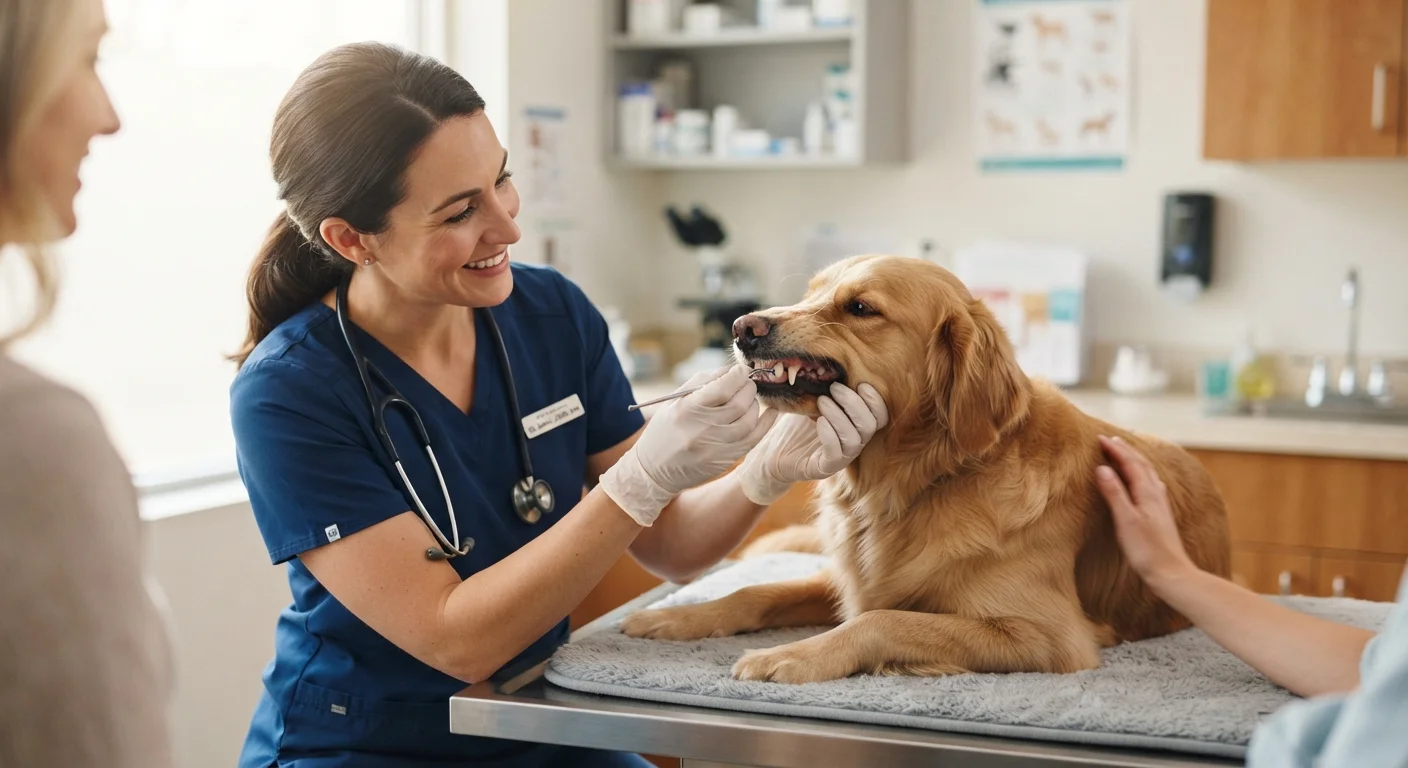
A thorough dental cleaning performed under general anesthesia allows the veterinarian to probe below the gumline, take dental X-rays, and treat or extract compromised teeth safely. Surface-only cleanings cannot assess the periodontal pocket or tooth roots, where most disease originates. Ask your vet how often your specific pet should be seen.
Dental-Supportive Products
The Veterinary Oral Health Council (VOHC) evaluates and accepts products that meet specific efficacy standards for reducing plaque and tartar. Look for the VOHC seal on dental chews, water additives, and diets. These can supplement brushing but are not a replacement.
Caring for your pet's teeth is part of a broader commitment to their health at every life stage. Dental care needs shift as pets age — starting good habits early makes a measurable difference in long-term outcomes.
This article is for general informational purposes only and is not a substitute for professional veterinary advice. Always consult a licensed veterinarian for guidance specific to your pet's health needs.
A Note on Anesthesia-Free Cleanings
Anesthesia-free dental procedures are sometimes marketed as a safer or lower-stress alternative. However, the American Veterinary Dental College and other professional bodies do not recommend them as a substitute for comprehensive care. Without anesthesia, it is not possible to safely examine below the gumline, take diagnostic X-rays, or treat diseased pockets — the areas where periodontal disease does its most serious damage. Discuss concerns about anesthesia directly with your veterinarian, who can address risk factors specific to your pet.