

Pets & Animals

Pet First Aid: What to Do in the 10 Most Common Emergencies Before Reaching a Vet

Share
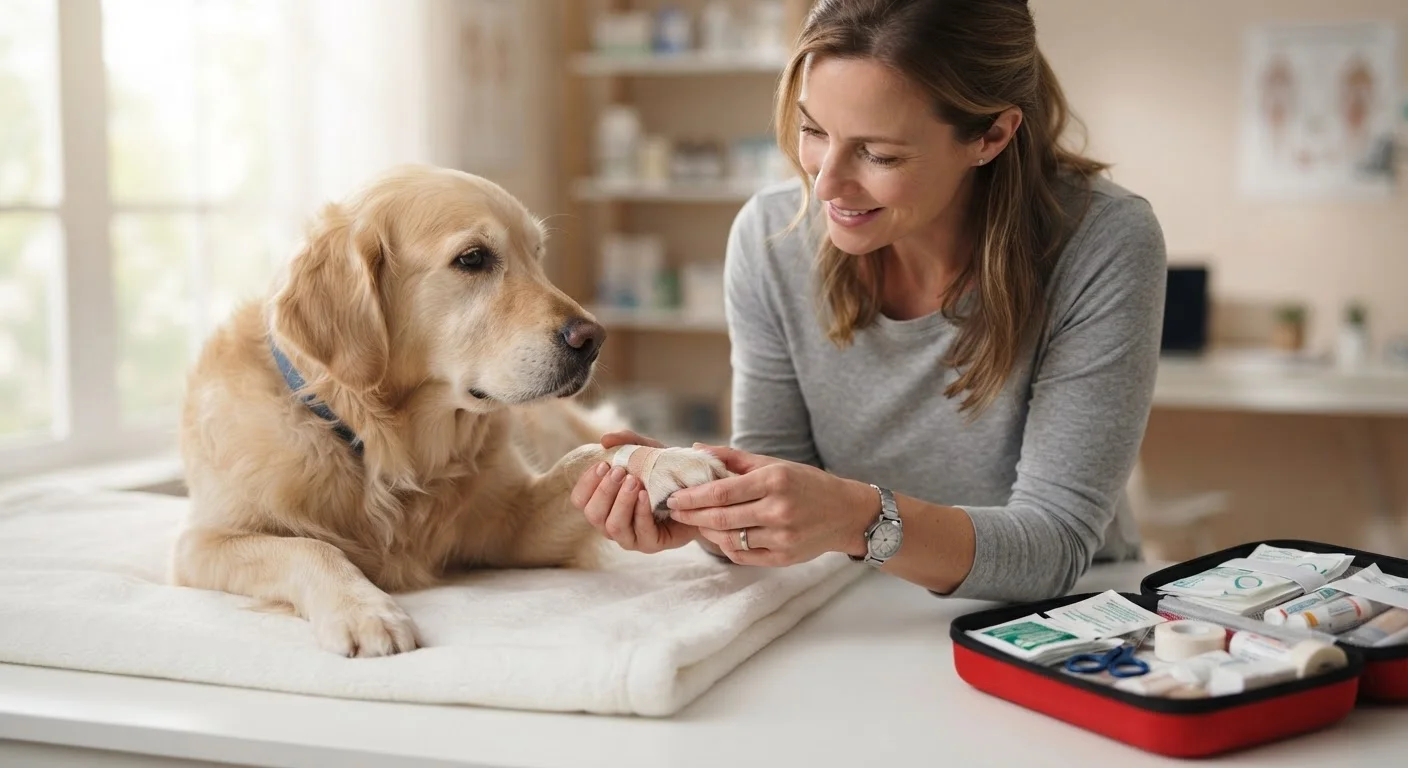
Person performing first aid on a dog with a pet first aid kit open on a table.

Key Takeaways

First aid stabilizes your pet — it never replaces prompt veterinary care.
Knowing your nearest emergency vet clinic before a crisis saves precious time.
A dedicated pet first aid kit should be stocked and accessible at all times.
Heatstroke, choking, and severe bleeding require immediate action within minutes.
Always call your vet or a poison hotline before inducing vomiting after ingestion.
Calm, controlled handling reduces stress and prevents injury to you and your pet.
15–25 min

Summary

22 items · 15–25 minutes

Why Every Pet Owner Needs Emergency Preparedness

Emergencies don't announce themselves. A dog can swallow a toy fragment in seconds; a cat can slip through a screen door on the hottest afternoon of the year. For pet owners, the gap between the moment something goes wrong and the moment you reach a veterinarian is where your knowledge matters most.

This checklist covers the ten most common pet emergencies — from choking and seizures to poisoning and heatstroke — with clear, vet-informed steps to stabilize your animal before professional care is available. Think of these as first-response actions, not treatments. The goal is to keep your pet safe and calm during transport, not to replace the care a veterinarian provides.

Before any emergency arises, take a few minutes to build your foundational readiness. The complete home preparation checklist is a good starting point for setting up a safe environment. Also keep the number of your nearest 24-hour emergency animal hospital and the ASPCA Animal Poison Control Center (888-426-4435) saved in your phone — not just written somewhere.

Required

Pet First Aid Kit

Provides gauze, adhesive bandage wrap, antiseptic wipes, a digital thermometer, and disposable gloves for immediate wound care and assessment.

Required

Emergency Vet Contact List

A saved or printed list of your regular vet, nearest 24-hour emergency animal hospital, and ASPCA Poison Control (888-426-4435).

Required

Pet Carrier or Transport Crate

Keeps an injured or distressed pet secure and prevents further injury during vehicle transport to the clinic.

Optional

Muzzle (appropriately sized)

Prevents pain-induced biting during handling; always ensure the airway remains unobstructed.

Optional

Digital Rectal Thermometer

Allows you to monitor body temperature during suspected heatstroke or fever; normal range for dogs and cats is approximately 101–102.5°F.

Optional

Saline Eye Wash

Can be used to gently rinse irritants from the eye only when specifically directed by a veterinarian or poison control professional.

The 10 Most Common Pet Emergencies: First Aid Checklist

Work through the relevant emergency scenario below. Each group represents a distinct situation; use the one that matches what you're facing. Always contact your veterinarian or an emergency clinic as you act — talking to a professional in real time is strongly recommended whenever possible.

Choking

Restrain your pet gently and open the mouth to look for a visible foreign object — only remove it if you can do so safely without pushing it deeper. Must
If the object is not visible, perform back blows: for small pets, hold them with their back against your chest and give firm blows between the shoulder blades; for large dogs, use the Heimlich-like technique by applying upward abdominal pressure. Must
Rush to an emergency clinic immediately — even if the object dislodges, a vet should examine the airway for injury. Must

Severe Bleeding

Apply direct, firm pressure to the wound with a clean cloth or gauze and hold it continuously — do not lift to check the wound for at least 3–5 minutes. Must
If blood soaks through, add more material on top rather than removing the first layer. Must
Keep the pet as still and calm as possible during transport to prevent increased blood flow. Should

Heatstroke

Move your pet immediately to a cool, shaded or air-conditioned area. Must
Apply cool (not ice cold) water to the neck, armpits, and groin; use a fan if available to aid evaporation. Must
Offer small amounts of cool water to drink only if the pet is conscious and able to swallow. Should
Transport to a vet as quickly as possible — heatstroke causes rapid organ damage even when the pet appears to stabilize. Must

Seizures

Clear the immediate area of furniture or hard objects to prevent injury — do not restrain or place anything in your pet's mouth. Must
Time the seizure from start to finish; a seizure lasting more than 5 minutes is a life-threatening emergency requiring immediate vet attention. Must
Keep lights low and minimize noise once the seizure ends, as pets are often disoriented and light-sensitive during recovery. Should

Suspected Poisoning or Toxic Ingestion

Call the ASPCA Animal Poison Control Center (888-426-4435) or your vet immediately — do not induce vomiting unless specifically instructed by a professional. Must
Collect the packaging, plant, or substance involved so you can describe it accurately to the vet or poison control specialist. Must
Note the time of ingestion and any symptoms you observe — this information helps the vet choose the right intervention. Should

Broken Bones or Suspected Fractures

Minimize movement of the injured limb — do not attempt to splint unless you are trained to do so, as improper splinting can worsen injury. Must
Use a flat, rigid surface (a board or firm blanket) to support the pet during transport if possible. Should
Muzzle the pet gently if there is a risk of biting due to pain, using a strip of cloth — ensure the airway remains clear. Should

Burns

Flush the burned area with cool running water for at least 10 minutes — do not apply butter, oil, or any home remedy. Must
Cover loosely with a clean, non-fluffy dressing to protect the area during transport. Should

Difficulty Breathing, Eye Injuries, Unconsciousness, or Suspected Cardiac Events

If your pet is unconscious and not breathing, begin CPR only if you are trained — untrained compressions on a healthy heart can cause harm. Must
For eye injuries, do not touch or flush the eye unless instructed by a vet; cover loosely with a damp cloth and transport immediately. Must
For respiratory distress, keep the pet upright, calm, and in fresh air; avoid anything that restricts the chest or neck. Must
Consider enrolling in a certified pet CPR and first aid course to build hands-on confidence for cardiac and respiratory emergencies. Nice to have

First Aid Is Not a Substitute for Veterinary Care

Every step in this checklist is designed to stabilize your pet in the minutes before you reach a professional — not to replace veterinary diagnosis or treatment. Even if your pet appears to recover fully after an emergency, a vet examination is still strongly recommended. Internal injuries, toxin effects, and cardiac stress can develop or worsen hours after the initial incident.

This article is for general informational purposes only and does not constitute veterinary medical advice. Always consult a licensed veterinarian for diagnosis, treatment, and guidance specific to your pet's condition.

Building Long-Term Emergency Readiness

The best time to prepare for a pet emergency is well before one happens. Consider enrolling in a hands-on pet first aid course — many humane societies and veterinary schools offer them. Regular wellness visits also help establish a baseline for your pet's health, so any sudden changes are easier to recognize. See what routine vet visits actually cover to understand how proactive care supports emergency readiness.

As your pet ages, their vulnerability to certain emergencies may shift. Senior pets are more prone to cardiac events and respiratory distress, while young animals are more likely to ingest foreign objects or toxic substances. The life-stage care guide explains how needs evolve. Pair that knowledge with the first-time owner's survival guide if you're newer to pet ownership and still building your foundational routines.

Never Delay Calling a Vet to Search Online

In an active emergency, every minute matters. Resist the urge to spend time searching for answers online — call your vet or an emergency animal hospital immediately and follow their real-time guidance. Online resources, including this checklist, are meant for preparation and general reference, not as a replacement for live professional advice during a crisis.

Pets & Animals Editorial Team is the collective byline for our editorial team and contributor network. Articles published under this byline or an editorial pen name are researched, written, and reviewed according to our editorial standards for clarity, consistency, and independence before publication.

View all articles by Pets & Animals Editorial Team →
Disclaimer: The content on this site is for informational purposes only and is not a substitute for professional advice. Always consult a qualified professional for guidance specific to your situation.