

| Typical Earnest Money Range | 1%–3% of purchase price (Common market practice; varies by region and market conditions) |
| Median Down Payment, First-Time Buyers | ~8% (National Association of Realtors, 2023 Profile of Home Buyers and Sellers) |
| Typical Closing Cost Range | 2%–5% of loan amount (Consumer Financial Protection Bureau general guidance) |
| PMI Threshold (Conventional Loans) | Required when down payment is below 20% (Standard conventional lending guideline) |
| Earnest Money Due | Within 1–3 business days of accepted offer (Typical contract terms; confirm with your purchase agreement) |
| Closing Costs Due | At settlement (closing day) (Standard real estate transaction practice) |
Three Costs, Three Different Purposes
Most first-time buyers think of the home purchase as one large outlay. In practice, it is three distinct financial obligations — each paid at a different stage, to different parties, for different reasons. Conflating them leads to real budget shortfalls at the closing table.
| Typical Earnest Money Range | 1%–3% of purchase price (Common market practice; varies by region and market conditions) |
| Median Down Payment, First-Time Buyers | ~8% (National Association of Realtors, 2023 Profile of Home Buyers and Sellers) |
| Typical Closing Cost Range | 2%–5% of loan amount (Consumer Financial Protection Bureau general guidance) |
| PMI Threshold (Conventional Loans) | Required when down payment is below 20% (Standard conventional lending guideline) |
| Earnest Money Due | Within 1–3 business days of accepted offer (Typical contract terms; confirm with your purchase agreement) |
| Closing Costs Due | At settlement (closing day) (Standard real estate transaction practice) |
Earnest money is submitted when you make an offer. The down payment is the equity stake you contribute toward the home's purchase price. Closing costs are the fees and prepaid expenses that cover the transactional and lending services required to complete the sale. Understanding what drives each figure — and when each is due — is foundational to any home purchase plan. For broader preparation context, see preparing to buy your first home.
Earnest Money: Your Good-Faith Deposit
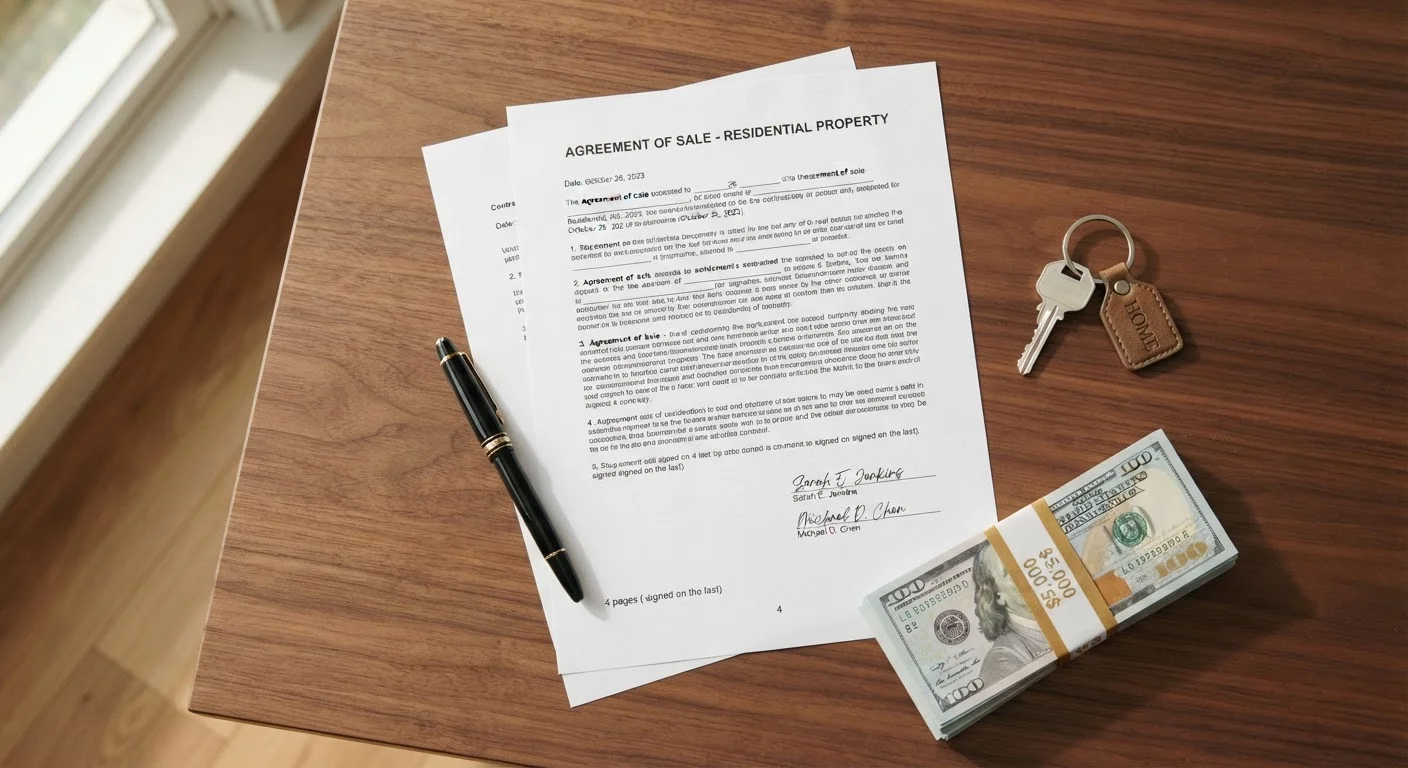
Earnest money signals to the seller that your offer is serious. Once a purchase agreement is signed, the deposit — typically 1%–3% of the purchase price — is transferred to a neutral escrow account, not directly to the seller. It stays there until the transaction closes or falls apart.
Earnest Money Is Not Automatically Refundable
Whether you can recover your earnest money if the deal falls through depends entirely on the contingencies written into your purchase contract. Common protections include financing and inspection contingencies. If you waive those protections and then back out, you may forfeit the deposit. See why buyers waive contingencies and what they risk for a fuller explanation of how these clauses work.
At closing, earnest money is applied toward your total cash due, reducing the amount you bring to settlement. It is not an additional cost on top of the down payment — it is an advance on it. The amount is often negotiated and can vary significantly in competitive markets. For a closer look at how escrow accounts function throughout a transaction, see understanding escrow in a home sale.
Down Payments: Equity From Day One
The down payment is the share of the home's purchase price you pay directly, with the lender financing the rest. On a $350,000 home with a 10% down payment, you contribute $35,000 and borrow $315,000. The ratio matters well beyond the initial transaction.
~8%
Median first-time buyer down payment
According to the National Association of Realtors' 2023 Profile of Home Buyers and Sellers, the typical first-time buyer put down around 8%, well below the often-cited 20% benchmark.
2%–5%
Closing costs as share of loan amount
The Consumer Financial Protection Bureau notes that closing costs commonly range from 2% to 5% of the loan amount, meaning a $300,000 loan could carry $6,000–$15,000 in fees.
1%–3%
Earnest money as share of purchase price
In most US markets, earnest money deposits fall between 1% and 3% of the purchase price, though competitive markets sometimes push this higher.
A down payment below 20% on a conventional loan typically triggers PMI, adding a recurring cost to your monthly payment until you build sufficient equity. Government-backed loan programs — FHA, VA, and USDA — have their own minimum down payment requirements and insurance structures that differ from conventional loans. Many buyers find that 20% is not a hard requirement. Common myths about the 20% rule often deter buyers who could qualify with far less. For a detailed look at how your down payment percentage reshapes your total loan cost, see the real impact of your down payment on a mortgage.
Closing Costs: The Fees Behind the Transaction
Closing costs are not a single fee — they are a collection of charges from multiple parties. Common line items include:
- Loan origination fee: The lender's charge for processing the mortgage
- Appraisal fee: Paid to a licensed appraiser to verify the home's market value
- Title search and title insurance: Confirms ownership history and protects against future title disputes
- Prepaid interest: Interest accrued between closing day and the first payment due date
- Escrow setup: Initial funding of property tax and homeowners insurance escrow accounts
- Recording fees: Charged by local government to record the deed transfer
Lenders are required to provide a Loan Estimate within three business days of your application, giving you an itemized preview of these costs. At closing, a Closing Disclosure provides the final figures. Learn how to read both documents in understanding your Loan Estimate and Closing Disclosure. Some closing costs are negotiable or can be covered through seller concessions — your agent and lender can clarify what is typical in your market.
Earnest Money
A good-faith deposit submitted with a purchase offer to show the seller the buyer is serious. It is typically held in escrow and applied toward the down payment or closing costs at settlement.
Down Payment
The portion of the home's purchase price the buyer pays out of pocket rather than financing. A larger down payment reduces the loan balance and can affect the interest rate and whether private mortgage insurance is required.
Closing Costs
Fees and prepaid expenses due at settlement, covering services like the loan origination, title search, appraisal, and property tax escrow setup. They are separate from the down payment.
Escrow
A neutral third-party account that holds funds during a real estate transaction until all conditions are met. Earnest money is held in escrow, and many lenders establish ongoing escrow accounts for taxes and insurance after closing.
Private Mortgage Insurance (PMI)
Insurance that protects the lender — not the buyer — when a conventional loan down payment is below 20% of the purchase price. PMI adds to the monthly payment until sufficient equity is reached.
Loan Estimate
A standardized federal disclosure a lender must provide within three business days of receiving a loan application. It itemizes estimated closing costs, interest rate, and monthly payment.
This article is for general informational purposes only and does not constitute financial, legal, or mortgage advice. Consult a licensed financial adviser, mortgage professional, or real estate attorney for guidance specific to your situation.