

Key Takeaways
Our Verdict
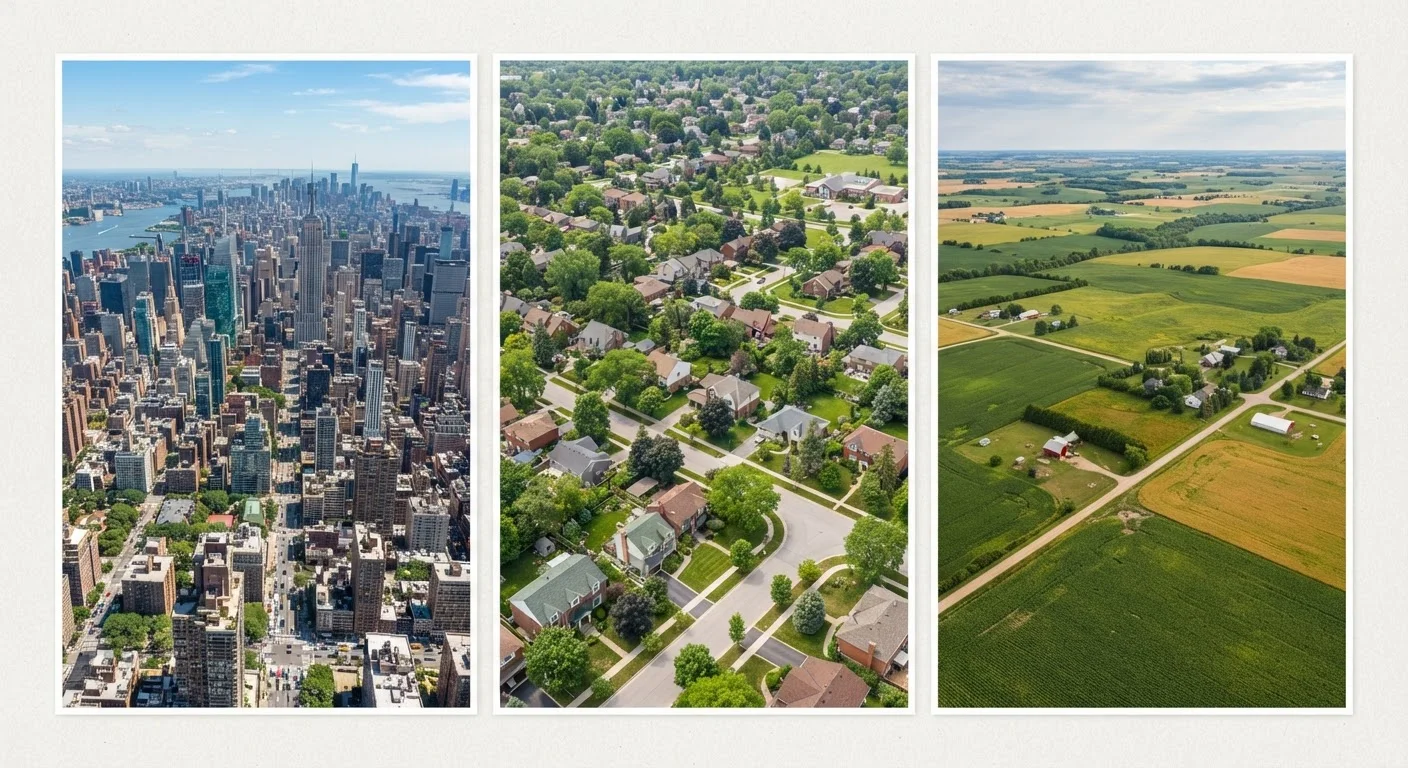
No single rental market setting is universally superior — each involves genuine trade-offs between cost, convenience, and lifestyle. Urban rentals suit those who prioritize access and walkability; suburban settings reward families or remote workers who value space; rural rentals offer affordability but demand self-sufficiency and reliable transportation.
| Best for | Recommended |
|---|---|
| Professionals who rely on public transit or work in dense employment hubs | Urban |
| Households needing more square footage, school districts, or a quieter environment | Suburban |
| Budget-focused renters comfortable with limited services and longer drives | Rural |
Why Location Defines the Rental Experience
Rent is never just about the unit — it reflects everything surrounding it. Whether a renter is weighing a studio apartment in a downtown core, a two-bedroom townhouse in the suburbs, or a farmhouse rental an hour from the nearest grocery store, the broader setting shapes daily costs, commute realities, lease terms, and quality of life in ways that aren't always visible upfront.
For renters new to the US housing market, understanding these structural differences is a foundation worth building. If you're just beginning to navigate the rental process, the complete renter's overview covers how leases, deposits, and tenant rights work across the country. The comparison below focuses specifically on how your choice of setting — urban, suburban, or rural — shapes the terms of your rental life.
| Urban | Suburban | Rural | |
|---|---|---|---|
| Median Rent Level | Highest | Moderate | Lowest |
| Average Unit Size | Smallest | Mid-range | Largest |
| Public Transit Access | Strong | Limited | Rarely available |
| Parking Included | Rarely | Often | Almost always |
| Lease Flexibility | Higher (month-to-month common) | Moderate | Lower (informal terms vary) |
| Rental Inventory | High volume, high competition | Moderate, less competitive | Low volume, limited choice |
| Nearby Amenities | Extensive | Moderate | Limited |
| Car Dependency | Low to moderate | High | Very high |
Urban Rentals: Access at a Premium
City rentals — in metros like New York, Chicago, Los Angeles, or Seattle — consistently rank among the most expensive in the country. According to data tracked by the U.S. Census Bureau and private housing analytics, median rents in dense urban cores can run 40–80% higher than comparable suburban units in the same region. What renters are paying for is access: walkability, public transportation, concentrated employment, and a dense ecosystem of restaurants, healthcare providers, and cultural institutions.
Urban landlords also tend to offer shorter minimum lease terms, making month-to-month arrangements more common — though at a notable cost premium. For renters considering the full picture of lease flexibility, understanding the real trade-offs between lease types is worth the time before signing.
Budget for the Full Cost of Location
Urban rent prices are visible upfront, but suburban and rural settings carry hidden costs — primarily transportation. Before comparing monthly rents across settings, estimate what you'd spend on a car, insurance, fuel, or rideshare services in each scenario. A lower suburban rent may net out to the same total monthly spend as a higher urban rent with no car required.
The practical downside: units are smaller on average, parking is rarely included, and competition for desirable apartments can require strong rental history and income documentation. Urban landlords frequently apply strict rent-to-income thresholds — often requiring gross monthly income of three times the rent.
Suburban Rentals: Space, Schools, and Car Costs
Suburban rental markets — encompassing areas ringing major cities and mid-sized metros — typically offer more square footage per dollar than urban equivalents. A renter priced out of a one-bedroom in a city center may find a two-bedroom apartment or townhouse in a nearby suburb for a similar monthly payment. Many suburban rentals include on-site parking, in-unit laundry, or garage access that would cost extra — or simply not be available — in urban settings.
The trade-off is transportation dependence. Most suburban rental locations in the US are designed around private vehicle ownership. Households without a car face significant limitations in accessing employment, healthcare, and daily errands. Those costs — insurance, fuel, maintenance — are real additions to the monthly budget that renters should factor into any rent-to-income calculation. How landlords evaluate income relative to rent explains this framing in practical terms.
Suburban lease structures tend toward standard 12-month fixed terms, with less flexibility for shorter stays than urban markets typically allow.
Rural Rentals: Affordability and Its Limits
Rental inventory in rural areas is the smallest and least standardized of the three categories. Available units range from converted farmhouses and detached single-family homes to manufactured housing — with rents that can be dramatically lower than suburban equivalents. The affordability advantage is real, but so are the constraints.
Limited inventory means fewer choices and, in some markets, extended vacancy waits or informal lease arrangements that may offer less tenant protection than those governed by urban landlord-tenant law. Renters in rural settings should carefully review their lease terms and understand local tenant rights, which can differ substantially by state.
Verify Tenant Protections in Rural Leases
Rural rental agreements are sometimes informal, handwritten, or missing key legal protections. Some states have weaker landlord-tenant statutes in unincorporated areas. Before signing any rural lease, confirm it complies with your state's requirements around security deposits, habitability standards, and required notice periods. When in doubt, consult a local tenant advocacy organization or attorney.
Infrastructure gaps are another consideration: internet connectivity (important for remote workers), healthcare access, and school quality vary significantly by rural region. For renters who value flexibility to relocate — including through subleasing — rural settings present additional challenges, as subleasing rules and common pitfalls can be even less clearly defined in informal rural markets.
This article is for general informational purposes only and does not constitute legal, financial, or real estate advice. Rental markets vary significantly by region; consult a licensed real estate professional or tenant advocate for guidance specific to your circumstances.