

Key Takeaways
The Coverage Gap Most Renters Don't See Coming
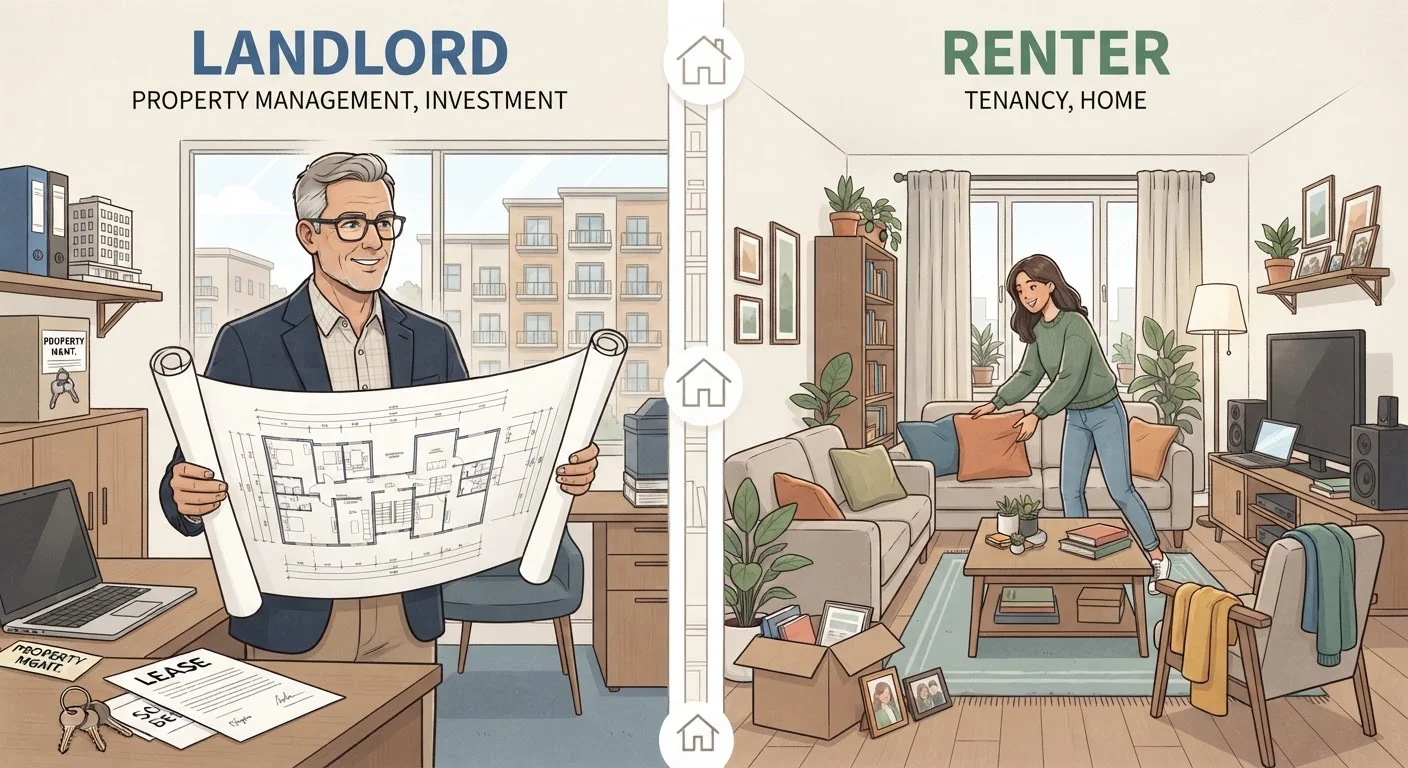
When you rent an apartment or house, your landlord almost certainly carries a property insurance policy on the building. Many tenants assume that policy extends to them — that if the roof leaks, a fire breaks out, or a pipe bursts and ruins their belongings, the landlord's insurer will make them whole. That assumption is incorrect, and it can be financially devastating.
A landlord's policy — often called a dwelling policy or landlord insurance policy — is written to protect the property owner's investment: the structure itself, the walls, the roof, and any fixtures the owner supplies. It does not cover a tenant's furniture, electronics, clothing, or other personal property. It also does not protect the tenant from liability if a guest is injured inside the unit.
This is the gap renters insurance is specifically designed to fill. As you explore your options as a renter, understanding exactly what each policy does — and does not — cover is a foundational step. For a broader look at the rental market and your rights within it, see our complete overview for first-time tenants.
Myth
My landlord has insurance on the property, so my belongings are covered if something goes wrong.
Fact
Landlord insurance covers the building and the owner's property — not the tenant's personal belongings.
A landlord's dwelling policy is a contract between the property owner and their insurer. Its purpose is to protect the owner's financial interest in the physical structure. If a fire destroys the building, the landlord's insurer will pay to repair or rebuild. Your laptop, couch, and clothing are simply outside the scope of that contract. Only a renters insurance policy in your name can cover your personal property.
Myth
Renters insurance is expensive and not worth it for most people.
Fact
Renters insurance is among the most affordable insurance products available, typically costing $15–$30 per month.
According to industry data from the National Association of Insurance Commissioners (NAIC), the average renters insurance premium in the United States has historically been well under $200 per year. For that cost, policyholders generally receive tens of thousands of dollars in personal property protection and significant liability coverage. The value proposition is strong relative to the premium, particularly for renters who own electronics, furniture, or other valuable items.
Myth
If my unit is damaged and I have to move out temporarily, my landlord is responsible for my hotel costs.
Fact
Temporary living costs are the tenant's responsibility unless a renters insurance policy with loss-of-use coverage is in place.
A landlord's obligation in a displacement scenario is typically limited to what the lease and local law require — often just a rent abatement or a proportional rent reduction for uninhabitable conditions. The cost of a hotel, meals, and storage during repairs is the tenant's burden unless they carry renters insurance that includes additional living expenses (ALE) coverage. Tenants who rely solely on their landlord's goodwill in these situations often find themselves with significant out-of-pocket costs.
Myth
Renters insurance only covers theft — it doesn't help with accidents or liability.
Fact
Most standard renters insurance policies include personal liability protection in addition to personal property coverage.
Personal liability coverage is one of the most overlooked benefits of renters insurance. If a visitor slips and falls in your apartment and files a claim against you, your renters policy can cover legal defense costs and any resulting judgment up to the policy limit. Similarly, if you accidentally cause water damage to a neighbor's unit — say, by leaving a bathtub running — your liability coverage may respond. This protection operates entirely independently of your landlord's policy.
Myth
Renters insurance covers any damage to my belongings, including floods and earthquakes.
Fact
Standard renters insurance policies explicitly exclude flood and earthquake damage; separate coverage must be purchased.
This is one of the most important exclusions to understand before assuming you're fully protected. If your belongings are damaged by rising water from a storm or a river overflow, a standard renters policy will not pay. Flood insurance for renters is available through the National Flood Insurance Program (NFIP) and some private insurers. Earthquake coverage is also typically sold as a separate endorsement or standalone policy. If you live in an area prone to either risk, discuss your options with a licensed insurance agent.
What Renters Insurance Actually Covers
A standard renters insurance policy generally includes three core protections:
- Personal property coverage — Reimburses you for belongings damaged or stolen due to covered perils such as fire, smoke, theft, vandalism, and certain water damage events. Coverage limits vary by policy and can often be adjusted.
- Personal liability coverage — Pays for legal defense and damages if someone is injured in your home and holds you responsible, or if you accidentally damage someone else's property.
- Loss of use / additional living expenses (ALE) — Covers reasonable costs for temporary housing and meals if a covered loss makes your unit uninhabitable while repairs are made.
Renters insurance does not typically cover floods or earthquakes — those require separate policies. Always read any policy document carefully and ask a licensed insurance agent to clarify exclusions before purchasing.
Flood and Earthquake Damage Are Not Covered
Standard renters insurance does not cover losses caused by flooding or earthquakes — two of the most financially devastating events for renters in vulnerable regions. If you live in a flood zone or an earthquake-prone area, ask a licensed insurance agent about separate flood or earthquake coverage before assuming your renters policy will protect you.
This article is for general informational purposes only and does not constitute personalized insurance, financial, or legal advice. Coverage terms, exclusions, and premiums vary by insurer and state. Consult a licensed insurance agent or adviser for guidance specific to your situation.
How Renters Insurance Fits the Bigger Picture
Understanding the boundaries of renters insurance is part of being a financially prepared tenant. If you're weighing the long-term question of whether to keep renting or pursue homeownership, our article on renting vs. buying a home in the US walks through the financial and lifestyle trade-offs involved.
Renters should also be aware of their broader legal protections. Many tenants are unaware of rights they already hold — from habitability standards to retaliation protections — which our piece on tenant rights many renters don't know they have covers in depth.
~$18/mo
Average US renters insurance premium
According to NAIC data, the average annual renters insurance premium in the US has been roughly $215, translating to approximately $18 per month.
55%
Renters who lack renters insurance
Industry surveys have consistently shown that a majority of US renters do not carry renters insurance, leaving them financially exposed to common household losses.
If you're approaching the end of a lease, financial preparedness extends to understanding what can reduce your security deposit return. See our guidance on moving out without losing money for common pitfalls to avoid.