

Key Takeaways
Read the Room Before You Open Your Closet
Before pulling anything off a hanger, do a quick read of the company's culture. A startup with a casual social media presence signals something different from a law office or financial services firm. Look at the company website, LinkedIn photos of employees, and any cues from your recruiter contact. This context shapes how dressed-up you actually need to be — and it can save you from over- or under-shooting.
As a general rule, aim to dress one level above what you'd expect employees to wear day-to-day. If the office looks business casual, lean toward business professional. When genuinely uncertain, err toward more structured — it's easier to make a strong first impression than to recover from appearing underprepared. For more perspective on what really drives a polished appearance, see The Overlooked Details That Quietly Elevate Any Outfit.
What you will need
Building Your Suit-Free Interview Outfit Step by Step
The good news: a well-coordinated set of separates can look just as professional as a suit when the pieces work together thoughtfully. Follow the steps below to put your look together with confidence.
Identify your base layer — the shirt or top
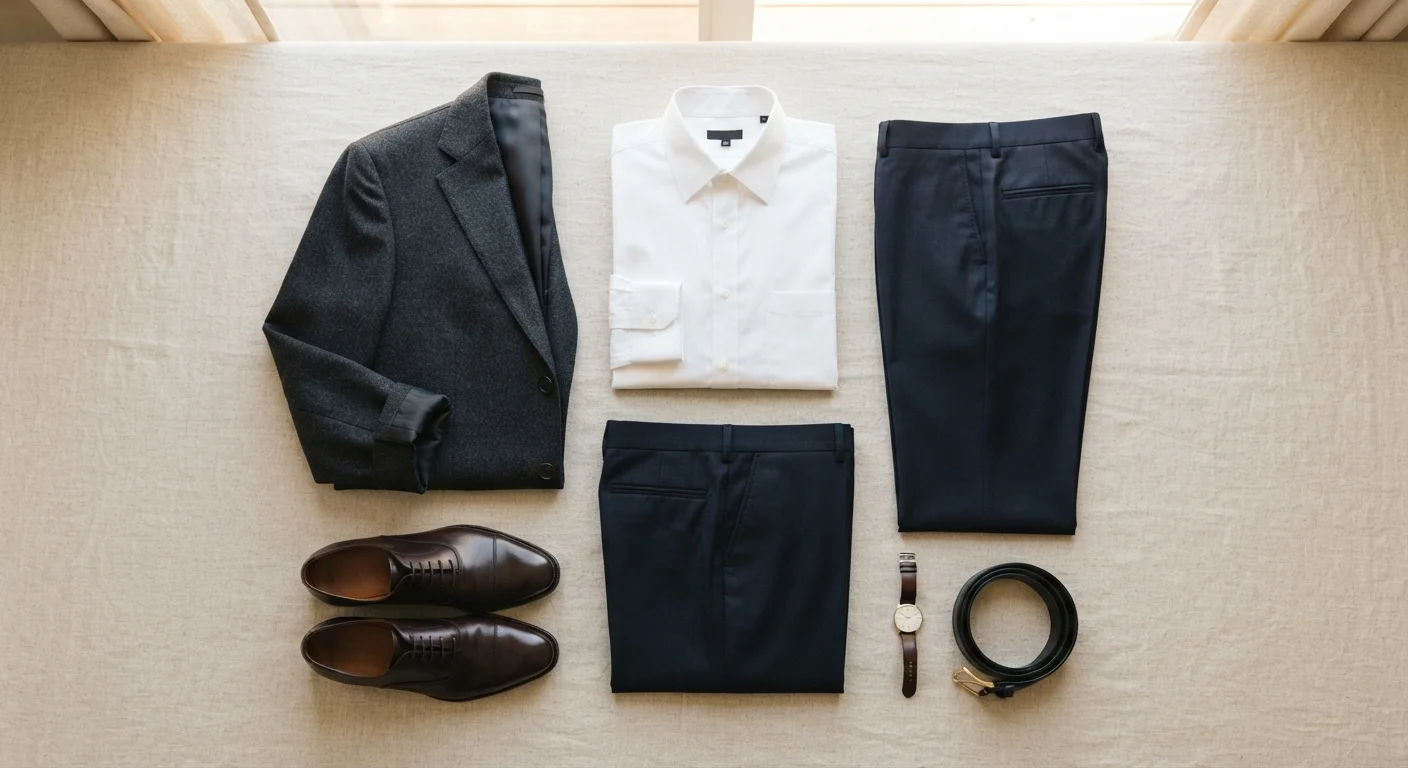
Start with a solid-colored, wrinkle-resistant top in a neutral or muted tone: white, light blue, soft grey, blush, or cream all work well. Button-down shirts are a reliable anchor for most interview settings. Blouses with a clean silhouette — no deep-V necklines or bold prints — read as equally professional. Check for stains, missing buttons, and fabric pilling before committing to the piece.
Choose well-fitting trousers, dress pants, or a tailored skirt
Dark trousers in navy, charcoal, black, or dark grey are your strongest option. Look for pants that sit at the natural waist or hip without pulling or bunching, and that fall cleanly at the ankle. A pencil skirt or A-line skirt in a similar dark, solid tone is equally professional. Avoid jeans, cargo pants, leggings, or anything with visible wear. Fit matters more than brand — a properly-fitting pair of non-designer trousers beats an ill-fitting expensive pair every time.
Add a structured outer layer if you have one
A blazer — even one that doesn't match your trousers — instantly elevates separates into a more cohesive, professional look. A dark blazer over a different-colored trouser is a legitimate styling move, not a mismatch. No blazer? A structured cardigan in a neutral color works in business casual environments. Avoid hoodies, puffer vests, or casual zip-ups.
Select clean, professional footwear
Shoes are among the first things interviewers notice subconsciously. Clean leather or faux-leather shoes, loafers, low block-heeled pumps, or neat flats all convey professionalism. Give them a wipe-down before the interview. Avoid sneakers, open-toed sandals, or very high stilettos for most professional settings unless the company culture clearly supports it.
Iron or steam every piece the night before
This step is non-negotiable. Wrinkled clothing undercuts an otherwise polished look no matter how well-chosen the pieces are. Lay out your complete outfit the evening before, iron or steam each piece, and hang everything somewhere it won't get crushed overnight. Pay special attention to collars, cuffs, and seams — these wrinkle most visibly.
When in Doubt, Go Slightly More Formal
It's far easier to be overdressed than underdressed at an interview. Showing up too casually is a harder impression to walk back. If you're interviewing at a notably casual company and feel unsure, a simple, neat business casual outfit is almost universally appropriate and will rarely work against you.
If you're thinking about building out your professional wardrobe more broadly after the interview, Building a Work Wardrobe on a Tight Budget is a practical starting point worth bookmarking.
Grooming and Finishing Touches That Seal the Look
Clothing is only part of the picture. Clean, neatly styled hair, trimmed nails, and a fresh appearance communicate the same level of intentionality as a pressed collar. You don't need an elaborate routine — a few well-placed habits matter far more than an extensive product collection. If your timeline is tight, Grooming on a Packed Schedule covers realistic, time-efficient routines worth trying the night before.
Skip or Minimize Fragrance on Interview Day
Heavy cologne or perfume can be distracting or uncomfortable for interviewers with sensitivities — and in a small meeting room, it becomes very apparent. Opt for a light application or skip fragrance entirely. A clean, fresh scent is always the most professional choice.
Keep accessories minimal and intentional. A simple watch, understated earrings, or a neat belt reinforces a polished look without competing for attention. The goal is for your qualifications to be the most memorable thing about the interaction — your outfit should support that. For a broader perspective on dressing in a way that genuinely works for you, Dressing for Your Body Shape offers a grounded take on what common style advice actually gets right.