

| Recommended face SPF | Broad-spectrum SPF 30 or higher, daily (American Academy of Dermatology) |
| Hair washing frequency | Varies: every 1–3 days depending on scalp type |
| Nail trimming interval | Fingernails every 1–2 weeks; toenails every 4–6 weeks |
| Body moisturizing timing | Within minutes of bathing, on slightly damp skin (American Academy of Dermatology) |
| Foot exfoliation frequency | 1–2 times per week on damp skin |
| Cleanser pH range | Ideally 4.5–5.5 (slightly acidic, matching skin's natural pH) |
How to Use This Reference
This guide is organized by body area so you can jump straight to what you need. Whether you're building a routine from scratch or fine-tuning specific zones, each section covers the core principles — what to prioritize, how often, and what to watch for. For a broader framework, see our morning routine guide or browse Beauty Basics for foundational skincare and grooming guidance.
| Recommended face SPF | Broad-spectrum SPF 30 or higher, daily (American Academy of Dermatology) |
| Hair washing frequency | Varies: every 1–3 days depending on scalp type |
| Nail trimming interval | Fingernails every 1–2 weeks; toenails every 4–6 weeks |
| Body moisturizing timing | Within minutes of bathing, on slightly damp skin (American Academy of Dermatology) |
| Foot exfoliation frequency | 1–2 times per week on damp skin |
| Cleanser pH range | Ideally 4.5–5.5 (slightly acidic, matching skin's natural pH) |
Scalp and Hair
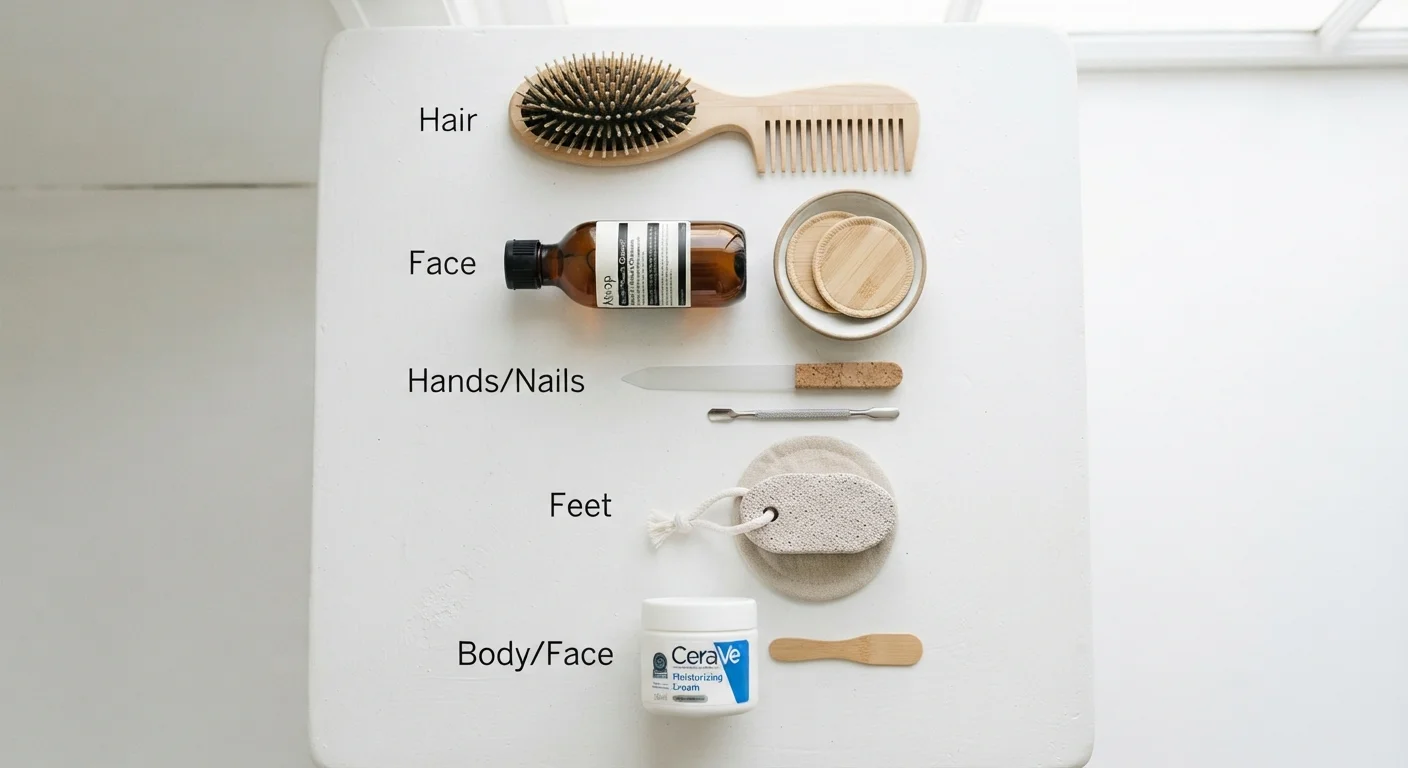
The scalp is living skin — it sweats, produces oil (sebum), and can become irritated just like the rest of your body. Wash frequency depends on hair type and scalp tendency: oily scalps generally benefit from washing every one to two days, while drier scalps may do well with two to three times per week. Use water temperature that's warm, not hot — heat can strip natural oils and worsen dryness.
Brushing distributes sebum along the hair shaft and stimulates circulation. Wide-tooth combs are gentler on wet hair, which is more elastic and prone to breakage when tugged aggressively. For deeper guidance on oil balance, dryness, and common scalp concerns, our complete scalp health guide goes well beyond the basics.
Sebum
The natural oil produced by sebaceous glands in the skin. It helps lubricate and protect the skin and hair, but overproduction can contribute to oiliness and breakouts.
Skin barrier
The outermost layer of skin that locks in moisture and keeps out irritants and bacteria. A compromised barrier can lead to dryness, sensitivity, and irritation.
Exfoliation
The process of removing dead skin cells from the surface of the skin, either physically (scrubs, tools) or chemically (acids). Regular exfoliation can improve texture and support cell turnover.
Cuticle
The thin layer of skin at the base of the nail that acts as a protective seal. Cutting or aggressively removing cuticles can expose the nail matrix to infection.
Broad-spectrum SPF
A sunscreen that protects against both UVA (aging) and UVB (burning) rays. Broad-spectrum protection is recommended year-round for daily face and exposed-skin care.
Face and Neck
Facial skin varies significantly by zone — the T-zone (forehead, nose, chin) tends to be oilier, while cheeks and the area around the eyes are often drier and more sensitive. A simple approach: cleanse twice daily with a gentle, pH-balanced cleanser, follow with a moisturizer suited to your skin type, and apply broad-spectrum SPF every morning.
Don't stop at the jawline. The neck is often overlooked but experiences the same sun exposure and environmental stress as the face. Extend your cleansing, moisturizing, and SPF application down to the collarbone. For men's specific face-care habits, including shaving technique and post-shave care, see our men's grooming basics article.
Hands, Nails, Feet, and Body
Hands and nails: Frequent handwashing strips moisture — apply a hand cream after washing when possible. Keep nails trimmed straight across to reduce the risk of ingrown edges, and push back cuticles gently rather than cutting them, as cuticles protect the nail matrix from bacteria.
Feet: Exfoliate heels one to two times per week using a pumice stone or foot file on damp skin. Moisturize daily, avoiding the spaces between toes where excess moisture can encourage fungal growth. Trim toenails straight across and not too short.
Body: Daily showering is common, but dermatologists generally note that over-washing with harsh soaps can disrupt the skin barrier. A gentle, fragrance-free body wash and regular moisturizing — especially after bathing when skin is still slightly damp — supports overall skin health.
85%
Adults who don't moisturize regularly
Survey data from the American Academy of Dermatology suggests the majority of adults skip regular moisturizing despite its skin-barrier benefits.
2x
Increased nail strength with consistent cuticle care
Nail care professionals note that maintaining cuticle integrity helps protect the nail matrix, reducing breakage over time.
If your schedule makes full routines tricky, our busy-lifestyle grooming guide outlines efficient habits that still deliver results. Traveling soon? The pre-travel grooming checklist covers what to pack and plan ahead.
This article is for general informational purposes only and is not a substitute for advice from a qualified dermatologist or healthcare professional. Consult a professional for skin concerns, persistent conditions, or questions about your individual needs.