

Key Takeaways
Why Routine Maintenance Matters
A well-maintained vehicle is safer, more fuel-efficient, and far less likely to leave you stranded. Skipping scheduled services doesn't just risk breakdowns - it can void warranties, reduce resale value, and turn small problems into expensive failures. Understanding the full scope of car ownership costs, including maintenance, is explored in depth in our complete financial guide to car ownership.
This guide covers every major maintenance category in one place, giving you the knowledge to stay on schedule, ask the right questions at the shop, and handle basic checks yourself with confidence.
$1,200+
Average annual car maintenance cost per vehicle
AAA research consistently estimates that routine maintenance and tire costs run over $1,200 per year for the average American driver.
4/32"
Recommended minimum tire tread depth for safety
Industry safety groups recommend replacing tires at 4/32-inch tread depth for adequate wet-weather braking, above the legal minimum of 2/32 inch.
38%
Drivers with at least one underinflated tire
According to NHTSA research, roughly 38% of passenger vehicles on U.S. roads have at least one significantly underinflated tire.
Engine Oil and Filters
Engine oil lubricates moving parts, reduces heat, and carries contaminants away from critical components. Over time, it degrades and loses viscosity - making regular oil changes one of the most important services you can perform.
Most modern vehicles using full-synthetic oil follow a 7,500-10,000 mile change interval, while older engines or those using conventional oil may require changes every 3,000-5,000 miles. Always defer to your owner's manual rather than generic rules of thumb.
The oil filter should be replaced at every oil change. A clogged filter forces oil through a bypass valve, which allows unfiltered oil to circulate through the engine - accelerating wear. Your engine air filter is a separate item; most manufacturers recommend replacement every 15,000-30,000 miles, though dusty driving conditions will shorten that interval.
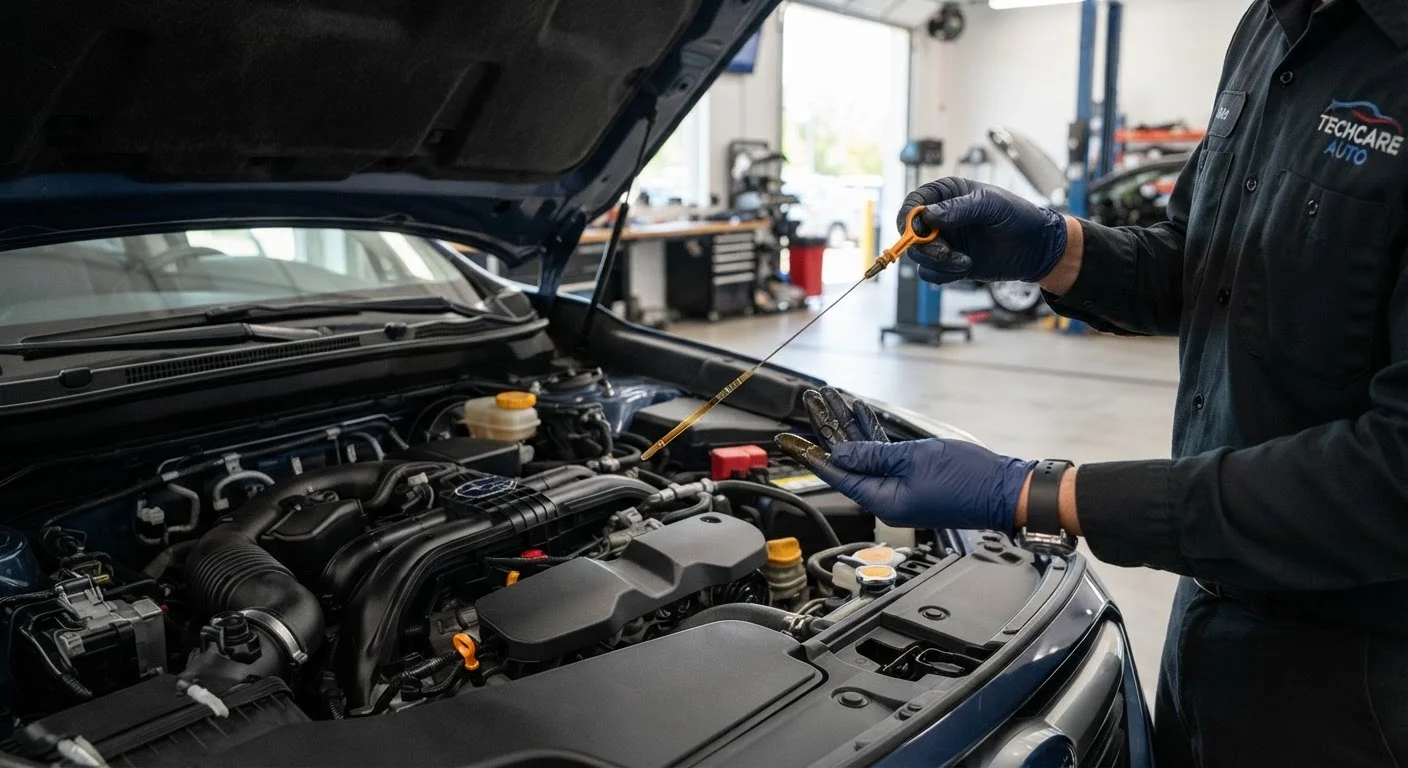
Pull the dipstick twice: wipe it clean, reinsert fully, then pull again for an accurate oil level reading. A single dip often yields a misleading result.
Oil can coat the dipstick unevenly on the first pull, causing drivers to add oil unnecessarily or miss a genuine low-level condition.
Check your oil color, not just the level. Fresh oil is amber; dark brown or black oil that looks gritty suggests the change interval has already been exceeded.
Color and clarity are reliable field indicators of oil degradation, giving drivers an early warning independent of mileage counters.
Tires: Pressure, Rotation, and Tread
Tires are your only contact with the road, making their condition directly tied to safety. Under-inflated tires increase fuel consumption, wear unevenly, and can overheat at highway speeds. Over-inflated tires reduce grip and make the ride harsher.
Check tire pressure monthly using a quality gauge. The correct pressure for your vehicle is listed on the sticker inside the driver's door jamb - not on the tire sidewall, which shows the maximum pressure the tire can hold.
Tire rotation every 5,000-7,500 miles evens out wear patterns across all four tires, extending their usable life. Tread depth should never fall below 2/32 of an inch - the legal minimum in most states - but many safety organizations recommend replacing tires at 4/32 for improved wet-weather braking. Use the penny test (Lincoln's head disappearing into the tread) as a rough field check.
Check Tire Pressure When Tires Are Cold
Tire pressure readings are most accurate when the vehicle has been parked for at least three hours or has been driven fewer than one mile. Heat from driving expands the air inside tires, giving artificially high readings. Make pressure checks part of your morning routine before any trip.
Brakes, Belts, and Hoses
Brake pads typically last 25,000-65,000 miles depending on driving style and terrain. Squealing or grinding noises, a soft brake pedal, or vibration under braking are all signs that inspection is overdue. Brake fluid absorbs moisture over time; most manufacturers recommend flushing it every two years or per mileage interval specified in the owner's manual.
The serpentine belt drives the alternator, power steering pump, and air conditioning compressor. Most last 60,000-100,000 miles, but a cracked, glazed, or fraying belt should be replaced immediately - a failure leaves the vehicle undriveable. The timing belt (where applicable) is even more critical: if it snaps, it can cause catastrophic engine damage on interference-type engines. Check your manual for the recommended replacement interval, commonly between 60,000 and 105,000 miles.
Hoses carry coolant and other fluids under pressure. Inspect them for softness, cracking, or swelling - conditions that signal imminent failure. These are tasks best assessed by a qualified mechanic during routine service visits.
For a look at services that are commonly delayed or forgotten - including timing belt checks and coolant flushes - see our guide on routine maintenance tasks that are often overlooked.
Timing Belt Failure Can Destroy an Engine
On interference engines - which include many common four-cylinder models - a snapped timing belt can cause pistons and valves to collide, resulting in thousands of dollars in engine damage or total engine loss. This is not a service to defer past the manufacturer's specified interval. If you're unsure whether your engine uses a timing belt or chain, or when replacement is due, ask a qualified mechanic.
Fluids, Filters, and the Rest
Beyond engine oil, your vehicle depends on several other fluids that require periodic attention:
- Coolant (antifreeze): Prevents overheating and freezing. Flush intervals range from 30,000 to 150,000 miles depending on fluid type.
- Transmission fluid: Manual transmissions typically need fluid changes every 30,000-60,000 miles; many modern automatics are specified as "lifetime" but still benefit from periodic service.
- Power steering fluid: Check the reservoir periodically; low or contaminated fluid causes stiff steering.
- Windshield washer fluid: Keep it topped up - it's the one fluid you'll notice immediately when it runs out.
The cabin air filter cleans the air entering your HVAC system. It rarely affects engine performance but impacts air quality inside the vehicle. Replace it every 15,000-25,000 miles or when airflow noticeably drops.
"Lifetime" Fluids Still Need Attention
Some manufacturers label transmission or coolant fluids as "lifetime" fill, meaning no scheduled change is specified under normal conditions. However, many mechanics and independent experts note that high-mileage vehicles, towing use, or severe driving conditions can still degrade these fluids significantly. If your vehicle has over 100,000 miles, it's worth having these fluids inspected even if no change interval is officially listed.
Building Your Maintenance Schedule
The most reliable maintenance schedule is the one inside your glove box: the owner's manual. Manufacturer-specified service intervals are engineered for your exact vehicle and should be your primary reference - not mileage stickers placed by quick-lube shops, which may not match your vehicle's actual requirements.
A practical approach is to organize maintenance into three tiers:
- Monthly self-checks: Tire pressure, oil level, all fluid levels, lights.
- Every 5,000-10,000 miles: Oil and filter change, tire rotation.
- Annual or mileage-triggered inspections: Brakes, belts, hoses, battery, spark plugs, cabin and engine air filters.
Tracking service history in a simple log - paper or digital - helps you spot what's overdue and builds documented value if you sell the vehicle. For broader context on managing the financial side of ownership, visit our Car Ownership hub.
This article is for general informational purposes only. Always consult your vehicle's owner's manual and a qualified mechanic for guidance specific to your make, model, and driving conditions.