

Key Takeaways
The Maintenance Gap Most Drivers Don't Notice
Oil changes get attention. Tire rotations make it onto the radar. But a long list of equally important services tends to fall through the cracks - not because drivers are careless, but because these tasks rarely trigger a dashboard warning light or an obvious symptom until real damage is underway.
The services covered below are among the most commonly deferred items in routine vehicle upkeep. Each has a manufacturer-specified interval, a clear mechanical purpose, and a meaningful consequence when ignored. As the cost of skipping routine maintenance shows, deferred services almost never save money in practice.
For context on how these fit into your vehicle's broader service schedule, your car's maintenance schedule, explained is a useful companion read.
Your Owner's Manual Is the Authority
Manufacturer-specified maintenance intervals are based on extensive engineering testing for each specific vehicle. General guidelines in articles like this one are useful starting points, but your owner's manual - or the automaker's official maintenance schedule - should always be your primary reference. Intervals can differ meaningfully between models, engine types, and driving conditions.
Seven Services Worth Putting Back on Your Schedule
Spark Plug Replacement
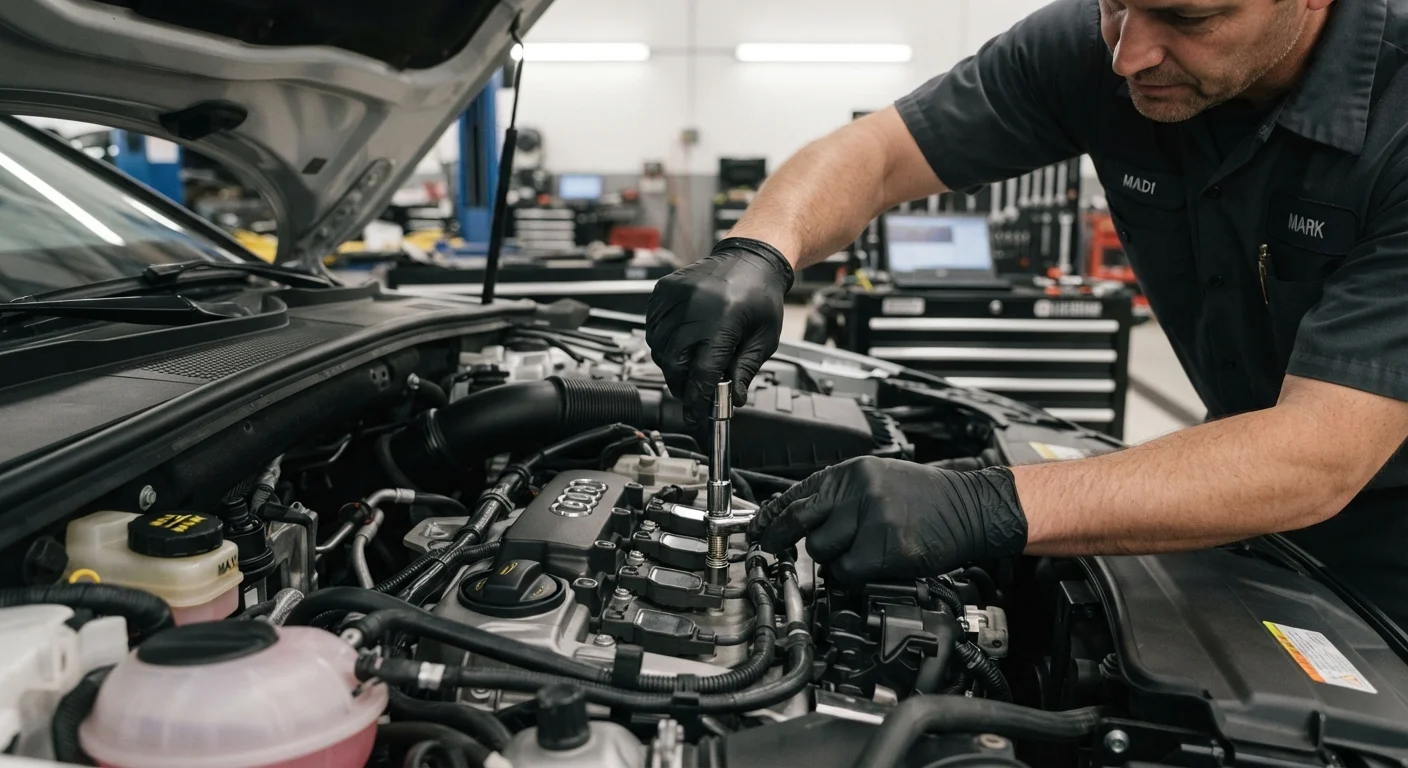
Spark plugs ignite the air-fuel mixture in your engine cylinders. Worn or fouled plugs cause misfires, reduced fuel economy, rough idling, and harder starting - symptoms that drivers often attribute to other problems. Most vehicles with conventional copper plugs require replacement every 30,000 miles, while iridium or platinum plugs in many modern engines can last 60,000 to 100,000 miles. Check your owner's manual for the specific interval. Because the symptoms of worn plugs develop gradually, it's easy to adapt to degraded performance without realizing it.
Worn spark plugs can quietly erode fuel economy before you notice any obvious symptom.
Coolant System Flush
Engine coolant (antifreeze) doesn't just regulate temperature - it also contains additives that inhibit corrosion inside the cooling system. Over time, those additives deplete and the coolant becomes acidic, which can attack metal components including the water pump and radiator. A coolant flush replaces old fluid and restores protective properties. Intervals vary widely by vehicle - some manufacturers specify every two years, others every five or more. Low or neglected coolant is one of the leading causes of engine overheating, which can result in serious, costly damage. See how to check your coolant level between scheduled flushes.
Degraded coolant becomes acidic and can corrode the very components it's meant to protect.
Transmission Fluid Change
Transmission fluid lubricates and cools the transmission's moving parts. In automatic transmissions it also serves a hydraulic function. As the fluid ages, it breaks down and accumulates debris, which increases friction and wear. Many drivers go years - or the life of the vehicle - without addressing this service, partly because some manufacturers label certain transmissions as having "lifetime" fluid. In practice, many mechanics and independent experts caution that no fluid truly lasts forever, particularly under towing, stop-and-go driving, or high-temperature conditions. Check your manual and discuss your specific driving patterns with a qualified technician.
"Lifetime" transmission fluid is a label, not a guarantee - driving conditions matter enormously.
Cabin Air Filter Replacement
The cabin air filter cleans air flowing into your vehicle's interior through the HVAC system, trapping dust, pollen, and other particulates. A clogged filter reduces airflow, makes the climate system work harder, and can noticeably degrade air quality inside the car - a real concern for passengers with allergies or respiratory sensitivities. Most manufacturers suggest replacement every 15,000 to 25,000 miles, though driving in dusty or high-pollution environments may warrant more frequent changes. This is one of the more accessible DIY tasks on most vehicles; consult your manual for location and procedure, or have a technician handle it during a routine service visit.
A blocked cabin air filter forces your HVAC system to work harder while delivering dirtier air.
Brake Fluid Replacement
Brake fluid is hygroscopic, meaning it absorbs moisture from the surrounding environment over time. As water content rises, the fluid's boiling point drops - under hard or prolonged braking, this can cause the fluid to vaporize and produce a dangerous loss of braking force known as brake fade. Most manufacturers recommend replacing brake fluid every two years or 30,000 miles, though this varies. Brake fluid condition is rarely discussed at quick-lube stops, and many drivers have never had it changed. For a fuller picture of your braking system, see brake system basics every driver should know.
Water-contaminated brake fluid can boil under heavy use, dramatically reducing stopping power.
PCV Valve Inspection and Replacement
The Positive Crankcase Ventilation (PCV) valve manages combustion gases that escape past pistons into the crankcase. A stuck or clogged PCV valve can cause oil leaks, rough idling, increased oil consumption, and even internal engine damage over time. It's an inexpensive part that typically costs just a few dollars, yet it rarely appears on standard service checklists. Replacement intervals vary by vehicle, but inspection every 30,000 miles is a reasonable general guideline. A mechanic can check its condition during other under-hood services.
A failed PCV valve - often a few dollars to replace - can lead to oil leaks and engine wear.
Serpentine Belt Inspection
The serpentine belt drives multiple engine accessories simultaneously - the alternator, power steering pump, air conditioning compressor, and water pump in many configurations. Modern belts are made from materials that resist visible cracking longer than older designs, which means wear isn't always obvious to the naked eye. If a serpentine belt fails while driving, it can disable steering assist, charging, and cooling all at once. Most manufacturers suggest inspection every 60,000 to 100,000 miles and replacement as needed. Ask a technician to evaluate belt condition as part of any major service interval.
A snapped serpentine belt can disable steering, charging, and cooling simultaneously - without warning.
Track Every Service, Not Just Oil Changes
Keeping a running log of all completed maintenance - including dates and mileage - makes it far easier to identify what's due and helps mechanics give you accurate guidance. It also supports your vehicle's resale value. See how to keep a maintenance log for a simple system that works.
Don't Wait for a Warning Light
The common thread across all seven items above is that they degrade silently. By the time a noticeable symptom appears - a rough idle, a soft brake pedal, an overheating engine - the damage is typically already in progress. Staying ahead of these services is almost always less disruptive and less expensive than reacting after the fact.
If you're unsure where your vehicle stands on any of these, a thorough inspection by a qualified mechanic is a reasonable starting point. You can also consult the complete guide to routine car maintenance for a comprehensive overview of the full maintenance picture. And if you're weighing which tasks to handle yourself versus delegating to a shop, DIY vs. professional maintenance walks through the real trade-offs.