

Key Takeaways
Summary
22 items · 30-60 minutes
Why an Annual Car Ownership Review Matters
Your car is likely one of the largest expenses in your household budget - yet most owners only think about the finances when something goes wrong. An annual review gives you a structured moment to step back and assess whether your vehicle is working for you financially, or quietly working against you.
This checklist covers four core areas: insurance coverage, loan or financing status, maintenance records, and total ownership cost tracking. Together, they form a picture of where you stand and what, if anything, needs attention. For a broader look at every major vehicle expense, see our complete financial guide to car ownership costs.
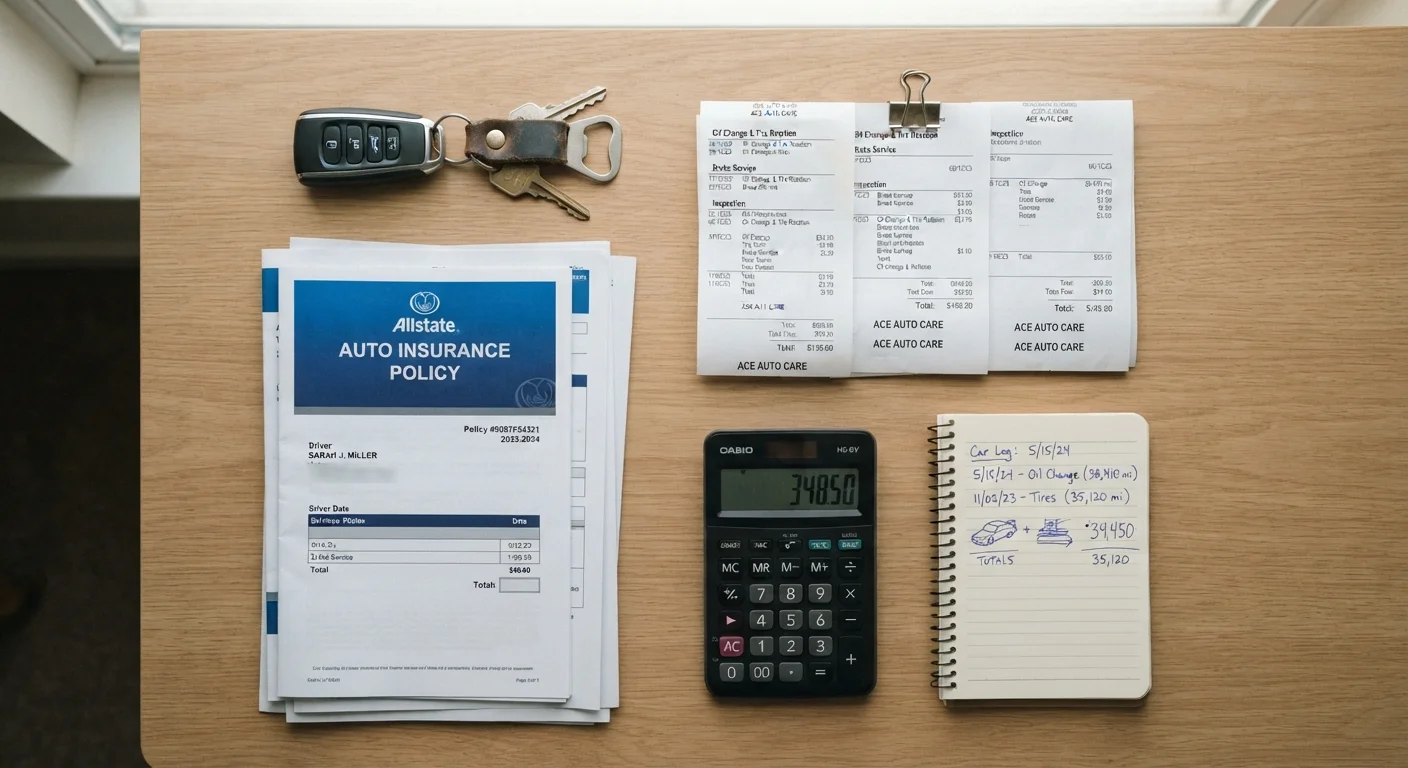
Set aside 30 to 60 minutes in a quiet space. Gather your insurance declarations page, loan statements, any maintenance receipts, and your vehicle's owner's manual.
Insurance Declarations Page
Confirms your current coverage types, limits, deductibles, and listed drivers.
Loan or Financing Statement
Shows your outstanding balance, interest rate, and remaining term.
Vehicle Maintenance Records
Documents completed service work and helps identify upcoming maintenance needs.
Owner's Manual
Contains your manufacturer's recommended maintenance schedule by mileage and time intervals.
Reputable Vehicle Valuation Tool
Provides a current market value estimate to compare against your loan balance or insurance coverage.
Spreadsheet or Budgeting App
Tracks total annual vehicle spending across all categories for an accurate cost-of-ownership picture.
The Checklist
Work through each group at your own pace. Items marked must are non-negotiable for financial safety; should items are strongly recommended; nice-to-have items add depth to your review.
Insurance Coverage
Loan and Financing Status
Maintenance Records and Upcoming Service
Total Cost of Ownership Tracking
Gaps in Insurance Can Be Costly
An outdated or inadequate insurance policy can leave you personally liable for costs your coverage won't pay. If your household circumstances have changed - new driver, new address, change in annual mileage - those updates need to reach your insurer. Coverage terms, exclusions, and eligibility vary by provider and state; always read your actual policy documents and consult a licensed insurance agent for guidance specific to your situation.
Negative Equity Can Limit Your Options
If you owe more on your vehicle than it's currently worth, trading in or selling becomes financially complicated. Rolling negative equity into a new loan increases the amount you finance and the total interest you pay over time. Understanding your equity position before making any vehicle decision is an important first step - consult a financial professional for advice tailored to your circumstances.
Acting on What You Find
Once you've completed the checklist, you'll likely have a short list of follow-up tasks. Prioritize by potential financial impact: an insurance gap or a lapsed registration deadline outweighs an overdue cabin air filter.
If your total annual ownership cost feels high relative to the vehicle's current market value, our article on the honest trade-offs of keeping a car long-term can help you think through whether holding on still makes sense. And if your records are disorganized, keeping good vehicle records explains exactly what to save and how.
For the financial side of this review to connect with your bigger picture, it helps to run it alongside a broader money check-in. Our annual financial check-in checklist covers savings, emergency funds, and goals - a natural companion to this audit.
This article provides general financial and vehicle ownership information for educational purposes only. It is not personalized financial, legal, or insurance advice. Consult a licensed financial adviser, insurance agent, or qualified mechanic for guidance specific to your situation.