

Key Takeaways
Why Distracted Driving Myths Are Dangerous
Distracted driving kills thousands of Americans every year, yet many drivers genuinely believe their habits are safe. That gap between perception and reality is exactly what makes the myths surrounding distraction so dangerous. When a misconception is widely accepted, drivers stop questioning their own behavior - and that false confidence makes crashes more likely, not less.
The evidence on distracted driving is clear and consistent: any activity that pulls your eyes, hands, or mental focus away from the road significantly increases crash risk. Yet common cultural narratives - that hands-free is safe, that experienced drivers can multitask, that a quick glance is harmless - persist despite what research consistently shows.
Understanding where these myths come from, and why they're wrong, is a critical step toward genuine road safety. For a broader look at safe driving practices, see the complete overview of safe driving in America.
Myth
Hands-free devices are safe to use while driving because your hands stay on the wheel.
Fact
Hands-free phone use still creates significant cognitive distraction that impairs driving performance.
The hands-free label addresses only one type of distraction - manual. But distraction has three dimensions: visual, manual, and cognitive. A phone conversation - whether held or wireless - demands sustained mental attention that competes directly with the cognitive demands of driving. Research from the AAA Foundation for Traffic Safety has found that hands-free calls produce measurable impairment in reaction time and hazard detection, comparable in some measures to handheld use. The conversation itself, not just holding the phone, is what creates danger.
Myth
Glancing at my phone for just a second or two is essentially harmless.
Fact
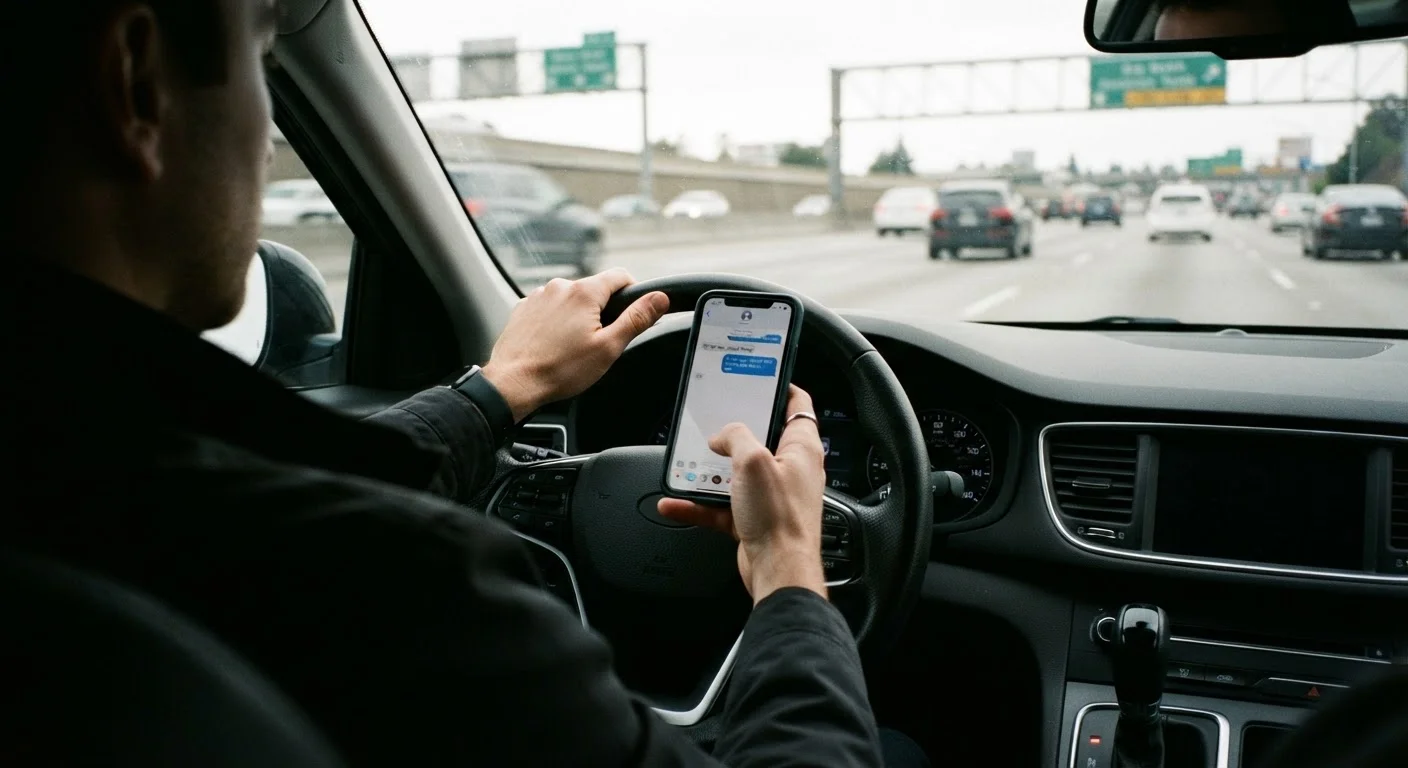
At 55 mph, a five-second glance means traveling roughly the length of a football field without watching the road.
What feels like a brief look can translate into a significant stretch of road covered entirely without visual attention. At highway speeds, even two or three seconds of eyes-off-road time means the driver has no information about lane drift, merging vehicles, braking traffic, or road debris during that interval. The National Highway Traffic Safety Administration (NHTSA) has consistently identified visual distraction - particularly phone use - as a leading factor in rear-end and lane-departure crashes. Brevity doesn't make a glance safe; it only makes it feel that way.
Myth
Experienced drivers can multitask behind the wheel because they've developed the skill over time.
Fact
The human brain does not truly multitask - it rapidly switches attention between tasks, and driving performance suffers either way.
Experience improves automaticity for routine driving tasks - steering, lane-keeping, braking - but it does not expand the brain's capacity to simultaneously process two demanding cognitive activities. When a driver is engaged in a conversation, navigating a complex interchange, or dictating a text, cognitive resources are divided. Research in cognitive neuroscience consistently shows that task-switching, not true parallel processing, is what occurs - and each switch introduces a latency window where the driver is functionally unaware of the road. Experienced drivers are not immune; they are simply more confident, which can itself become a risk factor.
Myth
Voice-to-text and in-car infotainment systems are designed to be safe, so using them while driving is fine.
Fact
In-vehicle voice and touch systems have been shown to create prolonged periods of cognitive and visual distraction.
AAA Foundation research found that some voice-activated systems demanded driver attention for more than 40 seconds to complete a task - a duration that, at typical speeds, covers substantial road distance with degraded awareness. Error correction, system misrecognition, and interface navigation all add time. Automakers have improved these systems over time, but no infotainment technology currently eliminates the cognitive load of operating it while driving. The safest practice remains completing such tasks before the vehicle is in motion or when safely parked.
Myth
If I've driven a route many times before, I can afford to be less attentive because I know the road.
Fact
Familiarity with a route increases autopilot-style driving, which reduces active hazard monitoring and raises crash risk.
Routine routes produce a well-documented phenomenon sometimes called "highway hypnosis" - a state where the driver's procedural memory handles basic navigation while conscious attention drifts. This makes familiar roads particularly dangerous when unexpected events occur: a child in the road, a sudden brake-light cascade, or a debris field. Drivers on familiar routes also tend to underestimate their own inattentiveness after the fact, reinforcing the belief that the route is safe. Active scanning and consistent attention matter regardless of how well you know the road.
The Data Behind Distraction
Distraction-related crash data is widely acknowledged to be an undercount. Because drivers rarely admit to phone use after a collision - and because physical evidence is often unavailable - official figures likely represent a fraction of actual distraction-involved crashes. That means the risk is even higher than statistics suggest.
~3,500
Annual U.S. distraction-related traffic deaths
The NHTSA reports approximately 3,500 fatalities per year attributed to distracted driving, with total figures considered an undercount due to underreporting.
4-5 sec
Average time eyes leave road during a text
NHTSA research indicates that sending or reading a text message diverts a driver's eyes from the road for an average of four to five seconds.
2.2×
Crash risk increase from phone use while driving
Studies cited by NHTSA suggest drivers using a handheld phone while driving are approximately 2.2 times more likely to be involved in a crash.
Cognitive distraction - where your eyes are on the road but your mind is focused elsewhere - is particularly deceptive because it feels safe. Hands-free calls fall squarely into this category. The brain's capacity to process a conversation competes directly with the visual and spatial processing required for driving. This is not a matter of skill or experience; it reflects fundamental limits of human attention. For a parallel look at another underestimated hazard, see driver fatigue and why it feels like alertness.
Cognitive Distraction Has No Safe Threshold
There is no level of phone use - handheld or hands-free - that research has found to be without impact on driving performance. Even brief, voice-only interactions create measurable gaps in hazard detection. The only universally safe approach is to keep phone interactions for when the vehicle is parked.
New and experienced drivers alike are vulnerable. Passengers, infotainment screens, and even deep thought about a conversation can all constitute meaningful distraction. Understanding that distraction isn't limited to phone use is essential to changing behavior. Explore how passengers specifically influence risk in our article on driving with passengers.
Tackling distraction honestly also means revisiting other overconfident driving habits. For instance, tailgating is far more dangerous than most drivers acknowledge, and distraction compounds that risk significantly by reducing reaction time further.