

Key Takeaways
Tailgating
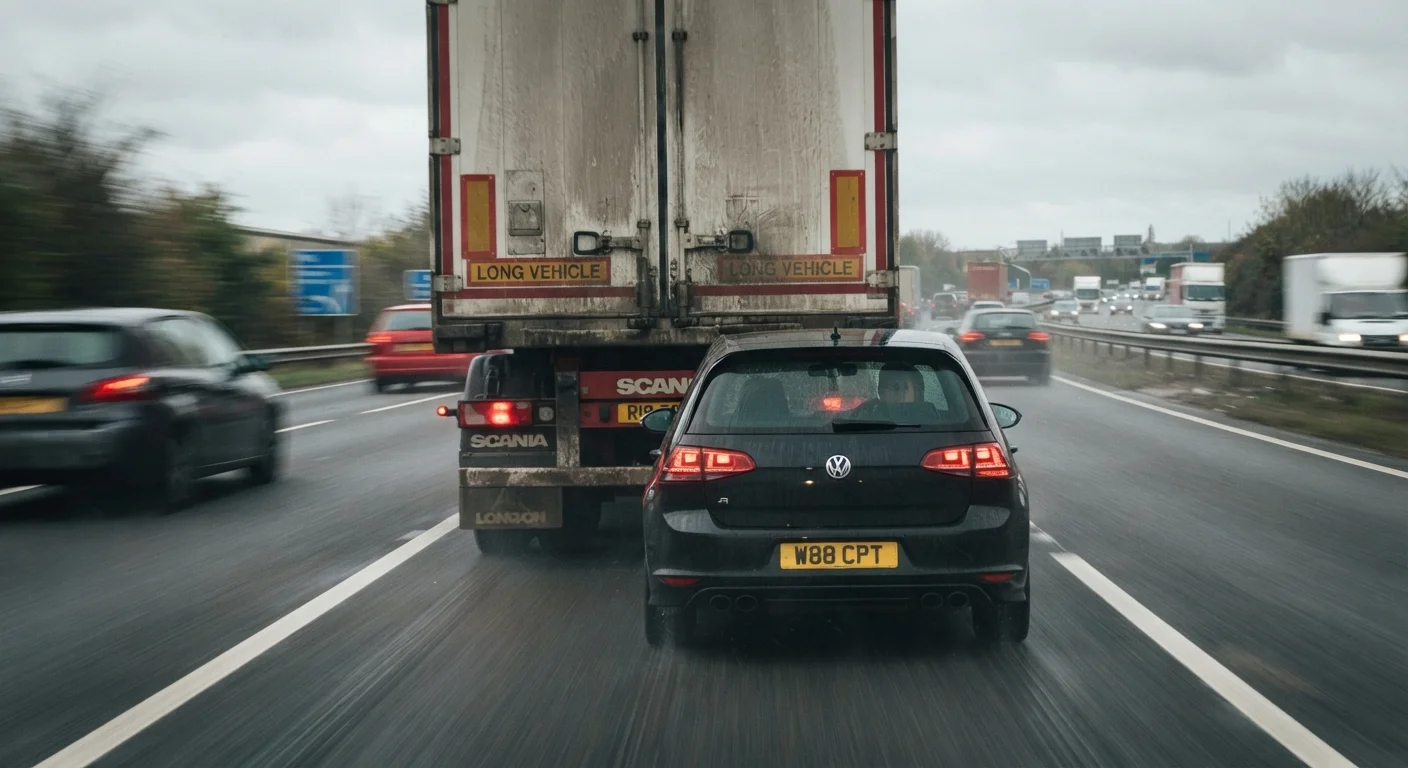
Tailgating means following another vehicle too closely - leaving less space between your car and the one in front than you would need to stop safely if traffic suddenly slowed or stopped. It is one of the most common dangerous driving behaviors on American roads, contributing to thousands of rear-end collisions every year. The term applies whether it happens at highway speeds or in slow city traffic.
Safe following distance is typically measured using the 'three-second rule' under normal conditions - the gap between you and the vehicle ahead should take at least three seconds to cover. In adverse weather or at higher speeds, that minimum increases significantly.
The Physics Behind the Risk
Most drivers instinctively know that following too closely is risky. Far fewer appreciate just how little room for error actually exists at typical highway speeds.
At 60 mph, a vehicle travels approximately 88 feet every second. A driver with an average reaction time of 1.5 seconds will cover more than 130 feet before their foot even reaches the brake pedal. From that point, braking distance on dry pavement adds another 180 feet or more depending on vehicle condition, tire quality, and road surface. Total stopping distance can easily exceed 300 feet - nearly the length of a football field.
Tailgating collapses that margin to nearly zero. A driver following just one car length behind at highway speed has no realistic ability to stop before a collision if the vehicle ahead brakes suddenly. This is not a judgment about skill - it is a straightforward consequence of physics.
~29%
Share of all U.S. crashes that are rear-end collisions
Rear-end crashes consistently rank as one of the most common crash configurations tracked by the National Highway Traffic Safety Administration (NHTSA).
130+ ft
Distance covered during reaction time at 60 mph
At 60 mph with a 1.5-second reaction time, a vehicle travels over 130 feet before braking begins - not including actual stopping distance.
3 seconds
Minimum recommended following distance
The three-second rule is the standard minimum under dry, normal-visibility conditions recommended by driving safety authorities across the U.S.
Weather compounds the problem significantly. Wet roads dramatically extend stopping distances, and the same gap that felt adequate on a dry summer afternoon can become wholly insufficient in rain or cold. Posted speed limits reflect ideal conditions - not the reduced traction of a wet or icy surface.
Why Drivers Tailgate Without Realizing It
Tailgating is rarely an act of conscious aggression. More often, it emerges from inattention, pace-matching, or a distorted perception of speed and distance.
On a busy highway, drivers naturally fall into the rhythm of surrounding traffic. When everyone is moving at 70 mph and gaps are tight, the spacing can start to feel normal - even safe. It is not. The relative calm of steady highway flow masks how quickly conditions can change when a vehicle ahead brakes, swerves, or blows a tire.
Recalibrate Your Gap on Every Trip
Following distance needs active attention - it is easy to let it shrink gradually over the course of a drive without noticing. Make it a habit to check your gap against a roadside marker every few minutes, especially when traffic density increases or conditions change. This simple recalibration takes less than five seconds and can make a significant difference.
Distraction plays a compounding role. A driver whose attention drifts - even for two seconds - will close additional distance on the car ahead without noticing. Common distracted driving misconceptions often lead drivers to underestimate exactly this kind of incremental risk accumulation.
Fatigue is another factor. Night driving introduces fatigue and reduced visibility that makes maintaining consistent spacing harder. Tired drivers are slower to notice drift and slower to respond when they do.
What Safe Following Distance Actually Looks Like
The three-second rule remains the most practical and widely taught method for gauging safe following distance. The technique is simple: when the rear of the vehicle ahead passes a fixed marker, count three full seconds before your front bumper reaches the same point. If you arrive sooner, you are too close.
Three seconds is a minimum under good conditions. Safety experts and many state driver handbooks recommend four to six seconds in rain or fog, and even longer on snow or ice. Drivers towing a trailer, operating a large vehicle, or traveling at sustained highway speeds should default to the longer end of that range.
It is also worth noting that following distance affects more than just your stopping ability. A larger gap gives you more time to scan the road ahead, identify hazards early, and make smoother decisions. It reduces the cognitive pressure of constant speed-matching and gives you flexibility if a lane change becomes necessary - a skill where many drivers already make critical errors.
This article is for general informational purposes only. Always follow posted traffic laws and consult your state's driver handbook for specific guidance applicable to your jurisdiction.