

Key Takeaways
Why Food Decisions Drain Your Mental Energy
Research in cognitive psychology has consistently shown that the quality of human decision-making tends to decline as the total number of choices made in a day accumulates - a pattern commonly called decision fatigue. Food is one of the most decision-dense areas of daily life. Estimates from nutrition behavior research suggest the average adult makes well over 200 food-related decisions each day, from what to eat for breakfast to whether to accept a colleague's offer of a snack.
By evening - when willpower and executive function are most depleted - the brain defaults to the path of least resistance: convenience foods, skipped meals, or impulsive choices driven more by mood than genuine hunger. This isn't a character flaw; it's a predictable consequence of cognitive load. The practical solution isn't stricter self-discipline. It's reducing the number of decisions that need to be made in the first place.
That's exactly what a well-constructed meal plan does. Rather than asking yourself what should I eat tonight? at 6 p.m. after a full day, the answer is already settled. This shift - from reactive to proactive - is where the real benefit of meal planning lives. For a broader look at how your current eating patterns may be working against you, see our nutrition habits audit.
Planning Reduces Fatigue, Not Flexibility
A good meal plan is a default, not a contract. If something changes mid-week and you swap Tuesday's dinner for Wednesday's, the plan has still done its job - the decision was made in advance and required minimal effort to adjust. Rigidity is not the goal; reducing the daily cognitive burden is.
How to Build Your Weekly Meal Plan
The following steps are designed to be completed once a week, ideally on a consistent day. Most people find Sunday or Saturday morning works well, but the right day is whichever you can protect reliably. Budget 30-60 minutes for your first attempt; the process typically shortens to 15-20 minutes once it becomes routine.
What you will need
Map your week before you plan a single meal
Open your calendar and identify the realistic cooking window for each evening. Mark nights with late commitments, social plans, or heavy workloads as low-effort nights - these need meals that require ten minutes or less, such as leftovers, simple grain bowls, or pre-cooked proteins. Reserve more involved recipes for days when you genuinely have time and energy.
Choose two or three anchor ingredients to batch-cook
Select two or three versatile proteins or grains - such as cooked chicken thighs, a pot of lentils, or a batch of brown rice - that can serve as the base for multiple meals across the week. Anchor ingredients do the heavy cognitive lifting: once they're cooked, individual meals become simple assembly rather than full cooking projects.
Assign specific meals to specific days
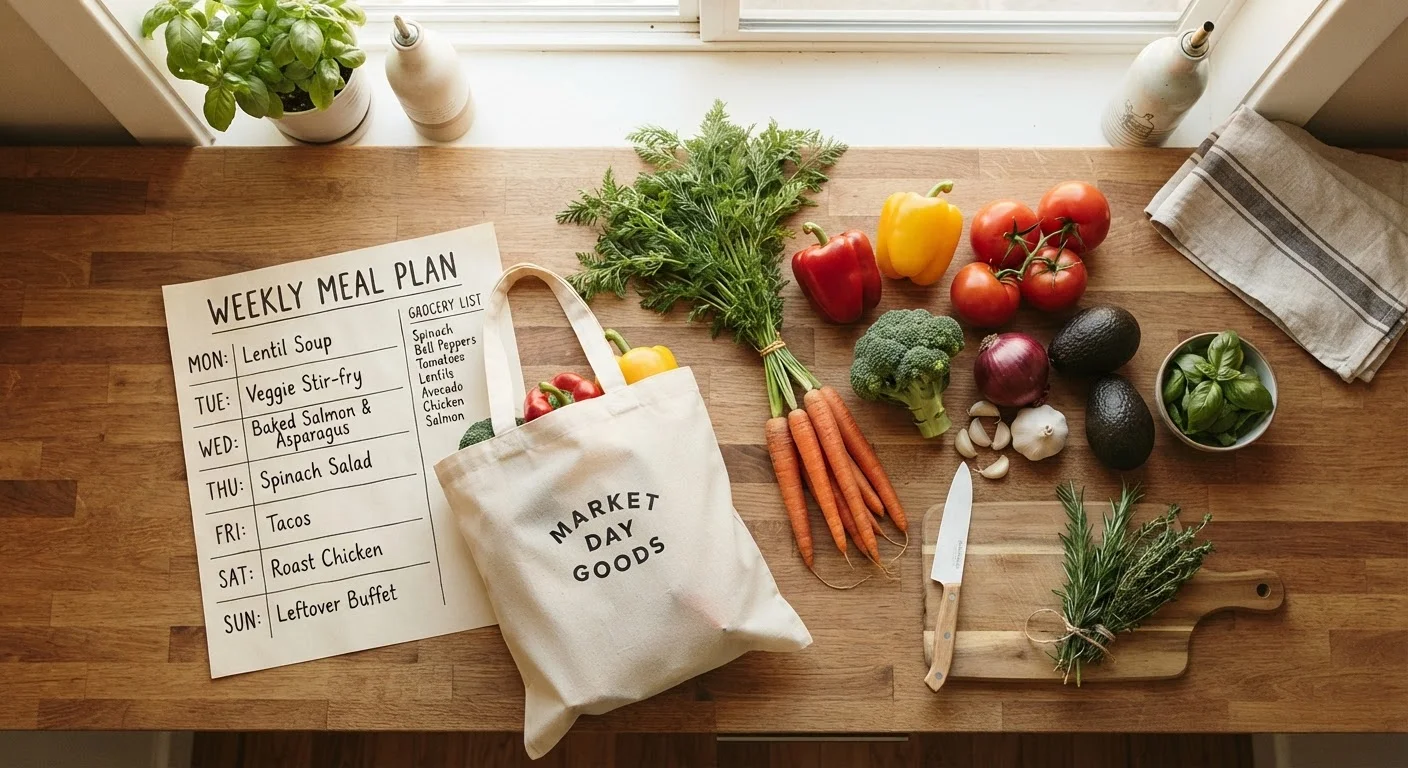
Using your low- and high-effort day map, assign meals rather than leaving them flexible. Write down breakfast, lunch, and dinner for each day - even if some entries are as simple as 'leftovers from Monday.' The act of writing it down is what converts intention into a decision already made, removing the evening scramble entirely.
Build your shopping list directly from the plan
Go through your meal plan day by day and list every ingredient needed, then cross-reference against what you already have in your pantry, fridge, and freezer. Organize your final list by grocery store section (produce, protein, dry goods) to reduce time spent backtracking through aisles. A plan without a corresponding shopping list creates a gap between intention and execution.
Do a brief weekly review and adjust
At the end of each week, spend five minutes reviewing what worked and what didn't. Did any planned meals get skipped? Were certain recipes too time-consuming for the night assigned? Use these observations to refine next week's plan. Over time, you'll build a personal library of reliable, tested meals that require almost no planning effort.
Once your plan is set, the logical next step is translating it into a grocery list. A well-structured list does more than remind you what to buy - it reduces store time and limits impulse spending. Our guide on building a shopping list that actually works walks through that process in detail.
Common Pitfalls and How to Avoid Them
The most common reason meal planning fails is that people plan for an idealized version of their week rather than the actual one. If Tuesday evenings involve a child's activity until 7 p.m., planning a 45-minute recipe for Tuesday is setting yourself up to abandon the plan entirely.
Don't Plan for the Week You Wish You Had
Planning aspirational meals for a realistically hectic week is one of the fastest ways to abandon meal planning altogether. If your schedule is genuinely unpredictable, lean heavily on simple, repeatable meals and leave one or two planned 'wildcard' nights where a backup option - such as eggs, canned beans, or frozen vegetables - is already accounted for. A modest plan you execute beats an ambitious one you don't.
A second pitfall is over-planning variety. Committing to seven completely different dinners per week is demanding - both in grocery cost and cooking effort. A more sustainable approach is planning for four or five distinct meals and allowing for one or two repeats or deliberate leftover nights.
Finally, don't conflate meal planning with dietary perfectionism. The goal is consistency and reduced cognitive load, not nutritional optimization to the gram. If a planned meal turns out to be simpler than you intended, that's a success, not a failure. For context on why maintaining any healthy eating pattern over time is genuinely difficult, our article on why a nutritious diet is harder to maintain than to start explores those barriers honestly.
If time pressure rather than decision fatigue is your primary obstacle, the strategies in eating well on a tight schedule complement the planning approach outlined here.
This article is for general informational and educational purposes only and is not a substitute for personalized advice from a registered dietitian or qualified healthcare professional. Individual nutritional needs vary; consult a qualified professional for guidance specific to your health situation.