

Key Takeaways
Why Most Shopping Lists Fall Short
Most people's shopping lists are a handful of words jotted on a receipt or typed in a rush. That's better than nothing - but it's also why the average shopping trip still produces several unplanned purchases. A list that's vague, incomplete, or written at the wrong moment doesn't give you much protection against the many cues designed to expand your cart.
Stores are deliberately laid out to influence what you buy. Understanding how retail layout works is one piece of the puzzle - but a well-built list is your most reliable counter-measure. The goal isn't to follow a rigid script; it's to walk in knowing what you need and why, so you can make faster, more confident decisions.
The practices below are practical improvements to how most people already approach list-making. None require special tools or apps - just a bit of intentional structure applied before you leave home.
Best Practices for Building a List That Holds Up
These approaches address the most common ways a shopping list breaks down - timing, organization, and specificity. Used consistently, they reduce the mental load of shopping and make it easier to stay within a planned budget.
Build your list at a consistent time each week, not right before you leave.
Lists written in the moment - especially when you're hungry or in a hurry - tend to be incomplete or inflated. A weekly rhythm, such as reviewing your kitchen and pantry every Sunday evening, gives you a clear-eyed view of what you actually need. This reduces both under-buying (which leads to extra trips) and over-buying.
Organize your list by store section, not by the order you thought of items.
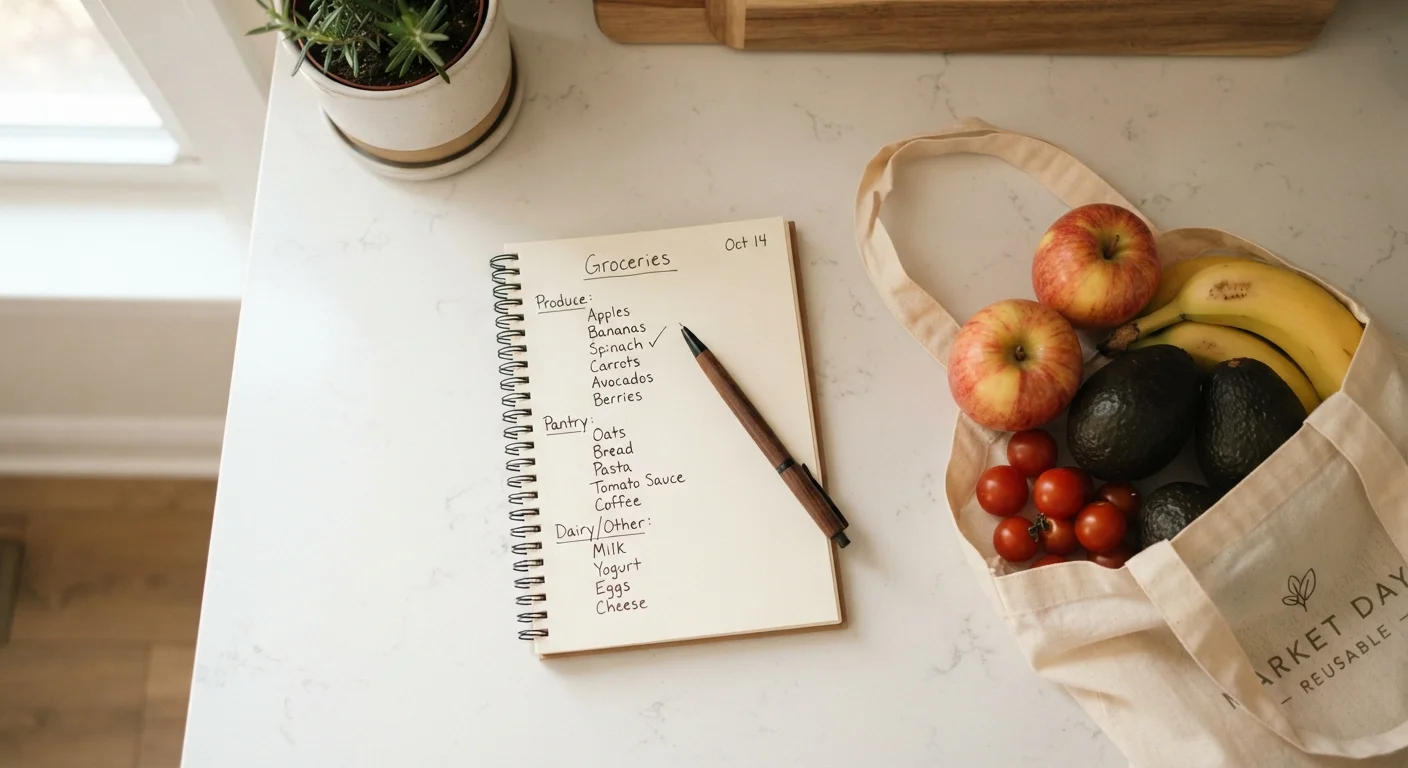
A list grouped by category - produce, dairy, dry goods, frozen - mirrors the physical layout of most stores. This reduces backtracking, limits time spent in high-impulse areas like center aisles, and makes checkout faster. Research in retail behavior consistently shows that more time in-store correlates with more unplanned spending.
Flag items as needs versus wants before you get to the store.
Not every item on a list deserves equal priority. Marking certain items as optional - or noting a budget ceiling - gives you a fast decision framework when you're standing in an aisle and something catches your eye. This distinction also makes it easier to trim your cart if the total is running high.
Note the approximate quantity and unit you need, not just the item name.
Vague entries like 'chicken' or 'soap' leave you making judgment calls in the store, which is where impulse sizing and upsells tend to happen. Being specific - '2 lbs chicken thighs' or '1 bar hand soap' - keeps you anchored to actual need rather than in-the-moment estimation.
Review the list one final time before checkout, not before leaving the house.
A quick check while your cart is full - but before you're at the register - gives you one last chance to remove anything that slipped in unplanned. This is a lower-stress moment to make trade-offs than during the shopping itself, and it's easier to return an item to a shelf than to request a refund later.
For a broader look at how small shopping habits compound over time, the patterns that quietly drain budgets are worth reviewing alongside these practices.
Quick Wins You Can Apply Before Your Next Trip
You don't need to overhaul your system all at once. These immediate actions each take under five minutes and reduce unplanned spending on your very next shopping trip.
Lists Work for All Shopping, Not Just Groceries
The same principles that make a grocery list effective apply to clothing, home goods, and electronics purchases. Before any shopping trip, writing down what you actually need - and why - creates a useful filter. If you're building out a professional wardrobe, for example, a pre-written list of specific gaps helps you avoid redundant purchases. See practical wardrobe-building strategies for a category-specific application of this approach.
Format: Paper, App, or Something Else
There's no universally superior format for a shopping list - the right one is whichever you'll actually maintain. That said, each option has real trade-offs worth knowing.
Paper lists are fast to write and easy to hand to someone else in the store. They don't require battery life or signal. Their limitation is that they're easy to lose and harder to share remotely.
App-based lists can be shared in real time, persist across shopping trips, and often allow category organization. If you shop with a partner or family member, a shared list app reduces duplicate purchases. The downside: some people find phones in a store add distraction rather than focus.
Hybrid approaches - keeping a running digital list during the week and printing or transcribing it before shopping - combine the convenience of always-available capture with the focused simplicity of paper in-store.
Whatever format you choose, the structure of the list matters more than the medium. A well-organized list on a napkin will outperform a disorganized one in the most sophisticated app. If you're also navigating the in-store versus online question, the trade-offs between both channels affect how you build and use your list, too.
“The supermarket is one of the most carefully engineered retail environments in existence. Without a list, shoppers are essentially navigating on the store's terms, not their own.”
— Paco Underhill, Retail environment researcher and author of 'Why We Buy'
Connecting Your List to a Larger Spending Plan
A shopping list doesn't exist in isolation - it works best when it's connected to a broader sense of what you're spending and why. If you haven't yet built a baseline for your household shopping budget, foundational budgeting concepts for shoppers offer a useful starting point.
For anyone looking to stretch what they already have, practical in-store strategies complement a strong list-building habit. And before making any larger purchase - planned or not - a pre-purchase checklist is a practical next step to avoid decisions you'll regret.
A list is a planning tool. The more consistently you use one, the more accurately it reflects your real needs - and the less mental energy each shopping trip requires.