

Key Takeaways
Option A
Animal Protein
The complete, highly bioavailable benchmark.
Best for: Those prioritizing complete amino acid profiles and efficient protein absorption in fewer servings.
Option B
Plant Protein
The fiber-rich, nutrient-dense alternative.
Best for: Those seeking protein alongside fiber, phytonutrients, and a lower environmental footprint.
If you want the most protein per bite with minimal meal planning
Animal Protein
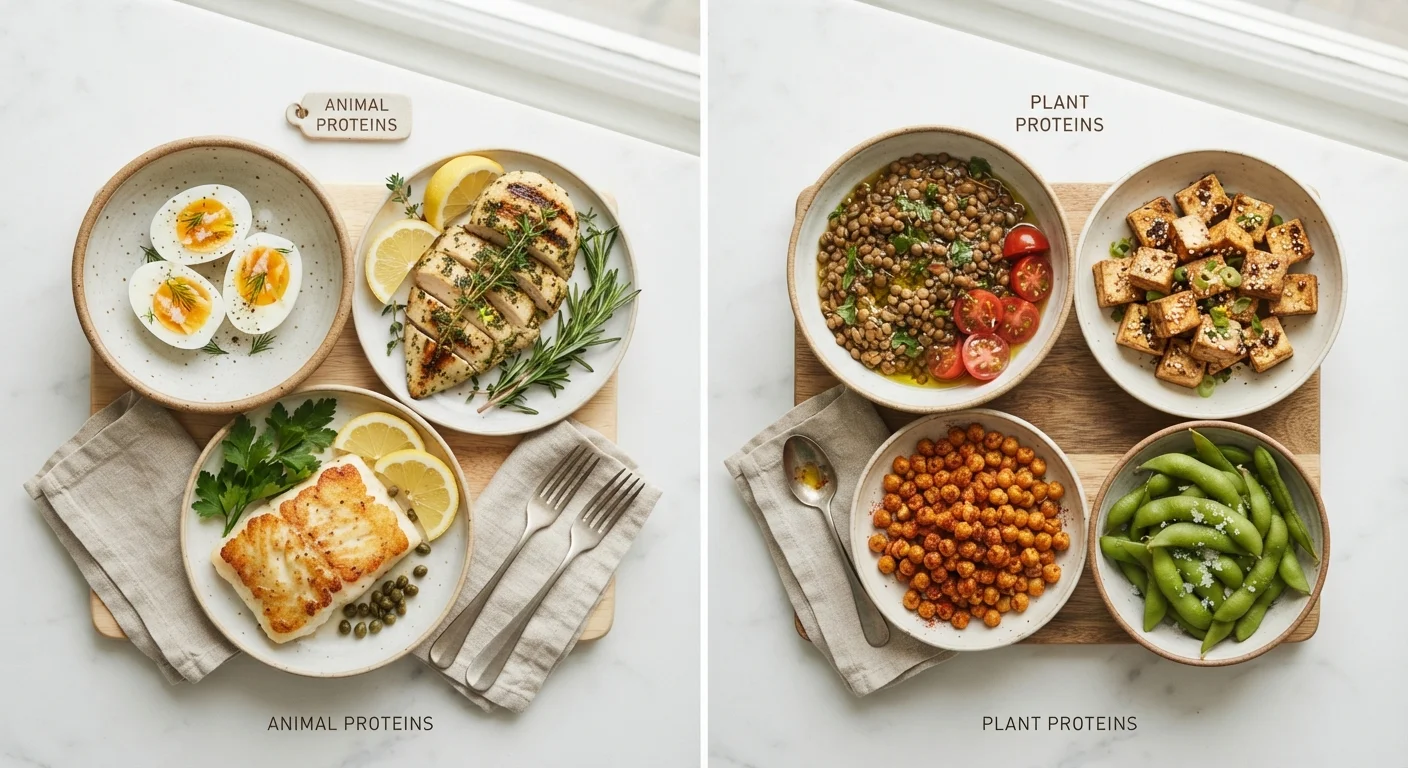
Animal sources like eggs, poultry, and fish pack complete amino acid profiles at high bioavailability, making it easier to meet daily protein targets without combining multiple foods.
If you want protein alongside fiber, phytonutrients, and heart-healthy fats
Plant Protein
Legumes, tofu, edamame, and whole grains deliver protein packaged with fiber and beneficial plant compounds that animal foods typically lack.
If you follow a vegetarian or vegan lifestyle
Plant Protein
A varied plant-based diet that includes legumes, soy foods, nuts, and whole grains can meet protein needs fully without relying on animal products.
If you are managing muscle maintenance or recovery with specific amino acid needs
Animal Protein
Animal proteins - particularly those high in leucine such as dairy and eggs - have well-established support in the research literature for muscle protein synthesis.
If you want to reduce chronic disease risk while still eating some animal foods
Animal Protein
Selecting lean or minimally processed animal proteins (fish, poultry, eggs, low-fat dairy) alongside ample plant foods represents the balanced approach supported by most dietary guidelines.
What Makes a Protein 'Complete' or 'Incomplete'?
Protein is made up of amino acids - the building blocks your body uses to repair tissue, produce enzymes, and regulate hormones. Of the 20 amino acids, nine are considered essential because the body cannot synthesize them on its own; they must come from food. Understanding this is foundational to comparing protein sources. For a deeper primer, see our plain-English guide to macronutrients.
Animal proteins - including meat, poultry, fish, eggs, and dairy - are generally described as complete proteins because they contain all nine essential amino acids in proportions that closely match human requirements. Plant proteins, with notable exceptions like soy and quinoa, typically fall short in one or more essential amino acids, earning the label incomplete. However, this framing can be misleading: eating a varied plant-based diet across the day naturally supplies the full amino acid spectrum.
The 'Incomplete' Label Can Mislead
Calling a plant protein 'incomplete' doesn't mean it's nutritionally deficient or inadequate on its own. It simply indicates that one or more essential amino acids is present in a lower quantity relative to human needs. Major health organizations, including the Academy of Nutrition and Dietetics, affirm that well-planned plant-based diets can meet all protein requirements across the lifespan. The key word is 'well-planned' - variety and adequate total intake matter.
Bioavailability: How Much Protein Actually Gets Used?
Protein quality is measured not only by amino acid content but by bioavailability - how efficiently the digestive system breaks down and absorbs the protein. A commonly referenced metric is the PDCAAS, updated in recent years to the DIAAS by the Food and Agriculture Organization.
| Criterion | Animal Protein | Plant Protein |
|---|---|---|
| Amino acid completeness | Complete (all 9 essential AAs) | Often incomplete; soy/quinoa are exceptions |
| Digestibility (DIAAS score) | Generally high (0.9-1.1+) | Generally moderate (0.5-0.9) |
| Dietary fiber | None | Significant (legumes, grains) |
| Vitamin B12 | Naturally present | Not naturally present; supplement or fortified foods needed |
| Heme iron | Present (especially red meat) | Absent; non-heme iron only |
| Saturated fat | Variable; higher in red/processed meat | Generally low (except coconut, palm) |
| Phytonutrients | Absent | Rich and varied |
| Environmental footprint | Generally higher | Generally lower |
Animal proteins - eggs and dairy in particular - consistently score at or near the top of these scales. Many plant proteins score lower, partly because plant cell walls and compounds like phytic acid can reduce digestibility. Cooking, soaking, sprouting, and fermentation are established methods that measurably improve the bioavailability of plant protein sources.
What Else Comes Along for the Ride?
Protein never arrives alone - its food matrix shapes your overall nutritional intake. This matters when comparing sources.
Animal protein foods deliver vitamins B12, D, and heme iron (a highly absorbable form), along with zinc and omega-3 fatty acids (especially in fatty fish). Some animal sources - particularly red and processed meats - also carry saturated fat and cholesterol; research associations between high processed-meat intake and cardiovascular risk are well-established in nutritional epidemiology, though individual context matters.
Plant protein foods contribute dietary fiber, folate, magnesium, and a range of phytonutrients and antioxidants. Legumes are among the best studied foods for supporting gut microbiome diversity. However, plant sources can be lower in vitamin B12, zinc, and heme iron, which is why people relying primarily on plant proteins benefit from attention to these nutrients - and from reviewing their dietary pattern with a healthcare provider.
For a broader view of how food quality affects nutrition beyond macronutrients, our article on whole foods versus processed foods offers useful context.
~30%
Higher iron absorption from heme vs. non-heme sources
The National Institutes of Health notes that heme iron from animal foods is absorbed at roughly 15-35%, compared to 2-20% for non-heme iron from plant foods, depending on dietary context.
1 in 3
Americans not meeting daily protein recommendations
USDA dietary survey data suggest a notable portion of certain demographic groups - including older adults - fall short of recommended protein intakes regardless of source.
~25g
Protein per 3 oz serving of cooked chicken breast
USDA FoodData Central lists cooked chicken breast as one of the most protein-dense common foods, offering a useful benchmark when comparing serving sizes across sources.
Practical Meal Planning: Making Either Approach Work
Both protein strategies are achievable with a bit of planning. Key practical considerations:
- Daily total protein needs vary by age, activity level, and health status. General population guidelines (such as those from the Dietary Reference Intakes) provide reference ranges, but individualized needs differ - consult a registered dietitian for personalized targets.
- Plant protein combining doesn't require meticulous matching at every meal. Eating a variety of legumes, whole grains, nuts, and seeds throughout the day reliably covers essential amino acids.
- Soy foods (edamame, tofu, tempeh) are among the few plant sources that match animal protein quality and are supported by a substantial body of safety research at typical dietary amounts.
- Mixed approaches - such as the eating patterns examined in our Mediterranean and plant-based diet comparison - often combine modest amounts of animal protein with abundant plant foods, a pattern associated with favorable health outcomes in population research.
This article provides general nutrition information and is not a substitute for personalized medical or dietary advice. Speak with a qualified healthcare professional or registered dietitian before making significant changes to your diet, especially if you have a medical condition.