

Key Takeaways
Why Your Water Bill Is the First Line of Defense
A hidden water leak rarely announces itself dramatically. More often, it shows up as a nagging monthly bill that's a bit higher than expected - easy to rationalize as a rate increase or a longer shower here and there. But unexplained water loss compounds quickly. Even a slow drip from a faulty supply line can waste thousands of gallons over a billing cycle, adding real cost to your household budget. Understanding how to read your bill turns a routine statement into a diagnostic tool.
Water bills in the U.S. typically include a base service charge (fixed, regardless of usage) plus a volumetric charge tied to actual consumption. The consumption figure - expressed in CCF or gallons - is the number to watch. Charges can also tier upward as usage climbs, meaning a leak that pushes you into a higher usage bracket costs more per unit on top of the raw volume. This is similar in principle to the way routine spending habits quietly push budgets off course - the damage is incremental but cumulative. For a broader look at how small recurring costs affect your finances, the budgeting basics hub offers useful framing.
What you will need
Where Hidden Leaks Usually Hide
The most common sources of silent residential water loss are toilets with worn flapper valves, dripping faucets, and slow leaks at supply line connections. A toilet flapper that no longer seals properly can leak 200 gallons or more per day - entirely invisibly, since the water flows directly into the bowl drain. Outdoor irrigation systems are another frequent culprit, particularly after winter if lines were not properly winterized.
Less obvious sources include pinhole corrosion in older copper pipes, failing shut-off valves under sinks, and slow seepage around water heater fittings. These tend to cause moisture damage before they become visible drips. Certain everyday habits can accelerate this kind of wear; our companion piece on habits that shorten plumbing lifespan covers the preventive side of this problem.
Build a 12-Month Usage Baseline
Save or photograph your bill each month for a full year. Seasonal variation is normal - lawn irrigation in summer, for instance, raises usage legitimately. A true anomaly stands out against the same month in a prior year, not just the previous billing cycle. This habit also makes hidden costs easier to spot, much like the savings traps that quietly erode financial progress.
Once you've identified what to look for, the step-by-step process below walks through a systematic investigation - starting with your bill and ending with a clear decision on next steps.
Recent water bills (3-12 months)
Establish a usage baseline so you can identify abnormal spikes in consumption.
Flashlight
Illuminate the water meter box and inspect dark utility areas for drips or moisture.
Dye tablets or food coloring
Drop into toilet tanks to detect silent flapper leaks without disassembling anything.
Notepad or phone notes app
Record meter readings at timed intervals during the shut-off test.
Leak detection strips or moisture meter
Detect dampness behind walls or under cabinets where visual inspection is limited.
Decode the usage figures on your bill
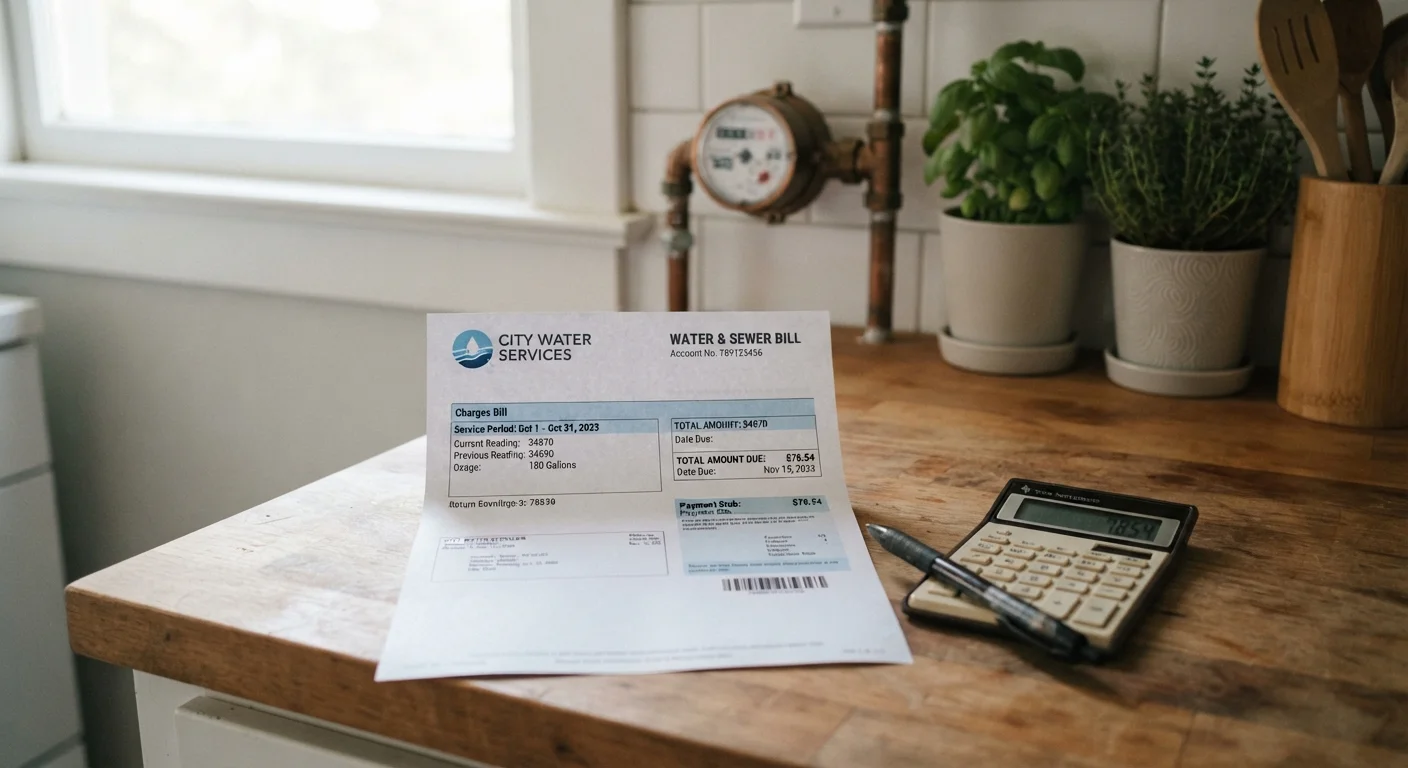
Find the section of your bill labeled Usage, Consumption, or Volume. Most U.S. utilities measure in CCF (hundred cubic feet) or gallons. One CCF equals roughly 748 gallons. Note the current period's figure and compare it directly to the same billing period from the prior year - seasonal habits make year-over-year comparison more meaningful than month-to-month. An increase of 20% or more with no change in household size or routine warrants investigation.
Check for a leak indicator symbol on the bill
Many water utilities now print a leak alert or flag symbol directly on the bill when their system detects continuous flow over a 24-hour period. Look for this near the usage section or in a separate notices box. If your utility offers an online portal, log in and check whether usage data is available day by day - a flat, non-zero baseline usage at 2-4 a.m. (when no one is awake) is a reliable leak signal.
Perform the water meter shut-off test
Turn off every water-using fixture and appliance in the home - faucets, dishwasher, washing machine, ice maker, irrigation system. Locate your meter and write down the exact reading, including the low-flow indicator (a small dial or triangle that spins with even minimal flow). Wait 15-30 minutes without using any water. Return and re-read the meter. If any dial has moved or the reading has changed, water is flowing somewhere it shouldn't be.
Test toilets for silent leaks
Toilets account for a large share of hidden household water loss. Remove the tank lid and drop two or three dye tablets - or a few drops of food coloring - into the tank. Do not flush. Wait 10 minutes, then check the toilet bowl. If color appears in the bowl, the flapper valve is leaking and needs replacement. This is a straightforward DIY fix for most homeowners. Repeat for every toilet in the home.
Inspect visible plumbing and fixtures
Walk through the home and check under every sink cabinet for moisture, staining, or warped cabinet floors. Examine the base of each toilet, the connections behind washing machines, and any exposed supply lines. In the basement or utility room, look for drips along the water heater connections and the main supply line. Note that your water heater setup - whether rented or owned - can affect where maintenance responsibility falls; see our guide on water heater ownership decisions for context.
Document findings and decide on next steps
Record everything: meter readings and times, which toilets failed the dye test, any damp areas found, and photos of visible issues. If you identified the source, repair or arrange repair promptly. If the meter test confirmed a leak but you cannot locate the source visually, share your documentation with a licensed plumber - it shortens diagnostic time. For leaks behind walls or under slabs, a plumber with leak detection equipment is required; this is not a DIY scenario.
Don't Ignore a Persistent High Bill
A water bill that stays elevated across two or more billing cycles - even after you've reduced usage - almost always points to a leak rather than a billing error. Left unaddressed, slow leaks can cause structural damage, mold growth, and significant water waste over time. If your investigation doesn't pinpoint the source, contact a licensed plumber promptly.