

Key Takeaways
Why Grease Feels Safe to Pour - But Isn't
Fresh out of the pan, cooking grease flows like water. It's easy to assume a quick rinse sends it harmlessly on its way. But within seconds of entering a cooler drain pipe, fats begin to transition from liquid back to solid. Bacon drippings, chicken fat, and even plant-based oils like coconut oil all behave this way at room temperature or below.
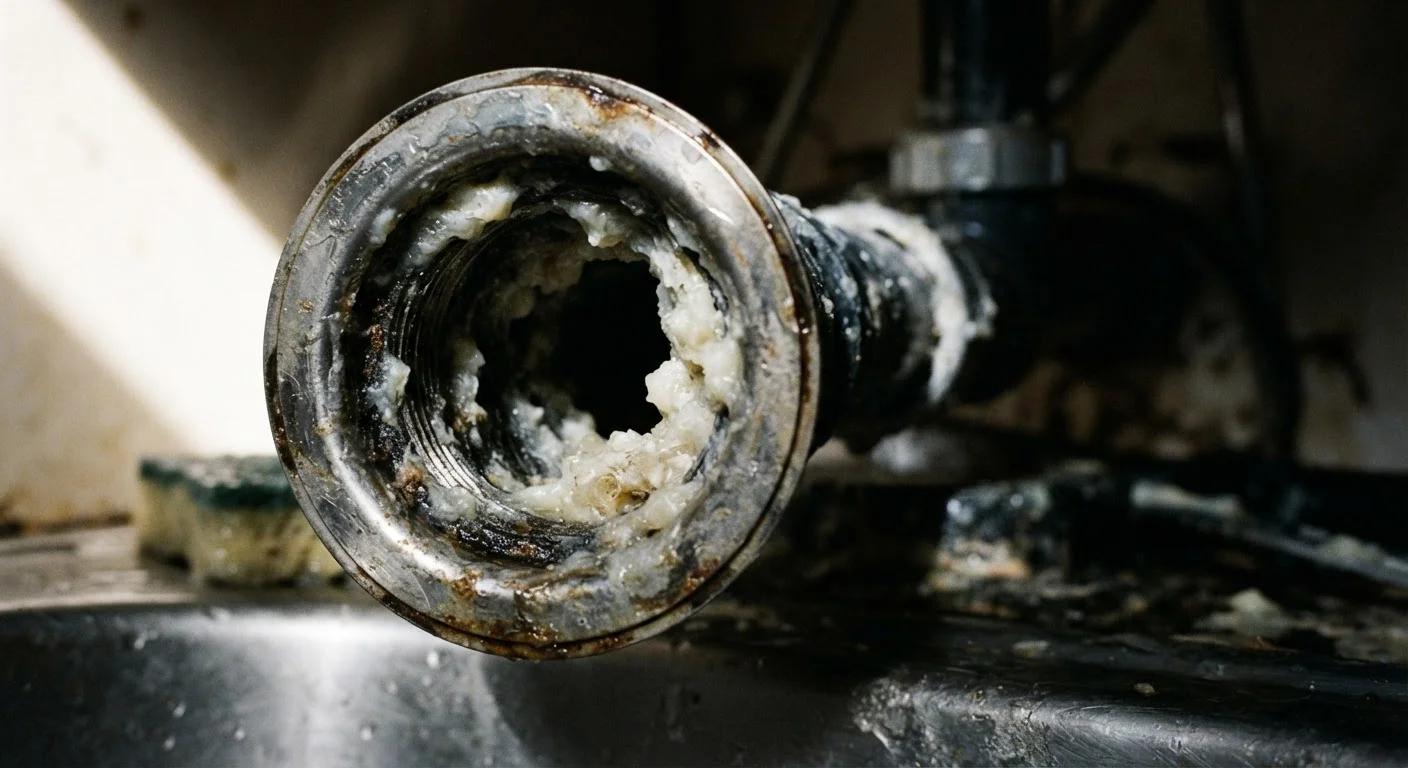
This isn't just a slow accumulation issue. Each pour adds a new layer to residue already coating the pipe walls. Over months, that buildup restricts flow, catches food particles and soap scum, and eventually forms a blockage that no amount of hot water will clear from the tap.
This is one of several everyday habits that quietly shorten the life of your home's plumbing - the kind that cause expensive problems long before most homeowners notice anything wrong.
Myth
Running hot water while pouring grease down the drain flushes it safely through the pipes.
Fact
Hot water keeps grease liquid temporarily, but it solidifies again once the water cools - often deeper in your pipe system where it's harder to reach.
This is the most common justification homeowners use. The logic seems reasonable: keep it liquid, send it away. The problem is that your drain pipes extend far beyond the sink, and water temperature drops quickly. The grease simply relocates - from the visible drain to an inaccessible section of pipe or, in some cases, into the municipal sewer system, where it contributes to large-scale blockages known as fatbergs.
Myth
Dish soap breaks grease down so it won't cause buildup in drains.
Fact
Dish soap emulsifies grease temporarily, but that emulsion breaks apart as the soapy water dilutes and cools inside the pipe.
Dish soap is excellent for cleaning grease off surfaces because you're actively scrubbing with it and rinsing thoroughly. In a drain, the grease-soap mixture travels through the pipe and gradually separates. The fat molecules re-coalesce and adhere to pipe walls just as they would without soap. Regular dish soap use doesn't prevent grease accumulation - it just makes the first few inches of pipe smell cleaner.
Myth
Small amounts of cooking oil are harmless - it's only large quantities that cause problems.
Fact
Repeated small amounts accumulate the same way as large pours; the damage is gradual but cumulative.
A teaspoon of grease after every meal adds up to significant buildup over a year of cooking. Pipe blockages from grease are rarely the result of a single event - they're the result of consistent small deposits layering on top of each other. By the time a blockage becomes noticeable, the buildup has typically been forming for months or longer.
Myth
Only animal fats like lard and bacon grease are a problem - vegetable oils are fine to drain.
Fact
Vegetable oils, including olive oil and coconut oil, also solidify or become viscous at typical pipe temperatures and cause similar buildup.
Coconut oil is solid at room temperature and behaves much like animal fat in a drain. Olive oil and other liquid vegetable oils remain more viscous than water at cooler temperatures and coat pipe walls effectively. While they may not solidify as firmly as saturated animal fats, they still accumulate, trap debris, and contribute to clogs over time. No cooking fat is truly safe to pour down the drain routinely.
The Right Way to Dispose of Cooking Grease
Proper grease disposal takes about two extra minutes and costs nothing. Let the fat cool in the pan until it solidifies or is at least no longer steaming. Then pour or scrape it into a sealable container - an old tin can, a glass jar, or even the original oil bottle works well. Once the container is full, seal it and put it in the trash.
For smaller amounts of residual grease left in the pan after cooking, wipe the pan with a paper towel before washing. This removes the bulk of the fat before water ever enters the equation.
Don't Pour Hot Grease Into Plastic Containers
Allow cooking fat to cool to a safe temperature before transferring it to any container. Pouring very hot grease into thin plastic bags or certain containers can cause them to warp, leak, or split - creating a burn hazard and a mess. Glass jars or metal cans are more reliable choices for still-warm (not boiling) grease.
Some municipalities offer grease recycling drop-off sites or accept used cooking oil at composting centers. It's worth checking your local waste management program's guidelines, as options vary significantly by area.
The underlying principle - keep fats out of drains entirely - applies whether you're dealing with a tablespoon of butter or a full fryer's worth of oil.
47%
Of sewer overflows attributed to grease
According to the U.S. Environmental Protection Agency, fats, oils, and grease are among the leading causes of sewer system overflows nationwide.
$25,000+
Potential cost of severe drain line replacement
Plumbing industry estimates suggest full drain line replacement in older homes can exceed tens of thousands of dollars, depending on pipe material and access.