

Key Takeaways
Why Sale Pricing Deserves a Second Look
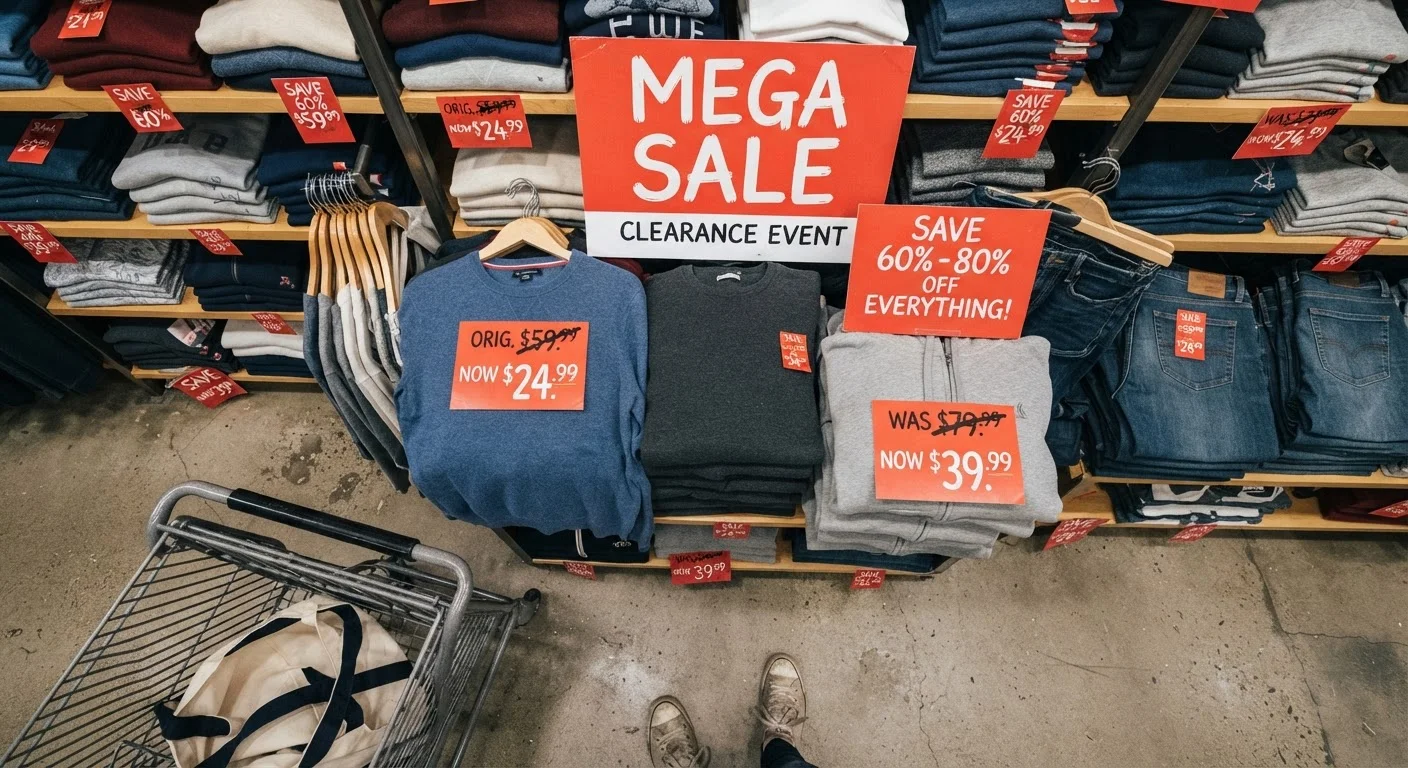
Retail pricing is not a neutral reflection of value — it's a communication strategy. Stores know that the number you see first shapes how you feel about the number you pay. A $60 item marked down from $120 feels like a win; the same item priced at $60 with no strikethrough barely registers. Same product, same price, very different emotional response.
This isn't a fringe observation. Regulatory bodies in the U.S., including the Federal Trade Commission, have long maintained guidance on deceptive pricing — specifically warning against artificially inflated reference prices that make discounts appear larger than they are. Understanding the mechanics behind these tactics is the most practical thing a shopper can do before spending money.
The myth-vs-fact pairs below break down the most common misconceptions about sale pricing. If you want to go deeper on related spending habits, our article on why impulse buying happens explains the psychological triggers retailers exploit.
Myth
A strikethrough 'original price' represents what the item was genuinely sold for before the sale.
Fact
Reference prices are often set high deliberately and may never have been the actual selling price for any meaningful period.
U.S. consumer protection guidance requires that a former price used as a comparison must have been a bona fide price at which the item was openly offered for a reasonably substantial period. In practice, enforcement is uneven, and some retailers set a brief high price purely to establish a reference point. Before trusting a strikethrough figure, consider whether that price reflects normal market value or exists mainly to make the 'sale' number look attractive.
Myth
If a sale countdown timer is running, the deal will genuinely expire when it hits zero.
Fact
Many countdown timers reset automatically or are tied to rolling promotional windows, not a fixed deadline.
Digital retail makes it trivially easy to display urgency signals that are technically accurate for a short window but reset immediately after. A timer counting down to midnight may simply restart at midnight. The urgency you feel is real — the scarcity is often not. If a deal is worth taking, it should be worth taking after a brief pause to verify the price history rather than because a clock is ticking.
Myth
Buying something on sale always saves you money.
Fact
A discount on something you wouldn't have purchased otherwise is a cost, not a saving.
The word 'savings' implies you had money and kept it. If you spent $40 on an item you didn't need, marked down from $80, you spent $40 — you did not save $40. This framing matters because retailers actively use it: 'You saved $X today' appears on receipts to make unplanned spending feel financially responsible. Genuine savings come from spending less than you planned, not from spending on something discounted.
Myth
Store-wide percentage-off events always mean everything in the store is cheaper than usual.
Fact
Retailers often raise prices on select items before a store-wide sale, or exclude popular categories from the discount entirely.
A '20% off everything' promotion may carve out electronics, new arrivals, or already-clearanced items in fine print. Some pricing audits by consumer journalists have also found that specific products get quiet price increases in the days before a major sale event — meaning the discounted price lands at or above the prior normal price. Reading exclusions and checking prior prices on any high-value item before a big sale is worth the two minutes it takes.
Myth
Name brands on sale are always a better deal than store brands at full price.
Fact
Store brands frequently offer comparable quality at a lower price even without a discount, making the sale comparison misleading.
When a name-brand item goes on sale, it can still cost more per unit than the store equivalent sold at its everyday price. Store brands vs. name brands examines where quality differences are real and where they exist mainly in packaging. Running that comparison before assuming a brand-name sale is a win often reveals the store brand was the better value all along.
How to Actually Verify a Discount
Knowing a tactic exists doesn't automatically protect you from it. Here are four concrete steps that cut through the noise:
- Track prices before a sale event. Free browser extensions can log price history on major e-commerce platforms, letting you see whether a 'sale' price is genuinely lower than the typical selling price or just lower than a briefly inflated one.
- Use unit pricing as a baseline. For groceries and household goods, the cost per ounce, count, or pound is often more revealing than the package price. Unit pricing explained walks through exactly how to read those small shelf-tag numbers.
- Compare across channels. Outlet, clearance, and off-price retailers can offer genuine reductions — but they also carry merchandise manufactured specifically for those channels. How discount channels actually work gives a clear overview of when those stores deliver real value.
- Ask: would I buy this at full price? If the honest answer is no, the discount is doing emotional work that the product itself cannot justify.
87%
Shoppers who bought due to urgency messaging
A survey by the Baymard Institute found a large majority of online shoppers have made a purchase they later regretted due to countdown timers or low-stock warnings.
~33%
Of 'sale' prices that aren't actually lower
Consumer Reports analysis of tracked retail prices has found roughly one in three items labeled 'on sale' were available at the same or lower price within recent weeks prior to the event.
For a broader framework on spending decisions, household budget strategies at the store offers practical, non-restrictive approaches that don't depend on chasing deals.
Deceptive Reference Pricing Is a Known Problem
The FTC has published guidelines specifically addressing fictitious pricing — the practice of marking goods down from a price that was never genuinely established in the market. If a deal looks implausibly large, the reference price is the first thing to question, not the last. Checking a product's price history over 30–90 days on a price-tracking tool takes less than a minute and is the single most reliable way to determine whether a discount is real.