

| Regulatory body for pet food labeling | AAFCO (model regulations) + FDA (safety oversight) |
| Required label elements | 6 core sections: product name, net quantity, manufacturer info, guaranteed analysis, ingredient list, nutritional adequacy statement (AAFCO model regulations) |
| Ingredient list order | Descending by pre-processing weight, including moisture |
| "Complete and balanced" defined by | AAFCO nutrient profiles or feeding trial protocols |
| Life stages recognized on labels | Growth (puppy/kitten), adult maintenance, all life stages, senior (not an AAFCO-defined category) (AAFCO model regulations) |
How Pet Food Labels Are Regulated
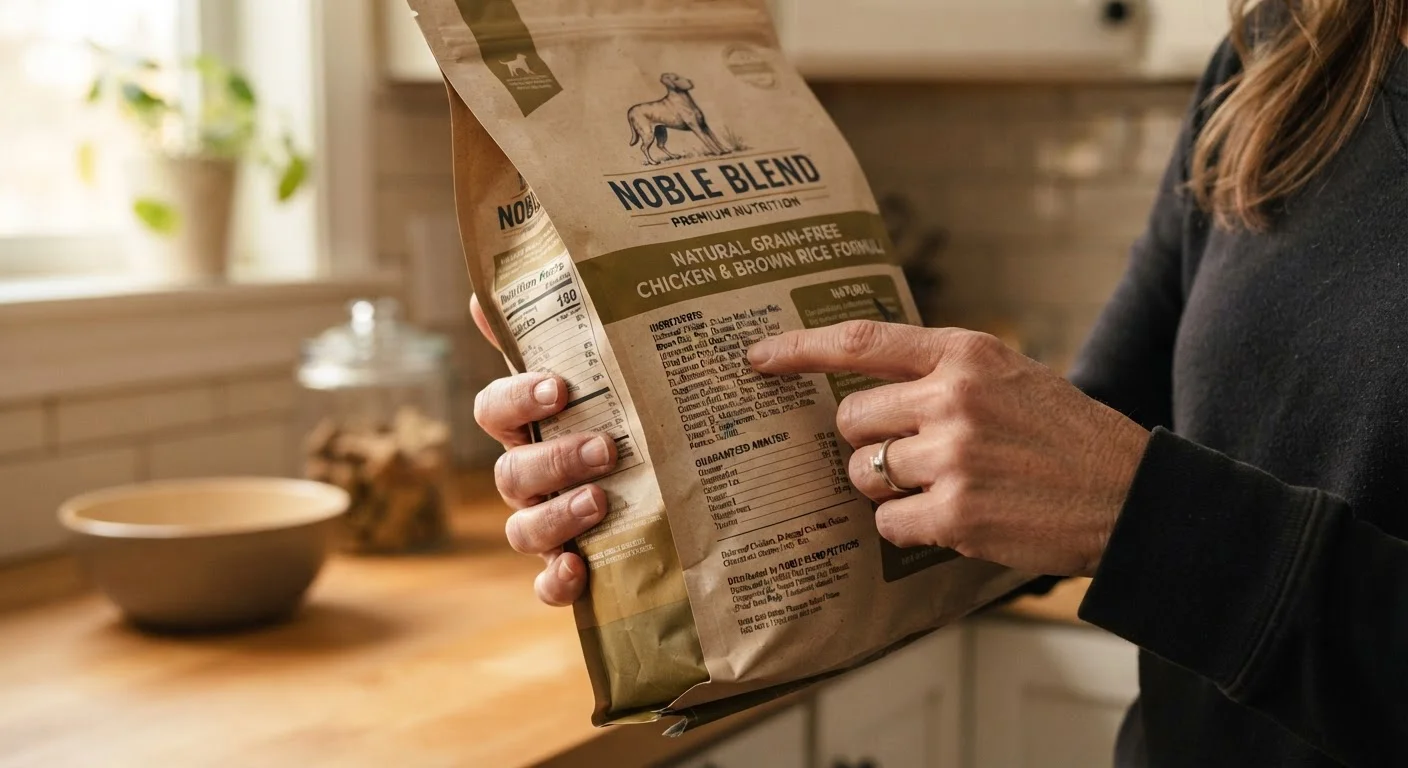
Pet food sold in the United States is subject to oversight from two main bodies: the AAFCO and, for certain labeling and safety standards, the FDA. AAFCO establishes the model regulations that most states adopt, which means the labels on your dog's kibble or your cat's wet food follow a standardized format — once you know how to read it.
Every compliant label must include six core pieces of information: the product name, the net quantity, the manufacturer's contact information, the guaranteed analysis, the ingredient list, and the nutritional adequacy statement. Each of these serves a distinct purpose, and knowing what to look for in each section puts you in a much stronger position as a pet owner.
For a useful parallel to how ingredient labels work for human food, see how the nutrition facts label works — many of the same ordering and disclosure principles apply.
| Regulatory body for pet food labeling | AAFCO (model regulations) + FDA (safety oversight) |
| Required label elements | 6 core sections: product name, net quantity, manufacturer info, guaranteed analysis, ingredient list, nutritional adequacy statement (AAFCO model regulations) |
| Ingredient list order | Descending by pre-processing weight, including moisture |
| "Complete and balanced" defined by | AAFCO nutrient profiles or feeding trial protocols |
| Life stages recognized on labels | Growth (puppy/kitten), adult maintenance, all life stages, senior (not an AAFCO-defined category) (AAFCO model regulations) |
The Ingredient List: Order, Meaning, and Common Misconceptions
Ingredients are listed by weight before processing, in descending order. This means the first ingredient contributes the most weight to the formula — but weight includes moisture. A whole chicken, for example, is roughly 70% water, so its protein contribution after cooking may be lower than it appears. That is not necessarily a red flag, but it is something to understand before assuming the first ingredient tells the whole story.
Look at the ingredient list as a group, not just the first entry. A food that lists three different grain sources separately (say, ground corn, corn gluten meal, and corn flour) may have more grain by weight than any single ingredient above it — a practice sometimes called ingredient splitting. This is a legitimate reason to scan the full list rather than stopping at the top.
Protein sources, fats, carbohydrates, vitamins, and minerals all need to appear in meaningful amounts for a food to support your pet's health across life stages. Nutritional needs shift as pets age, which is one reason life-stage-specific formulas exist.
AAFCO
The Association of American Feed Control Officials, a non-governmental organization that establishes model regulations for pet food labeling and nutrition standards adopted by most U.S. states.
Guaranteed Analysis
A required label panel listing minimum crude protein and fat percentages and maximum crude fiber and moisture percentages in the food as sold.
Dry Matter Basis
A calculation method that removes moisture from nutrient percentages to allow fair nutritional comparison between foods with different water contents, such as wet and dry pet food.
Crude Protein
A laboratory measurement of total nitrogen-containing compounds in a food, used as an estimate of protein content. 'Crude' refers to the measurement method, not the quality or source of the protein.
Nutritional Adequacy Statement
A required label statement indicating whether a food is 'complete and balanced' for a specific life stage, and how that claim was substantiated — either through AAFCO feeding trials or nutrient profile formulation.
Ingredient Splitting
The practice of listing multiple forms of the same ingredient separately so each appears lower on the ingredient list by weight, potentially making a less prominent ingredient appear more dominant than it actually is.
The Guaranteed Analysis and What Those Numbers Mean
The guaranteed analysis panel lists minimum percentages of crude protein and crude fat, and maximum percentages of crude fiber and moisture. The word crude refers to the chemical method used to measure each nutrient — it does not describe quality. A high crude protein percentage tells you how much protein is present, but not whether it is highly digestible or from a single source versus multiple blended ones.
To compare wet and dry foods fairly, you need to account for moisture differences by converting values to a dry matter basis. For example, a wet food listed at 10% protein with 78% moisture actually contains about 45% protein on a dry matter basis — considerably higher than a dry food showing 28% protein at 10% moisture. Your veterinarian can help you interpret these numbers in the context of your pet's specific needs.
70%
Approximate moisture content of whole chicken before processing
This is why whole meats listed first on a dry food ingredient panel may provide less protein by dry weight than their label position implies.
~45%
Dry matter protein in a typical wet food at 10% crude protein, 78% moisture
Dry matter basis conversion is essential for comparing wet and dry pet foods on equal nutritional footing.
If your pet has a diagnosed health condition, the gap between a therapeutic prescription diet and an over-the-counter formula matters. See our comparison of prescription diets versus therapeutic pet foods for more detail.
Marketing Terms: What's Regulated and What Isn't
The language on the front of a pet food bag is where marketing and regulation intersect — not always cleanly. Here is a breakdown of terms with defined meanings versus those that are largely unregulated:
- "Complete and balanced" — This phrase has a specific AAFCO meaning. It signals the food meets established nutrient profiles for a stated life stage, verified either by formulation or feeding trials.
- "Natural" — AAFCO defines this as derived from plant, animal, or mined sources without chemically synthetic processing. However, vitamins and minerals added to meet nutritional requirements may still appear in a food labeled "natural," as long as that is noted.
- "Human grade" — This term is largely unregulated in the pet food context. It does not automatically indicate superior nutrition or safety.
- "Grain-free" — Describes the absence of certain grains, not the absence of carbohydrates generally. Grain-free foods often substitute legumes or potatoes. The FDA has investigated a possible link between certain grain-free diets and dilated cardiomyopathy in dogs; consult your veterinarian before switching.
For a broader look at how marketing language operates on food packaging generally, reading between the lines on food marketing claims offers useful context.
The FDA and Grain-Free Diets
Since 2018, the FDA has been investigating a potential association between certain grain-free pet diets — particularly those high in legumes — and dilated cardiomyopathy (DCM) in dogs. As of the agency's most recent updates, the investigation is ongoing and a definitive causal link has not been established. If you have questions about your dog's diet and heart health, speak with your veterinarian before making any changes.
This article provides general educational information about pet food labeling and is not a substitute for individualized guidance from a licensed veterinarian. Always consult your vet before making significant changes to your pet's diet.