

Key Takeaways
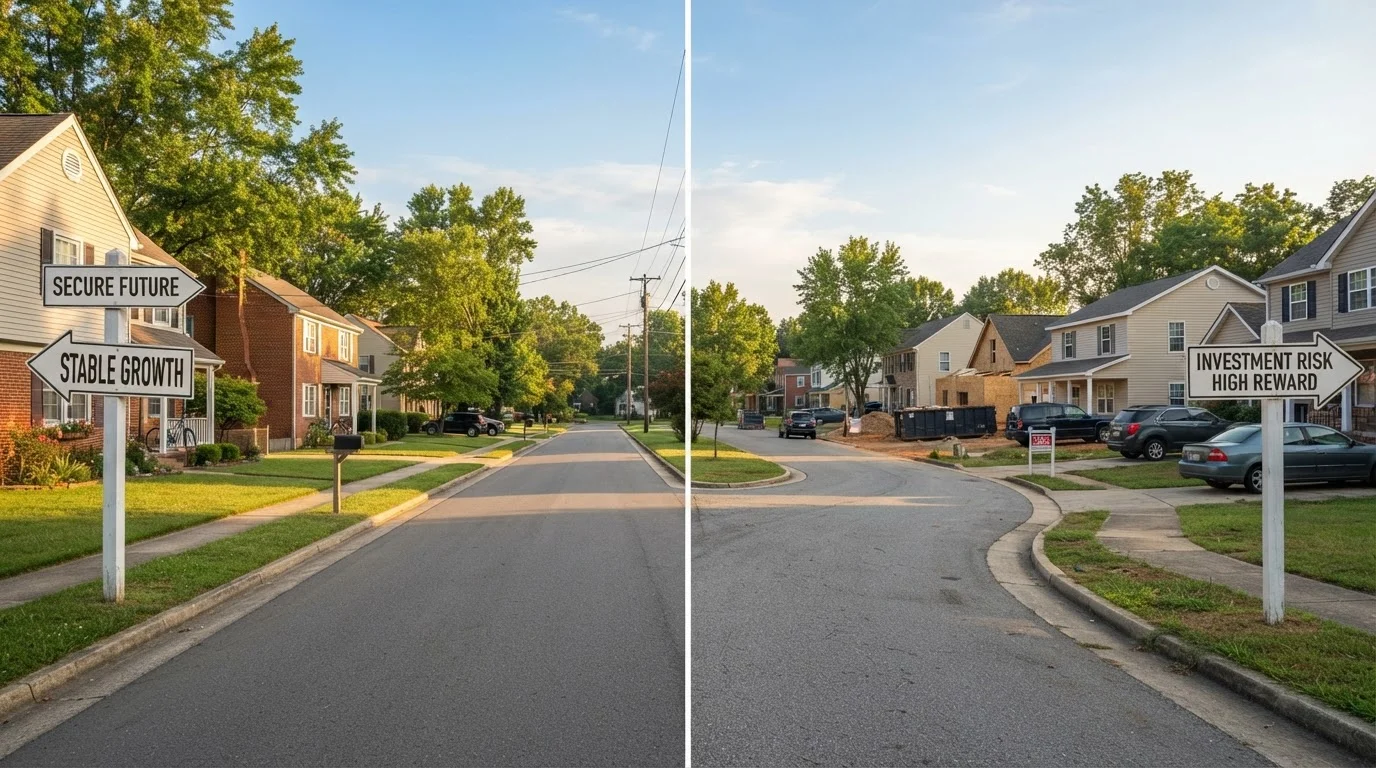
Option A
Conventional Loan
The flexible, cost-efficient choice for stronger borrowers.
Best for: Buyers with solid credit scores and enough savings to put at least 5–20% down.
Option B
FHA Loan
The accessible, government-backed path for first-time or credit-challenged buyers.
Best for: Buyers with lower credit scores, limited savings, or less conventional financial profiles.
If you have a credit score above 700 and at least 10% saved for a down payment
Conventional Loan
You'll likely qualify for competitive interest rates and can avoid the lifetime mortgage insurance premiums that FHA borrowers face.
If your credit score falls between 580 and 639
FHA Loan
FHA's lower credit threshold and 3.5% down payment requirement make homeownership achievable when conventional lenders may decline your application.
If you have limited savings and need to minimize your upfront costs
FHA Loan
FHA allows a 3.5% down payment for borrowers with qualifying credit, and gift funds from family members are permitted to cover it.
If you're buying a higher-priced home in a competitive market
Conventional Loan
Conventional loans conform to higher loan limits in many areas and don't carry FHA's property condition requirements, giving you more flexibility.
If you're a first-time buyer rebuilding credit after past financial difficulties
FHA Loan
FHA underwriting is more tolerant of past credit events such as prior bankruptcy, with shorter mandatory waiting periods than most conventional programs.
What Separates These Two Loan Types
A conventional loan is a mortgage not insured or guaranteed by the federal government. It is issued by private lenders — banks, credit unions, and mortgage companies — and typically follows guidelines set by Fannie Mae or Freddie Mac, the government-sponsored enterprises that purchase most conventional mortgages on the secondary market.
An FHA loan (Federal Housing Administration loan) is insured by a federal agency within the U.S. Department of Housing and Urban Development. Because the government backstops the lender against default, FHA-approved lenders can extend credit to borrowers who would not meet conventional standards. This distinction shapes nearly every element of cost and eligibility.
Understanding these structural differences is the starting point for a sound borrowing decision. For a broader look at how FHA compares to other government programs, see Government-Backed Mortgage Programs in the US.
| Criterion | Conventional Loan | FHA Loan |
|---|---|---|
| Minimum Credit Score | 620 (typically) | 500–580 depending on down payment |
| Minimum Down Payment | 3% (for qualifying buyers) | 3.5% (580+ score); 10% (500–579) |
| Mortgage Insurance | PMI; cancels at 20% equity | Upfront + annual; often lifetime |
| Government Backing | None | Insured by FHA (HUD) |
| Max DTI Ratio | ~45–50% | ~50–57% with compensating factors |
| Property Condition Standards | Lender appraisal only | HUD minimum property standards |
| Loan Limits | FHFA conforming limits by county | FHA limits by county (often lower) |
Credit, Down Payment, and Qualification Standards
Conventional lenders generally require a minimum FICO score of 620, though scores above 740 unlock the most favorable rates. FHA allows scores as low as 580 for its standard 3.5% down payment option; borrowers with scores between 500 and 579 may still qualify but must put down at least 10%. Lenders can impose additional requirements — known as overlays — above the FHA minimums, so individual outcomes vary.
Debt-to-income ratio (DTI) — the share of gross monthly income consumed by debt payments — also differs. Conventional guidelines typically cap DTI at 45%, though some automated approvals allow up to 50%. FHA is generally more permissive, with DTIs up to 57% sometimes acceptable when other compensating factors are strong.
To understand what lenders weigh across all loan types, see what goes into a lender's underwriting decision.
~30%
Share of purchase loans using FHA financing
FHA loans have historically represented roughly a quarter to a third of all purchase mortgages, particularly among first-time buyers, according to HUD annual reports.
620
Typical conventional loan minimum credit score
Fannie Mae and Freddie Mac guidelines set 620 as the floor, though most lenders prefer scores above 660 for standard pricing.
1.75%
FHA upfront mortgage insurance premium
This mandatory premium is charged at closing and added to the loan balance on all FHA-insured mortgages, per current HUD guidelines.
Mortgage Insurance: The Long-Term Cost Difference
This is where the two programs diverge most significantly in total cost. Conventional loans require private mortgage insurance (PMI) when the down payment is below 20%. PMI typically costs 0.2%–2% of the loan amount per year and — crucially — is automatically canceled once the borrower reaches 20% equity in the home based on the original value.
FHA loans carry two layers of mortgage insurance: an upfront mortgage insurance premium (UFMIP) of 1.75% of the loan amount, rolled into the loan at closing, plus an annual premium that currently ranges from approximately 0.45% to 1.05% depending on loan term and loan-to-value ratio. For most FHA borrowers putting down less than 10%, these annual premiums remain for the life of the loan. The only way to eliminate them is to refinance into a conventional mortgage once sufficient equity has been built.
FHA-to-Conventional Refinance Strategy
Some borrowers deliberately start with an FHA loan to purchase sooner, then refinance into a conventional loan once they have built 20% equity. This eliminates the ongoing FHA mortgage insurance premium. However, refinancing involves closing costs — typically 2–5% of the loan amount — so the timing and financial benefit depend on your specific interest rates, remaining loan term, and how long you plan to stay in the home. Run the numbers carefully and consult a mortgage professional before pursuing this path.
This lifetime insurance obligation is why many borrowers who start with an FHA loan eventually explore refinancing. For a breakdown of when that transition makes financial sense, see Mortgage Refinancing: When It Makes Sense.
Property Requirements and Loan Limits
FHA loans come with minimum property condition standards. The home must meet HUD's safety, security, and soundness guidelines — meaning significant structural issues, health hazards, or deferred maintenance can disqualify a property. This can complicate offers on fixer-uppers or homes sold as-is in competitive markets where sellers prefer conventional buyers who impose fewer conditions.
Conventional loans have no equivalent federal property standard, though lenders will still require an appraisal confirming the home's market value. This flexibility can be advantageous when bidding on distressed or dated properties.
Both loan types are subject to conforming loan limits set annually by the Federal Housing Finance Agency, which vary by county. In high-cost areas, these limits are significantly higher. Borrowers needing amounts above the conforming threshold must pursue a jumbo loan, which falls outside both programs. For a side-by-side view of how conventional loans compare to all major government-backed options, see FHA, VA, USDA, and Conventional Loans Side by Side.
Your choice of loan type also interacts with rate structure. Whether you select a fixed or adjustable rate can be equally consequential — see our comparison of fixed-rate vs. adjustable-rate mortgages for further context.
This article is for general informational purposes only and does not constitute personalized financial, mortgage, or legal advice. Loan terms, eligibility criteria, and insurance costs vary by lender, loan amount, credit profile, and property. Consult a licensed mortgage professional or financial adviser before making borrowing decisions.