

Key Takeaways
Security Deposit
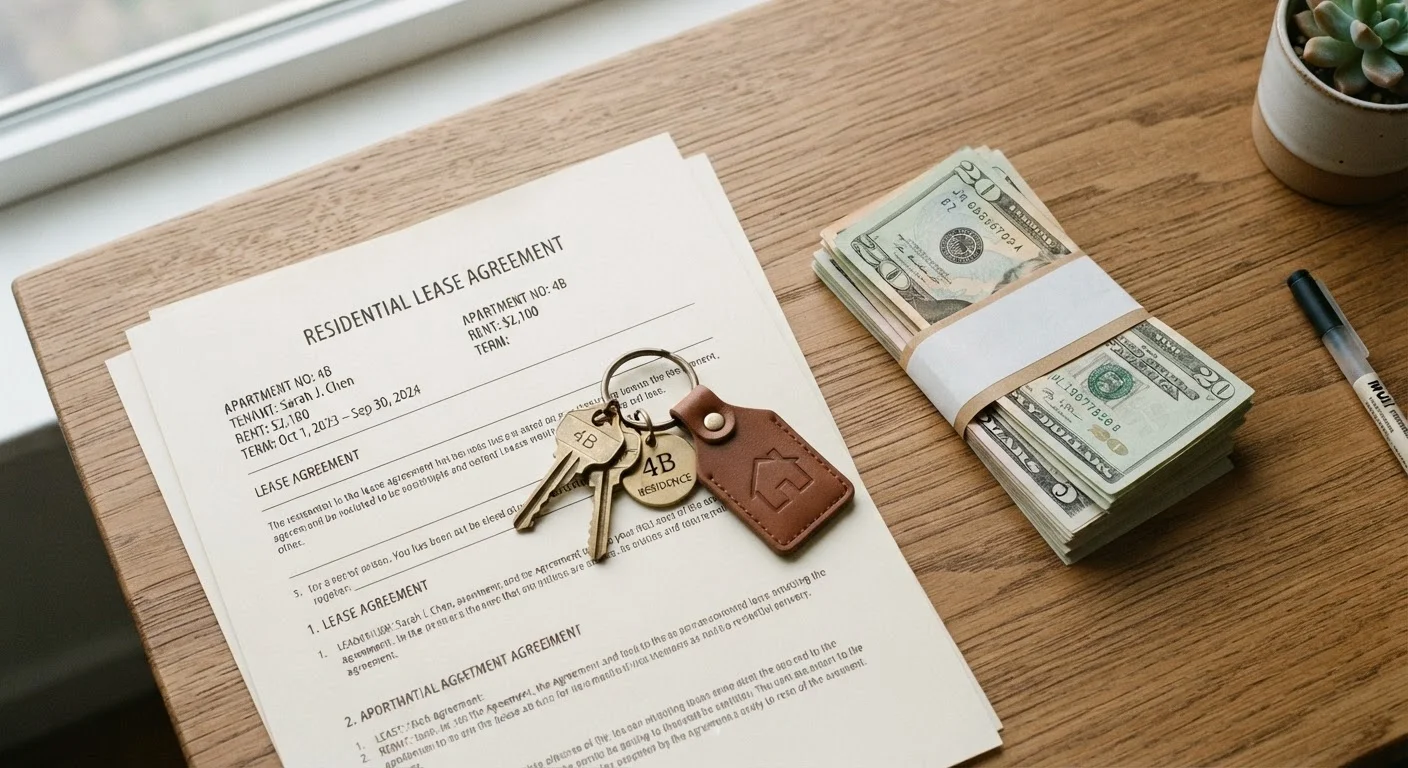
A security deposit is a sum of money a tenant pays to a landlord before moving in. It serves as financial protection for the landlord against unpaid rent or damage beyond normal wear and tear. At the end of the tenancy, the landlord must return the deposit — minus any legally justified deductions — within a timeframe set by state law.
Most states cap security deposits at one to two months' rent and require landlords to hold the funds in a separate, sometimes interest-bearing, account.
How Security Deposits Work
When you sign a lease, your landlord typically collects a security deposit alongside your first month's rent. This upfront payment — often one to two months' rent — sits in reserve throughout your tenancy. It is your money, not the landlord's income, and state law governs how it must be stored, documented, and returned.
Many states require landlords to hold deposits in a separate bank account and, in some cases, pay tenants interest on those funds. At move-out, the landlord reviews the unit's condition and either returns the full deposit or sends an itemized written statement listing any deductions, along with the remaining balance. That statement must be delivered within the state-mandated deadline — missing it can strip the landlord of the right to keep anything at all.
Before you ever hand over that money, it's worth reviewing our practical checklist for paying a security deposit, which covers how to verify the landlord's identity and understand your state's rules upfront.
~$3,000
Typical security deposit in a major US city
According to rental market analyses, deposits in high-cost metros often equal one to two months of median rent, which can exceed $3,000 in cities like New York, San Francisco, and Boston.
14–45 days
State return deadline range for deposits
State landlord-tenant statutes set return deadlines that typically fall between 14 and 45 days after a tenant vacates or provides a forwarding address.
2–3×
Penalty multiplier for bad-faith withholding
Many states allow tenants to recover two to three times the wrongfully withheld deposit amount if a court finds the landlord acted in bad faith.
What Landlords Can Legally Keep
State laws differ in their specifics, but most permit landlords to deduct from a security deposit for a defined set of reasons:
- Unpaid rent: Any rent balance owed at the time you vacate may be deducted.
- Damage beyond normal wear and tear: Holes in walls, broken fixtures, stained carpets from spills, or burns on countertops are examples of damage for which a landlord can charge.
- Excessive cleaning costs: If you leave the unit in a condition that requires substantial professional cleaning beyond routine turnover, the landlord may deduct those costs.
- Unreturned keys or access devices: The cost of replacing keys or rekeying locks due to unreturned items may be chargeable.
Crucially, deductions must be reasonable and documented. Landlords cannot simply estimate — they typically must provide receipts or invoices for repair and cleaning work. Vague or inflated charges are a common source of disputes.
What Landlords Cannot Keep
The concept of normal wear and tear is the central protection for tenants. This refers to the natural, gradual decline in a rental unit's condition resulting from ordinary everyday living — not negligence or misuse. Landlords generally cannot charge tenants for:
- Faded or lightly scuffed paint after a standard tenancy
- Small nail holes from hanging artwork or photos
- Minor carpet wear from foot traffic over time
- Worn finishes on appliances or fixtures due to regular use
- Loose hinges or door handles that develop over time
Beyond wear and tear, landlords also cannot deduct for repairs that were their maintenance responsibility, damage that was present before you moved in, or the cost of upgrades — for example, replacing an old carpet with a new one and billing you for the full price rather than its depreciated value.
Many renters are unaware of just how broad their protections actually are. Our overview of tenant rights many renters don't know they have covers additional protections that apply throughout your tenancy.
Always Complete a Written Move-In Checklist
Ask your landlord for a move-in condition checklist before or on the day you receive the keys. Walk through every room together, note any existing damage, and have both parties sign and date the document. Keep a copy for your records — this single step is your most powerful defense if deductions are disputed later.
How to Protect Your Deposit From Move-In to Move-Out
Your deposit protection strategy begins the day you move in, not the day you move out. Follow these practices to put yourself in the strongest possible position:
- Document everything at move-in. Photograph every room, appliance, and surface. Note pre-existing damage in writing — ideally on a move-in checklist signed by both you and the landlord.
- Keep copies of all communications. Emails, texts, and letters about repairs or unit conditions serve as evidence if a dispute arises.
- Request repairs in writing. This creates a paper trail showing that problems existed and were reported during your tenancy.
- Clean thoroughly before leaving. Return the unit in the same condition you received it, accounting for normal wear.
- Provide a forwarding address promptly. Many state deadlines for returning deposits start when the landlord receives your forwarding address.
For a deeper look at the most common missteps renters make on the way out, see our guide on moving out without losing money.
Security Deposit Rules Vary by State
There is no single federal law governing security deposits. Each state — and sometimes individual cities — sets its own rules covering deposit caps, storage requirements, itemization standards, and return deadlines. Always look up your state's specific landlord-tenant statute or consult a local tenant rights organization to understand exactly what applies to your situation.