

Key Takeaways
Why a Simple Framework Beats a Complex One
Walk into any beauty aisle and the sheer number of products can feel overwhelming — serums, essences, toners, exfoliants, oils, eye creams. The skincare industry thrives on the idea that more steps equal better results. Dermatologists, however, tend to tell a simpler story: for most people, three well-chosen products used consistently will do more good than ten products used sporadically.
This guide is built around that philosophy. Whether you have dry, oily, combination, or sensitive skin, the same three-step logic applies: cleanse, moisturize, protect. Everything else is optional enhancement, not a requirement. If you're brand new to building a routine, the starting a skin care routine for the first time guide is a great companion read before you dive in here.
What you will need
What You'll Need
You don't need a full vanity's worth of products to get started. Below are the essentials, along with a few optional additions for those who want to go a little further.
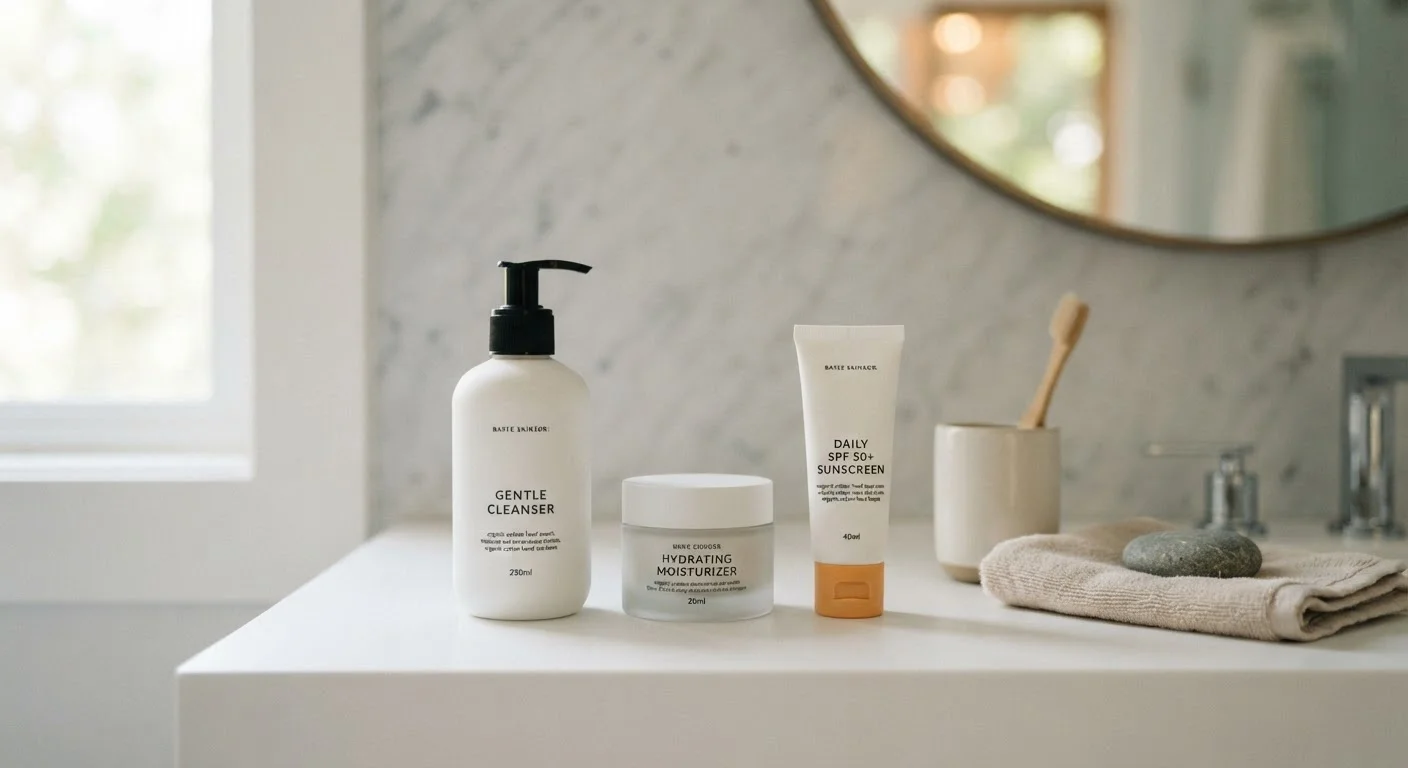
Gentle Facial Cleanser
Removes overnight oils, sweat, and environmental residue without stripping the skin's natural moisture barrier.
Facial Moisturizer
Replenishes hydration and helps maintain the skin barrier after cleansing.
Broad-Spectrum Sunscreen (SPF 30+)
Protects skin from UVA and UVB rays, which are associated with premature aging and other skin damage.
Soft Face Cloth or Microfiber Towel
Gently pats skin dry after cleansing without causing micro-abrasion.
Targeted Serum
Delivers concentrated active ingredients (such as vitamin C or niacinamide) for specific concerns like uneven tone or texture.
If you're curious about what those ingredient names on the label actually mean, our practical glossary of skincare ingredients breaks them down in plain language.
Your Step-by-Step Daily Routine
Follow these steps each morning. A brief evening version — skip SPF, add a slightly richer moisturizer if you like — mirrors the same logic.
Splash your face with lukewarm water
Wet your face with lukewarm — not hot — water. Hot water can compromise the skin's natural barrier and increase dryness. About 15 to 20 seconds of gentle wetting is plenty to prepare your skin for cleansing.
Apply and rinse your cleanser
Dispense a small amount of cleanser — typically a pea-to-dime-sized amount — into your palms. Work it into a lather if it's a foaming formula, or apply directly if it's a cream or oil-based cleanser. Massage gently across your face for about 30–60 seconds using soft, circular motions. Rinse thoroughly with lukewarm water, then pat — don't rub — dry with a clean towel.
Apply your moisturizer
While your skin is still slightly damp, apply a modest amount of moisturizer evenly across your face and neck. Damp skin absorbs moisturizer more effectively than completely dry skin. Give it 30–60 seconds to absorb before moving to the next step.
Apply broad-spectrum sunscreen
This is the most important step in your morning routine. Apply a broad-spectrum sunscreen with at least SPF 30 as the final step, covering your full face, ears, and the back of your neck if exposed. If your moisturizer contains SPF, it may offer some protection, but dermatologists generally recommend a dedicated sunscreen for more reliable coverage. Reapply if you're spending extended time outdoors.
Give New Products Time to Work
Most skincare products need at least four to six weeks of consistent use before you can accurately judge whether they're making a difference. Switching products too frequently makes it hard to know what's actually helping — or causing — any changes you notice. Before adding anything new, check out our practical checklist for trying a new skincare product to introduce additions safely.
Once you're comfortable with the basics and want to experiment with serums or exfoliants, understanding layering skincare products in the right order will help you get the most out of everything you add.
Adapting the Routine for Your Skin Type
The three core steps stay constant; the formulas you choose within each step shift based on how your skin behaves.
- Dry skin: Choose a cream or oil-based cleanser, a rich moisturizer containing ceramides or hyaluronic acid, and a moisturizing SPF formula.
- Oily or acne-prone skin: A gel or foaming cleanser, a lightweight oil-free moisturizer, and a non-comedogenic (won't clog pores) SPF lotion or gel work best.
- Combination skin: A gentle, balanced cleanser and a medium-weight moisturizer are your friends; apply SPF evenly and blot oily areas as needed.
- Sensitive skin: Fragrance-free, minimal-ingredient formulas reduce the risk of irritation. Patch-test anything new before full application.
Introduce New Products One at a Time
Adding multiple new products simultaneously makes it nearly impossible to identify the culprit if your skin reacts badly. Introduce one new product per week at most, and patch-test unfamiliar formulas on a small area of skin (such as the inner forearm) for 24 hours before applying to your full face. If redness, itching, or burning persists, discontinue use and consult a dermatologist.
For guidance on weaving SPF seamlessly into your day, our deep-dive on sunscreen in a grooming routine covers the why and the how in detail. And if you'd like to fold these habits into a broader morning ritual, see our guide to building a morning grooming routine that actually sticks.
This article is for informational purposes only and is not a substitute for professional medical or dermatological advice. If you have a skin condition or concerns about your skin, consult a qualified healthcare professional.