

Key Takeaways
Start here
Why a Simple Routine Is the Right Starting Point
Next
The Core Three: Cleanser, Moisturizer, and SPF
Then
Understanding Your Skin Type
When you're ready
How to Layer Products and Build from Here
Why a Simple Routine Is the Right Starting Point
The skin care aisle can feel genuinely overwhelming — dozens of serums, toners, essences, and treatments all promising transformation. Here's the encouraging truth: you don't need most of it, especially at the start. Building a skin care routine is really about forming a consistent daily habit, and the simpler that habit is, the more likely you are to actually stick with it.
Research consistently points to a few fundamental behaviors — cleansing, moisturizing, and sun protection — as the foundation of healthy skin. Everything else is optional enhancement. Starting small means fewer variables, less chance of irritation, and a clearer sense of what your skin actually responds well to.
Whether you're completely new to skin care or returning after years away, the Beauty Basics hub is a good companion resource as you explore beyond this guide.
Consistency Beats Complexity Every Time
A cleanser, moisturizer, and SPF used faithfully every day will do more for your skin than an elaborate 10-step routine you manage only occasionally. Commit to your simple lineup for at least a month before adding anything new. Your skin adapts to routines, and that steady rhythm is where the real benefit builds.
The Core Three: Cleanser, Moisturizer, and SPF
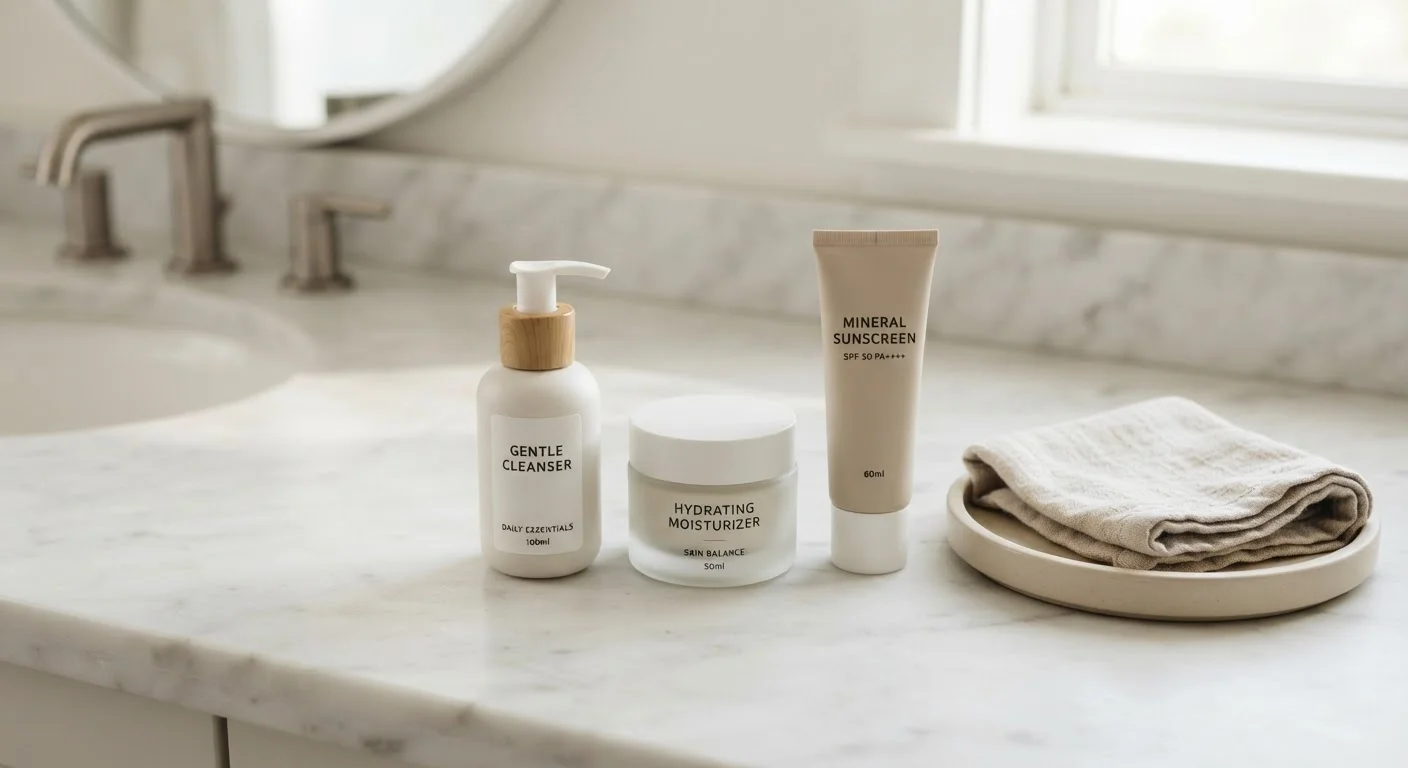
These three steps cover the essentials and work together as a system:
- Cleanser
- A gentle, pH-balanced face wash removes dirt, excess oil, and environmental pollutants without stripping the skin's natural barrier. Use it morning and night. Harsh soaps and hot water can disrupt the skin's moisture balance, so opt for lukewarm water and a fragrance-free formula when in doubt.
- Moisturizer
- Even oily skin benefits from a moisturizer — hydration and oil production are different things. A moisturizer reinforces the skin barrier, reduces water loss, and leaves skin feeling comfortable. Lightweight gels suit oilier skin; richer creams work well for drier types.
- SPF (Sunscreen)
- This is the step with the most robust scientific support for long-term skin health. A broad-spectrum SPF 30 or higher protects against both UVA and UVB rays, which contribute to premature aging and skin damage. Apply it every morning as the last step before going outside.
For a deeper look at how these three steps fit into a daily framework, The Everyday Skincare Routine That Works for Almost Anyone walks through each one step by step.
Broad-spectrum SPF
A sunscreen that protects against both UVA rays (which cause aging) and UVB rays (which cause burning). Look for 'broad-spectrum' and SPF 30 or higher on the label.
Skin barrier
The outermost layer of skin that keeps moisture in and irritants out. A healthy barrier feels comfortable and resilient; a damaged one may feel tight, red, or reactive.
pH balance
A measure of acidity or alkalinity on a scale of 0–14. Healthy skin is slightly acidic (around pH 4.5–5.5), and using harsh soaps can disrupt this balance and cause irritation.
Sebum
The natural oil produced by your skin's sebaceous glands. It's protective in moderate amounts, but excess sebum can contribute to shine and breakouts.
Hyaluronic acid
A naturally occurring molecule that draws and holds moisture in the skin. As a skincare ingredient, it's widely tolerated and used to add hydration without heaviness.
Exfoliation
The process of removing dead skin cells from the surface, either with a gentle scrub (physical) or an acid-based product (chemical). It can improve texture and brightness when done in moderation.
Understanding Your Skin Type
Choosing products that suit your skin type makes the whole routine more effective and comfortable. The five most common types are:
- Normal: Balanced — not too oily or too dry, with minimal sensitivity.
- Oily: Produces excess sebum, especially in the T-zone (forehead, nose, chin). Prone to shine and breakouts.
- Dry: Feels tight, looks dull, and may flake or feel rough. Needs richer hydration.
- Combination: Oily in some areas (typically T-zone) and normal or dry elsewhere.
- Sensitive: Reacts easily to products or environmental factors with redness, stinging, or irritation.
A useful quick test: wash your face, pat dry, wait 30 minutes without applying anything, then observe. If your skin feels tight, it's likely dry. If it looks shiny all over, probably oily. Shine in only the T-zone suggests combination.
Patch Test New Products Before Committing
Before applying a new product all over your face, test it on a small area — the inner forearm or behind the ear — for 24 to 48 hours. This is especially important for sensitive skin types or anyone prone to allergic reactions. If you notice redness, itching, or swelling, discontinue use and consult a healthcare professional if symptoms persist.
Keep in mind that skin type isn't fixed — hormones, seasons, age, and stress can all shift how your skin behaves over time.
How to Layer Products and Build from Here
When you're ready to expand beyond the core three, the general rule is to apply products in order of lightest to heaviest texture: serums and treatments before moisturizer, sunscreen last in the morning. Introduce one new product at a time and wait at least a week before adding another. This makes it much easier to spot anything that causes irritation or breakouts.
Common next steps include a hydrating serum (hyaluronic acid is well-tolerated by most skin types), an exfoliant used once or twice a week, or an eye cream. None of these are urgent — your core three will serve you well for as long as you want to keep things simple.
If your skin care goals include tackling specific concerns like acne, hyperpigmentation, or signs of aging, those warrant a closer look with a dermatologist rather than a trial-and-error approach with active ingredients.
Skin care and makeup naturally go hand in hand. If you're also exploring cosmetics for the first time, Makeup for Beginners: Building Confidence With a Minimal Kit is a friendly next read. And if you're looking for grooming guidance specifically tailored to men's skin, Grooming Routines for Men: The Basics Worth Getting Right covers the same fundamentals with that focus in mind.
This article is for general informational purposes only and does not constitute medical or dermatological advice. Consult a qualified dermatologist or healthcare professional for guidance on skin concerns or conditions specific to you.