

Key Takeaways
The Real Reason Your Skin Still Feels Dry
You bought the moisturizer. You use it every morning. And yet your skin still feels tight, flaky, or dull by midday. Sound familiar? The frustrating truth is that moisturizer performance isn't just about the product — it's about how, when, and in what order you apply it.
Most moisturizer missteps come down to a handful of repeatable habits that quietly undermine even a solid formula. The good news: they're all fixable once you know what's going wrong. If you're building your routine from the ground up, our everyday skincare routine guide is a great place to start.
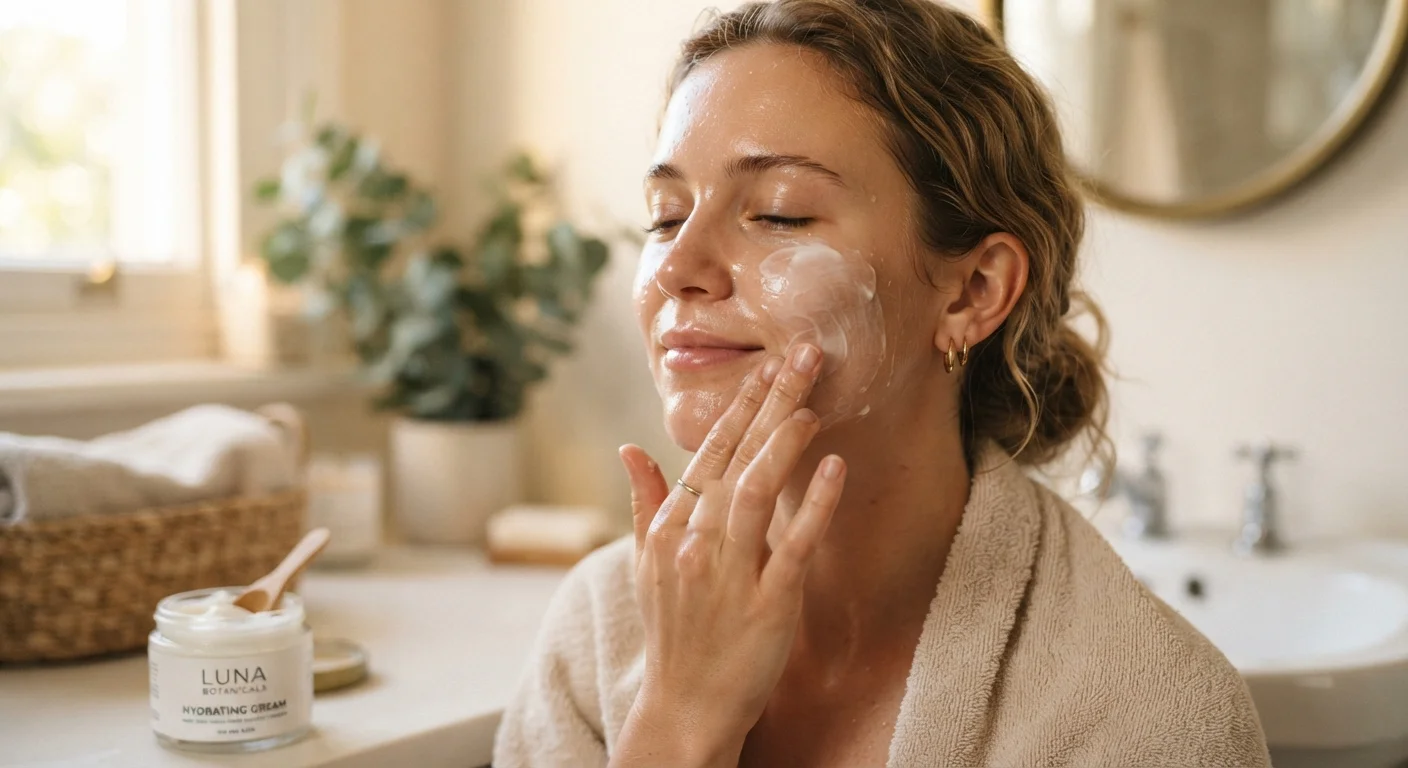
Applying moisturizer to completely dry skin instead of damp skin.
Why it happens: Most of us towel off fully out of habit before reaching for our moisturizer, not realizing that timing makes a real difference.
Relying on a moisturizer with no occlusive ingredients to seal moisture in.
Why it happens: Lightweight, water-based formulas feel pleasant and are heavily marketed, so it's easy to overlook whether they actually lock in hydration.
Applying moisturizer before serums or treatment products.
Why it happens: Intuition suggests that moisturizer is a 'base' layer, and many people simply don't know that thinner, active-ingredient products need direct skin contact to work.
Using a formula that doesn't match your skin type.
Why it happens: Moisturizer marketing tends to be one-size-fits-all, and many people haven't identified their actual skin type or how it changes with seasons.
Over-exfoliating and then expecting moisturizer to compensate.
Why it happens: Exfoliation feels like progress, so it's tempting to do it frequently. But too much disrupts the skin barrier, leaving it unable to hold on to moisture regardless of what you apply.
How to Get More From the Moisturizer You Already Have
Before reaching for a new product, revisit your cleansing habits. Hot water and harsh cleansers strip the skin barrier before moisturizer even gets a chance to work — our face washing habits article covers the most common culprits. If your moisturizer has suddenly started feeling less effective even though nothing in your routine changed, outside factors like seasonal shifts or hormonal changes are often involved. For that scenario, see why your moisturizer stops working.
Moisturizer Is Not a Fix-All
If your skin feels persistently irritated, inflamed, or extremely dry despite consistent moisturizing, that may signal a compromised skin barrier or an underlying condition. This article is for general informational purposes and is not medical advice. Please consult a dermatologist for personalized guidance.
Small, consistent adjustments — timing, formula fit, layering order — tend to make a much bigger difference than swapping products. Give any change at least two to four weeks before evaluating results, and resist the urge to overhaul everything at once.
Don't Layer Actives Without Knowing the Order
Mixing acids, retinoids, and moisturizers without understanding how they interact can cause irritation or reduce effectiveness. If you use active ingredients like vitamin C, AHAs, or retinol, take time to learn the correct layering sequence before adding new steps to your routine.
This article is for general informational and educational purposes only and does not constitute medical or dermatological advice. If you have concerns about your skin, please consult a qualified healthcare professional.