

| U.S. label requirement | All garments must list fiber content by percentage (U.S. Federal Trade Commission Textile Rules) |
| Most common natural fiber | Cotton |
| Most common synthetic fiber | Polyester |
| Typical spandex range in stretch fabrics | 2–5% |
| Label listing order | Fibers listed highest to lowest percentage (FTC Textile and Wool Acts) |
| Fiber affecting care requirements | The most delicate fiber in a blend sets the care standard |
Why Fabric Content Labels Actually Matter
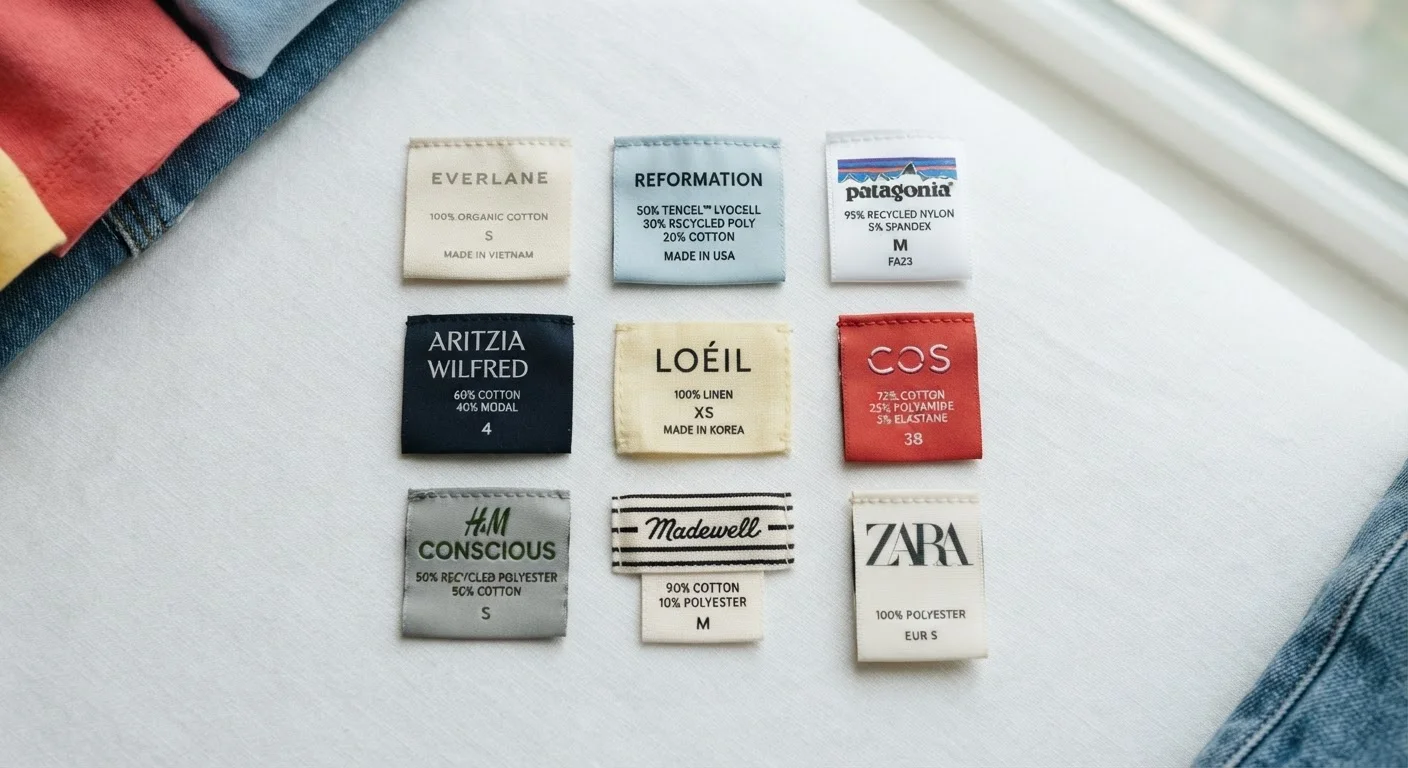
Every garment sold in the United States is required by the Federal Trade Commission (FTC) to carry a fiber content label. That small tag sewn into a seam isn't just a nuisance — it's a roadmap to how a piece will feel against your skin, how long it will last, and how you need to care for it.
Once you know how to read it, you can shop with real confidence — whether you're browsing a thrift rack or checking a product page online. (Speaking of which, our guide to buying clothes online covers exactly what to look for before you commit to a purchase.)
| U.S. label requirement | All garments must list fiber content by percentage (U.S. Federal Trade Commission Textile Rules) |
| Most common natural fiber | Cotton |
| Most common synthetic fiber | Polyester |
| Typical spandex range in stretch fabrics | 2–5% |
| Label listing order | Fibers listed highest to lowest percentage (FTC Textile and Wool Acts) |
| Fiber affecting care requirements | The most delicate fiber in a blend sets the care standard |
The Major Fibers and What They Do
Cotton
Cotton is a natural fiber prized for breathability and softness. It absorbs moisture well, making it a go-to for warm-weather wear and activewear. On the downside, 100% cotton wrinkles easily, can shrink in the wash, and dries slowly when damp. Higher thread counts generally indicate a smoother, more durable weave.
Polyester
Polyester is a synthetic fiber engineered for durability and wrinkle resistance. It holds its shape, dries quickly, and resists shrinking — which is why it's common in athletic wear, workwear, and budget-friendly basics. Its main drawback is breathability: polyester traps heat and can feel clammy in warm conditions. It also tends to hold onto odors over time.
Rayon (Viscose)
Rayon is a semi-synthetic fiber made from processed plant cellulose. It drapes beautifully and feels silky, which makes it popular in flowy tops and dresses. However, it's one of the more delicate fibers — prone to shrinking, stretching, and weakening when wet, so it often requires hand washing or dry cleaning.
Nylon
Nylon is a strong, lightweight synthetic that resists abrasion exceptionally well. You'll find it in hosiery, activewear, and outerwear linings. Like polyester, it's not very breathable, but it adds resilience to any blend it's part of.
Spandex (Elastane or Lycra)
Spandex is almost never used alone — it's the stretch ingredient added in small amounts (usually 2–5%) to give a garment recovery and flexibility. Even a tiny percentage transforms the fit and movement of otherwise rigid fabrics.
Fiber content label
A federally required tag on U.S. garments listing the percentage of each fiber in the fabric. The fibers are listed in order from highest to lowest percentage.
Natural fiber
A fiber derived directly from plants or animals — such as cotton (plant) or wool (animal). Natural fibers tend to be breathable but may require more careful laundering.
Synthetic fiber
A fiber manufactured through chemical processes, typically from petroleum-derived polymers. Examples include polyester, nylon, and acrylic. Synthetics are generally durable and wrinkle-resistant.
Semi-synthetic fiber
A fiber made by chemically processing natural raw materials, usually plant cellulose. Rayon (viscose) and modal are common examples. They often feel natural but behave more like synthetics in washing.
Blend
A fabric that combines two or more different fiber types to balance their properties — for example, mixing cotton's breathability with polyester's durability.
Spandex / Elastane
A highly elastic synthetic fiber added in small amounts to give fabric stretch and shape recovery. Often labeled as Lycra, which is a brand name for elastane.
Blends: Getting the Best of Multiple Fibers
A fabric blend combines two or more fibers to balance their strengths and offset their weaknesses. A classic example is a cotton-polyester blend — say, 60% cotton, 40% polyester. You get cotton's breathability and softness alongside polyester's durability and wrinkle resistance. These blends are workhorses in everyday wardrobes for good reason.
Here's a general pattern to keep in mind: the fiber listed first on the label is present in the highest percentage. So "65% polyester, 35% cotton" leans more synthetic than a "60% cotton, 40% polyester" garment, even though they contain the same two fibers.
~52%
Share of global fiber production that is polyester
According to Textile Exchange's Preferred Fiber & Materials Market Report, polyester has consistently dominated global fiber output in recent years.
~24%
Share of global fiber production that is cotton
Cotton remains the leading natural fiber worldwide, per Textile Exchange industry data.
Understanding fiber content also feeds directly into garment longevity. Fit and construction matter too — a well-fitting piece in a durable blend will outlast a poorly cut 100% cotton shirt every time. Our article on how fit transforms any garment digs into that side of the equation.
From Label to Laundry: What Fiber Content Means for Care
Fabric content is the single biggest factor in how you should wash, dry, and store a garment. High polyester content? Machine wash and tumble dry with confidence. High rayon or wool content? Check for a dry-clean-only tag before tossing it in. Even within blends, the minority fiber often sets the rules — a 90% cotton, 10% wool sweater still calls for gentle handling because of the wool.
For a deeper look at extending the life of everything in your closet, the guide to caring for your clothes walks through laundry habits, storage tips, and maintenance routines organized by fabric type.
The Minority Fiber Rule for Care
When a garment contains a blend, always default to the care instructions for the most delicate fiber present — even if it makes up a small percentage. Washing a 95% polyester, 5% wool piece in hot water can still cause the wool component to felt or shrink. When in doubt, choose the gentler wash option.