

| Average battery lifespan | 3-5 years (AAA Automotive Research) |
| Typical replacement voltage threshold | Below 12.2 volts (resting) |
| Extreme heat effect | Accelerates water loss and plate corrosion (Battery Council International) |
| Cold weather effect | Can reduce battery capacity by up to 50% (AAA Automotive Research) |
| Recommended test frequency | Annually after age 2 |
| Common battery type in passenger vehicles | 12-volt lead-acid (flooded or AGM) |
How Long Should a Car Battery Last?
Most automotive batteries last between three and five years under normal driving conditions, though real-world results vary significantly based on climate, driving habits, and vehicle type. Short daily trips - those under 20 minutes - can be particularly hard on batteries because the alternator doesn't have enough time to fully recharge the battery after each start.
| Average battery lifespan | 3-5 years (AAA Automotive Research) |
| Typical replacement voltage threshold | Below 12.2 volts (resting) |
| Extreme heat effect | Accelerates water loss and plate corrosion (Battery Council International) |
| Cold weather effect | Can reduce battery capacity by up to 50% (AAA Automotive Research) |
| Recommended test frequency | Annually after age 2 |
| Common battery type in passenger vehicles | 12-volt lead-acid (flooded or AGM) |
Batteries in hot-climate regions like the American Southwest often fail earlier than the national average, while drivers in northern states may find cold weather is their bigger challenge. Understanding what erodes battery life is the first step toward avoiding a dead battery at the worst possible moment. For a broader look at how temperature swings affect your vehicle, see our seasonal vehicle prep guide.
Warning Signs of a Weakening Battery
Recognizing early symptoms gives you time to plan - not just react. Watch for these indicators:
- Slow engine crank: If the engine turns over sluggishly on startup, especially in mild weather, the battery may be losing capacity.
- Frequent need to jump-start: Needing jumps more than once in a season is a reliable red flag.
- Dimming headlights at idle: Lights that brighten when you rev the engine suggest the battery isn't holding charge effectively.
- Electrical gremlins: Intermittent issues with power windows, infotainment, or dashboard warning lights can sometimes trace back to a weak battery.
- Swollen battery case: Physical bulging indicates heat damage - a battery in this condition should be replaced promptly and handled carefully.
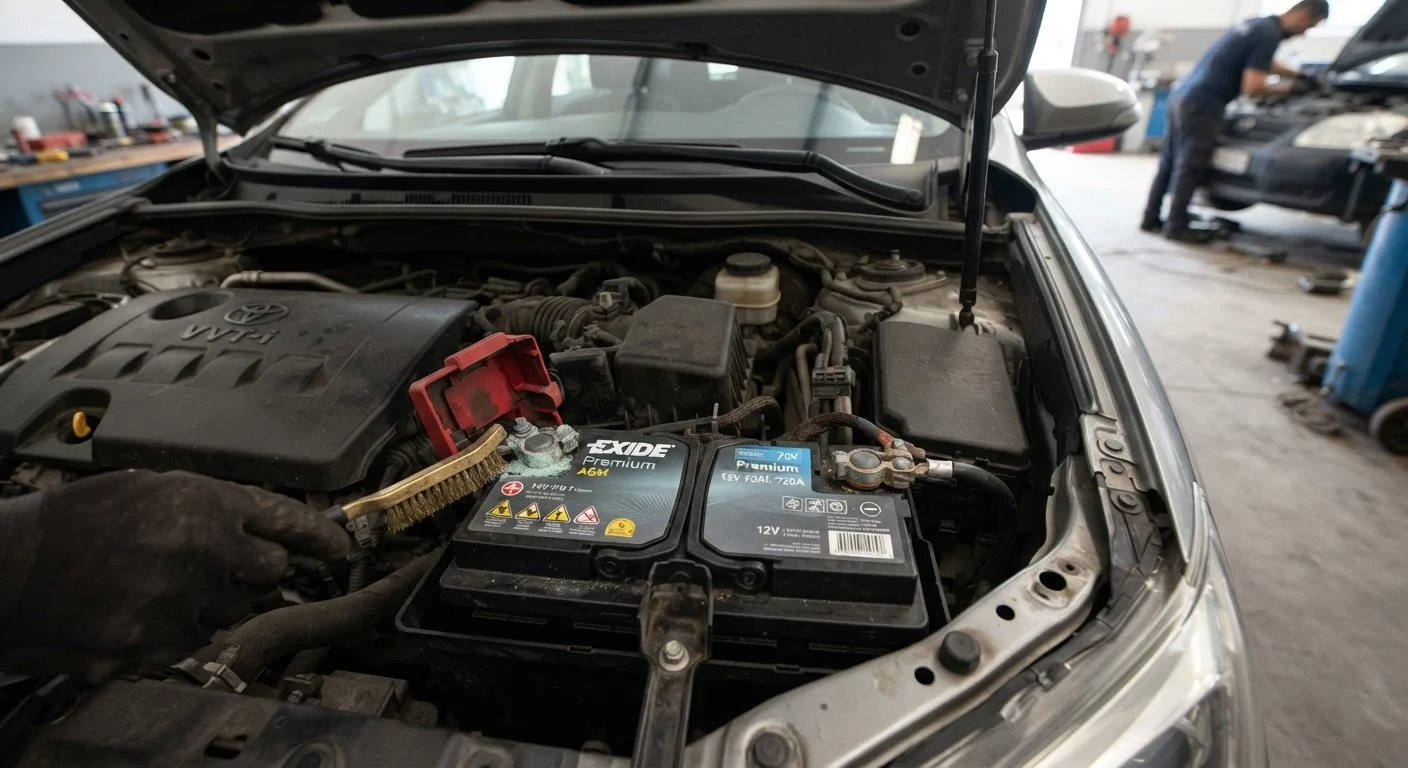
- Visible corrosion on terminals: White or bluish crust around the terminals can impede electrical flow and signals a battery that needs attention.
Cold Cranking Amps (CCA)
A measurement of a battery's ability to start an engine in cold temperatures. Higher CCA ratings indicate stronger starting power in freezing conditions.
Sulfation
A chemical process where lead sulfate crystals accumulate on battery plates over time, reducing capacity and charge acceptance. Sulfation is one of the leading causes of premature battery failure.
Parasitic Drain
A small but continuous draw on a battery's charge from systems like clocks, alarms, or faulty electronics - even when the vehicle is turned off. Excessive parasitic drain can shorten battery life.
State of Charge (SOC)
The current charge level of a battery expressed as a percentage of its full capacity. A fully charged 12-volt automotive battery typically reads around 12.6 volts.
Because some of these symptoms overlap with alternator or starter issues, a proper load test at a shop or auto parts store is the most reliable way to confirm battery condition.
Factors That Accelerate Battery Wear
Several environmental and behavioral factors push batteries toward early failure:
- Extreme heat
- High temperatures accelerate the internal chemical reactions that degrade battery plates and evaporate electrolyte fluid. Consistently parking in direct sun or in hot climates shortens battery life noticeably.
- Extreme cold
- Cold weather doesn't destroy batteries, but it dramatically reduces their available capacity - sometimes by half - while simultaneously demanding more power to crank a cold engine.
- Infrequent driving
- Batteries self-discharge slowly when sitting. Vehicles left unused for weeks can drop to a state of charge low enough to cause sulfation, permanently reducing capacity.
- Parasitic drain
- Aftermarket accessories, faulty relays, or aging factory electronics can pull a small continuous current that drains the battery between uses.
1 in 5
Cars have a weak or failing battery
According to AAA, approximately one in five vehicles brought in for service has a battery in poor condition.
50%
Reduction in battery capacity in extreme cold
AAA testing has found that frigid temperatures can cut a battery's effective capacity roughly in half, stressing the starting system.
3-5 years
Typical car battery service life
Most automotive batteries are expected to last three to five years under normal driving conditions, though climate and habits vary outcomes.
Ignoring these factors is one of the ways a small, inexpensive problem becomes an unexpected breakdown. Our article on deferred maintenance costs explores this pattern in detail.
Battery care also fits into a broader maintenance rhythm - see routine maintenance tasks that are often overlooked for services that quietly protect your vehicle's reliability.
When to Involve a Professional
Battery testing and replacement involve working near electrical systems and, in some vehicles, resetting control modules after a battery swap. If you're unfamiliar with these steps, have a qualified mechanic perform the inspection and replacement. This is especially important for vehicles with advanced driver-assistance systems (ADAS) or stop-start technology, where improper battery installation can affect system calibration.
This article provides general automotive information for educational purposes only. For diagnosis, battery testing, and replacement decisions specific to your vehicle, consult a qualified mechanic.