

Key Takeaways
Vehicle Depreciation
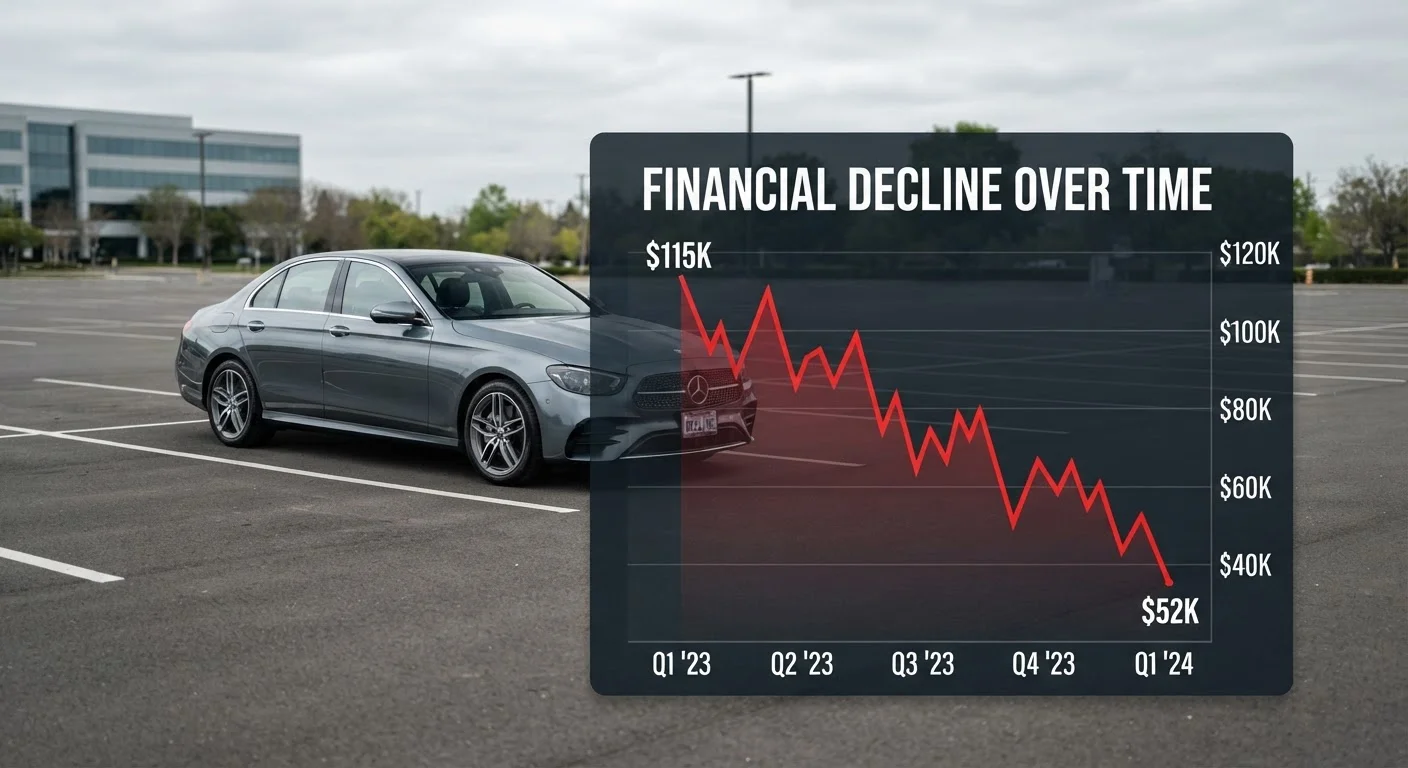
Vehicle depreciation is the decline in a car's market value over time. Every vehicle loses worth from the moment it's purchased, with the steepest drop typically occurring in the first few years of ownership. It represents the gap between what you paid for a car and what it would sell for today.
Depreciation is classified as an implicit cost - it doesn't require a monthly payment, but it directly reduces the equity you hold in the vehicle and affects the total cost of ownership calculations used by financial planners and fleet managers.
What Vehicle Depreciation Actually Means
Depreciation is simply the difference between what you paid for a vehicle and what it is worth at any given point afterward. Unlike a dent in the fender or a worn tire, depreciation is invisible - you don't feel it during your commute, but it quietly erodes the financial value of one of your largest assets.
The moment a new car leaves the dealership lot, it transitions from "new" to "used" in the eyes of the market. That shift alone triggers an immediate drop in resale value. From there, depreciation continues steadily, though the rate slows as the vehicle ages. As part of the full picture of car ownership costs, depreciation deserves its own attention because it consistently ranks as one of the heaviest financial burdens owners carry.
20%
Average first-year new car value loss
Industry estimates commonly place new vehicle depreciation at roughly 20% within the first 12 months of ownership.
~40%
Typical value retained after 5 years
On average, vehicles retain approximately 40% of their original value after five years, though this varies significantly by make and model.
$3,000+
Estimated annual depreciation cost
AAA's annual Your Driving Costs study has historically estimated depreciation as one of the highest per-year ownership costs for new vehicle buyers.
What Drives the Rate of Depreciation
Not all vehicles lose value at the same pace. Several factors shape how quickly a car's market worth declines:
- Age and mileage: The older a vehicle and the more miles it carries, the less it is generally worth. High annual mileage accelerates depreciation meaningfully.
- Brand and model reputation: Vehicles with strong reliability records and broad consumer demand tend to hold value better than those with mixed reviews or niche appeal.
- Condition: A car with a clean interior, no accident history, and documented maintenance history depreciates more slowly than one showing heavy wear or unresolved mechanical issues.
- Market supply and demand: Shifts in fuel prices, consumer preferences, and available inventory all influence resale values. A sudden surge in demand for fuel-efficient vehicles, for example, can affect what comparable models fetch on the used-car market.
- Vehicle category: Certain segments - particularly luxury vehicles and large sedans - tend to depreciate faster than trucks, SUVs, or models with strong enthusiast followings.
Staying on top of routine car maintenance not only keeps your vehicle reliable but also protects resale value over time.
Protect Resale Value With Simple Habits
Keeping thorough maintenance records, avoiding excessive mileage when possible, and addressing minor cosmetic wear promptly all help slow the depreciation curve. A documented service history signals reliability to future buyers and can make a meaningful difference in resale value.
Why Depreciation Matters When You Buy, Finance, or Sell
Depreciation doesn't just affect what you pocket when you sell - it shapes the economics of every phase of ownership.
When financing a vehicle, depreciation creates the risk of being "underwater" - owing more on your loan than the car is currently worth. This is most common in the early years of a loan, when the vehicle is depreciating rapidly while the loan balance decreases slowly. How you acquire the vehicle directly affects how exposed you are to this dynamic.
When leasing, you are in effect paying for the vehicle's projected depreciation during the lease period. Understanding this makes it easier to evaluate whether a lease's monthly payment reflects fair value.
When selling or trading in, depreciation determines your equity position. A car purchased new and sold after three years will have shed a significant portion of its value - a real, out-of-pocket loss even if no accident or damage ever occurred.
See the true annual cost of car ownership to understand how depreciation fits alongside other ongoing expenses.
Being Underwater on a Loan Is More Common Than You'd Think
When a vehicle depreciates faster than the loan balance decreases - particularly with long loan terms and small down payments - owners can find themselves owing more than the car is worth. This situation limits options if you want to sell, trade in, or if an insurance payout falls short of the outstanding balance. Gap insurance is one product designed to address this exposure; terms and availability vary by provider and policy.
Factoring Depreciation Into Long-Term Ownership Decisions
One practical way to reduce the financial weight of depreciation is to hold onto a well-maintained vehicle once the loan is paid off. At that stage, you no longer carry financing costs, and while depreciation continues, the percentage loss from a lower base value is smaller in absolute dollar terms. Long-term ownership involves real trade-offs, but for many drivers, the math favors staying put once a vehicle is paid off and mechanically sound.
Buying a vehicle that is two to three years old is another common strategy. The steepest depreciation curve has already passed, meaning you acquire the vehicle at a lower cost basis while still getting a relatively modern car. This approach won't eliminate depreciation, but it reduces how much of it you personally absorb.
Incorporating depreciation into your annual car ownership review - alongside insurance, maintenance, and loan terms - gives you a clearer picture of what your vehicle is actually costing you each year. That awareness is the foundation of making sound decisions about when to keep, sell, or replace a car.
This article is for general informational and educational purposes only and does not constitute financial or legal advice. Consult a qualified financial professional for guidance tailored to your personal situation.