

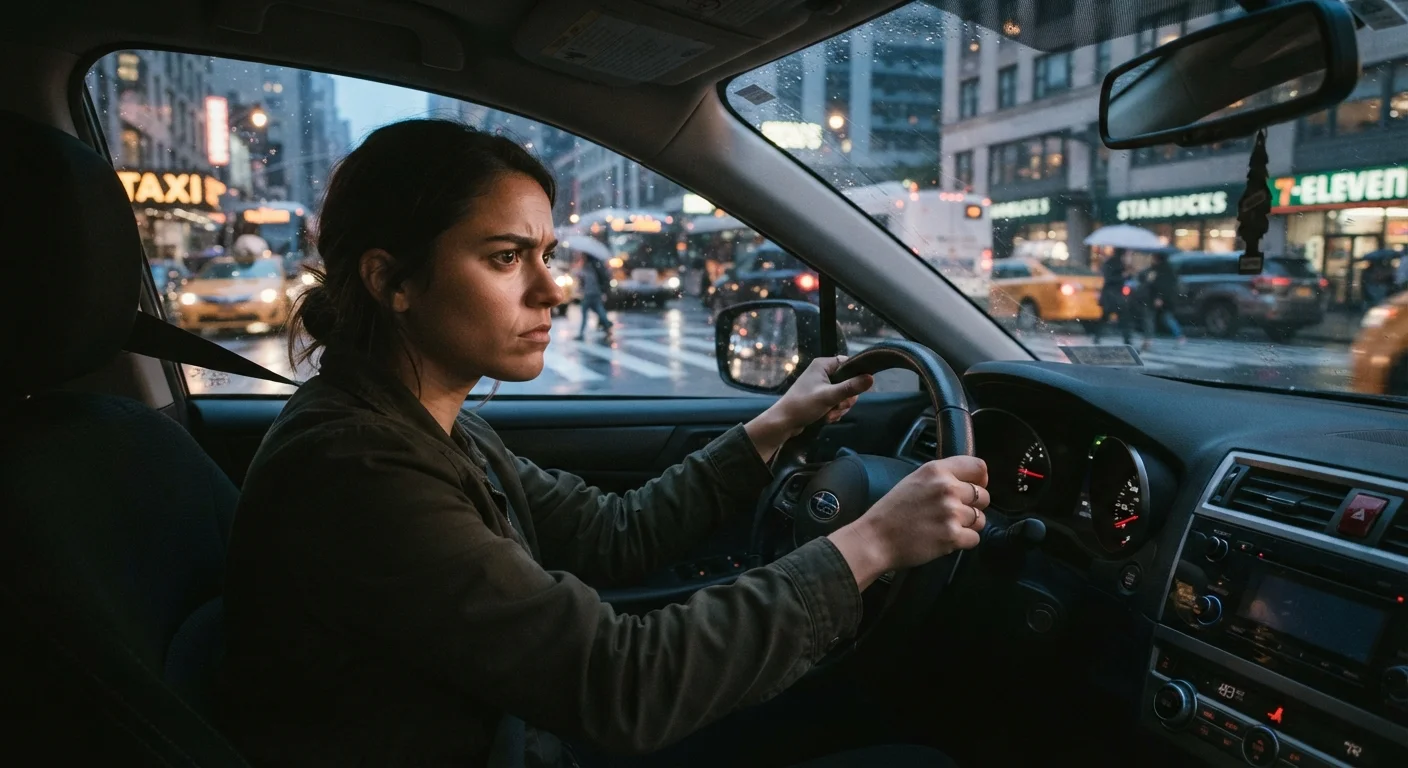
Key Takeaways
What licensing doesn't teach
Passing a driver's license test is a legal threshold, not a safety certification. The written exam verifies knowledge of traffic laws; the road test checks basic vehicle control. Neither is designed to build the perceptual habits and situational awareness that characterize low-crash drivers. For a broader foundation, see our complete overview of safe driving in America.
The habits below aren't advanced techniques. They're practical, learnable behaviors that experienced drivers apply automatically - and that new drivers are rarely shown explicitly. Closing that gap early makes a measurable difference.
Licensing Tests Have Real Limits
Most U.S. driver's license exams test knowledge of rules and basic vehicle control - not the situational awareness and perceptual habits that separate low-risk drivers from high-risk ones. Studies by the AAA Foundation for Traffic Safety and others have found that crash rates among new drivers drop significantly in the first one to two years as experience fills these gaps. Structured practice with a experienced driver, or a post-licensing defensive driving course, can accelerate that learning curve.
The list that follows covers six habits worth building from the very first months behind the wheel.
Scan intersections - don't just obey the signal
A green light confirms your legal right-of-way; it does not confirm the intersection is clear. Experienced drivers pause a beat before entering, scanning left, right, and left again for vehicles running the opposing red, pedestrians mid-crossing, and cyclists filtering through gaps. This habit - sometimes called a defensive intersection scan - takes under two seconds and reduces exposure to one of the most common crash types in urban driving.
The same principle applies to four-way stops: establish eye contact or clear visual confirmation before moving, even when the right-of-way math is simple.
A green light confirms your right-of-way - not that the intersection is actually clear.
Perform head checks, not just mirror checks
Every modern vehicle has blind spots - zones the mirrors simply cannot cover. Relying solely on mirror checks before changing lanes or merging is one of the most consistent errors new drivers make. A quick shoulder check (turning your head roughly 45 degrees toward the target lane) physically confirms what mirrors miss. Improper lane changes are a leading crash cause precisely because this step gets skipped under time pressure.
Adjust mirrors correctly before every drive - seat adjustments change your sightlines - and still supplement them with a physical head check before any lateral move.
Mirrors show most of the picture; a shoulder check fills the gap mirrors cannot reach.
Match following distance to conditions, not just habit
The classic "three-second rule" is a minimum for dry roads in daylight. In rain, fog, or at night, most driving safety educators recommend doubling it. Behind large commercial trucks - which can shed debris and obstruct sightlines - extra distance also gives you more time to react to sudden stops. Posted speed limits reflect ideal conditions; your following distance should reflect the actual ones.
A practical method: pick a fixed roadside marker and count the seconds between when the vehicle ahead passes it and when you do. Adjust until the gap feels uncomfortably large - that discomfort usually means you're at about the right distance.
The three-second rule is a fair-weather floor, not an all-conditions standard.
Use lane positioning strategically
Within a lane, you have roughly three feet of lateral choice - and where you sit matters. On multi-lane roads, positioning toward the center of your lane (rather than drifting toward the lane line) maximizes buffer space on both sides. In construction zones or when parked vehicles line the curb, shifting subtly toward the center reduces the risk of an unexpected door opening into your path.
Lane choice matters too. The right lane on a highway is the travel lane; the left is for passing. Staying in the right lane unless overtaking reduces exposure to aggressive merging and keeps traffic flowing predictably. Highway and city driving demand entirely different positioning instincts.
Where you sit within a lane shapes your margin for error on every road type.
Recognize how fatigue and passengers change your risk profile
Licensing curricula rarely address how sharply driver performance degrades with fatigue or social distraction. Cognitive impairment from severe sleep deprivation can rival alcohol impairment by measurable reaction-time standards - yet drivers often feel alert enough to continue. Nighttime driving compounds fatigue risk significantly.
Passenger dynamics introduce a separate pressure. Research consistently shows that teen drivers face elevated crash risk when carrying peer passengers - not primarily because of noise, but because of subtle social pressure to keep pace, take gaps, or appear confident. Understanding how passengers affect driver behavior is a practical skill no written test covers.
Social pressure from passengers can influence risk-taking as much as distraction does.
Communicate your intentions earlier than feels necessary
Turn signals activated at the last moment give surrounding drivers almost no useful information. Signaling well in advance - before braking, not during it - allows traffic behind and beside you to adjust smoothly. The same applies to brake lights: a light tap before harder braking telegraphs your intent and reduces the chance of a rear-end chain reaction.
Eye contact at crosswalks, a brief wave at four-way stops, and hazard lights in slow-moving traffic all serve the same function: converting your intentions into information other road users can act on. Defensive driving is as much about communicating as it is about reacting.
Signaling early turns your intent into actionable information for everyone around you.
Turning habits into instincts
None of these habits require exceptional skill - they require repetition and intention. The challenge for new drivers is that the learning environment typically ends the moment the license arrives, just when independent, unsupervised driving begins.
Build the Habit Loop Before It Matters
Practice each of these habits in low-stakes conditions - empty parking lots, quiet suburban streets, daylight hours - until they become automatic. Habits formed before stressful situations are far more reliable than behaviors you try to consciously adopt under pressure. Consistency in easy conditions is what creates instinct in hard ones.
Consider supplementing early driving experience with resources like your state's graduated licensing guidelines or a recognized defensive driving course. Understanding common distraction myths is another useful complement to the habits above. Road signs are also worth revisiting - our reference on signs every driver should know cold covers ones that are frequently misread.
This article is for general informational and educational purposes only. Traffic laws, licensing requirements, and driving regulations vary by state. Always follow applicable local laws and consult official state motor vehicle resources for guidance specific to your situation.