

Key Takeaways
Why Gutter Myths Lead to Real Damage
Gutters sit at the edge of your roofline, doing unglamorous work in the rain - which probably explains why so many homeowners pay them little attention until something goes wrong. The trouble is, the assumptions people hold about gutters are often exactly wrong, and acting on them tends to accelerate the damage they're meant to prevent.
Water that can't move freely away from a home's foundation, walls, and soffits creates cascading problems: rot, mold, basement flooding, and cracked foundations are all on the list. Most of that damage is slow-moving and invisible until it's expensive. Getting gutter maintenance right isn't complicated, but it does require setting aside a few stubborn myths first.
This is similar to the kind of misinformation that catches people off guard in other areas of home ownership - as we explored in our look at why caulking fails prematurely, small oversights compound into costly repairs.
Myth
Cleaning gutters once a year is enough for most homes.
Fact
Twice yearly is the standard recommendation for most homes, with additional cleanings needed in heavily treed yards.
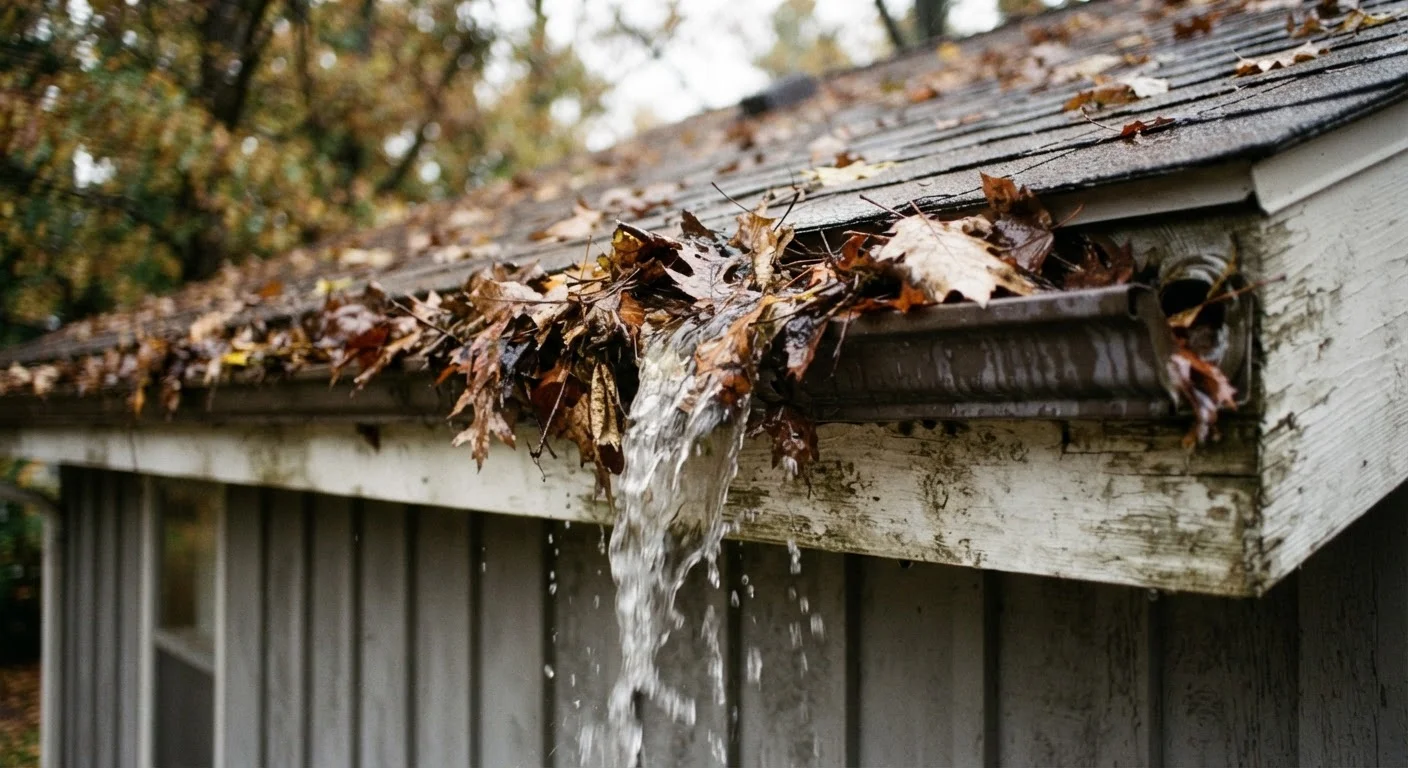
A single annual cleaning - typically done in fall - leaves gutters vulnerable to spring blockages from pollen, seeds, and late-winter debris. Gutters that overflow even occasionally can push water behind fascia boards and into soffits, starting rot that takes years to become visible. Two cleanings per year is the baseline; homes with overhanging trees may need three or four.
Myth
Gutter guards mean you never have to clean your gutters again.
Fact
Gutter guards reduce the frequency of cleaning but do not eliminate it - debris still accumulates on and around them.
Micro-mesh and screen-style guards do a reasonable job of keeping large debris out of the channel, but fine particles like shingle grit, seed pods, and pine needles work their way through or collect on the surface over time. Guards also need to be removed or lifted periodically to inspect the gutter channel underneath. Think of them as a maintenance reducer, not a maintenance eliminator.
Myth
If my gutters look fine from the ground, they're probably working fine.
Fact
Many gutter failures - sagging pitch, small separations at seams, detached hangers - are invisible from the ground.
A gutter can appear perfectly intact from street level while quietly directing water against your fascia, siding, or foundation. The only reliable way to assess gutter condition is to get up close during or after a rainstorm, or to physically inspect the channel, hangers, and downspout connections during cleaning. Discoloration on exterior siding near joints is one of the few ground-level clues worth watching for.
Myth
Vinyl gutters are just as durable as metal options.
Fact
Vinyl gutters are typically less durable than aluminum or steel, particularly in climates with wide temperature swings.
Vinyl (PVC) gutters cost less and resist rust, but they become brittle in sustained cold and can warp in intense heat. Most manufacturers rate them for a shorter service life than aluminum gutters, which are the most common residential choice in the U.S. for that reason. In mild climates, vinyl performs reasonably well; in regions with harsh winters or very hot summers, the trade-off is more significant.
Myth
Downspouts just need to point away from the house - that's enough.
Fact
Downspout placement matters, but discharge distance and the slope of surrounding grade are equally critical.
A downspout that empties two feet from the foundation in an area where the ground slopes back toward the house can still funnel water into basement walls. General guidance calls for at least four to six feet of horizontal discharge distance, combined with a ground slope that grades away from the structure. Downspout extensions and buried drainage pipes are both practical options when site conditions are less than ideal.
Practical Steps That Actually Protect Your Home
Once you've cleared the myths out of the way, gutter maintenance is genuinely straightforward. Here's what a sound routine actually looks like:
- Clean twice a year minimum. Schedule one cleaning after spring pollen and seed season and another after autumn leaves have fully dropped. Homes surrounded by pine trees may need an additional pass in summer, since needles fall year-round.
- Inspect pitch after every significant storm. A gutter that's pulled even slightly away from its hanger will pool water rather than channel it. You can check pitch visually: standing water sitting in a dry gutter after rain has passed is the tell.
- Extend downspout discharge. Water should exit at least four to six feet from the foundation. Splash blocks alone are usually insufficient - consider flexible downspout extensions if water consistently pools near the house.
- Check fascia boards during cleaning. The board your gutter attaches to is often the first surface to show rot from a failing gutter seal. Soft or discolored wood behind the gutter is an early warning worth acting on quickly.
Staying ahead of gutter issues connects to the same principle behind protecting your home's plumbing - consistent, low-effort habits prevent the kind of silent deterioration that produces large repair bills.
Ladder Safety Is Not Optional
Falls from ladders during gutter cleaning are a leading cause of serious home-repair injuries each year. Always use a ladder rated for your weight plus equipment, keep three points of contact, and never lean a ladder against the gutter channel itself - it's not designed to bear that load. On two-story homes or steep pitches, professional cleaning is genuinely the safer choice.
Gutter work that involves ladder use on a two-story or steep-roofline home carries real fall risk. If you're not comfortable working at height, having a professional handle cleaning and inspection is a reasonable and common choice - not an extravagance.