

Key Takeaways
Immediate possession - no waiting for delivery
When timing matters, in-store shopping eliminates shipping delays entirely. You leave with the product, which is particularly valuable for urgent or time-sensitive needs.
Try before you buy reduces return risk
Clothing, footwear, and furniture are easier to evaluate in person. Trying items on or inspecting quality directly prevents many of the mismatches that lead to costly returns.
Easier price comparison across many sellers online
Online shoppers can compare prices from multiple retailers in minutes without leaving their seat, making it harder for any single seller to charge above-market rates.
Wider selection and niche availability online
E-commerce platforms aren't constrained by shelf space, so they typically offer more size options, colorways, and specialized products than physical stores can stock.
In-store staff can answer product-specific questions
For complex purchases - appliances, tools, or electronics - a knowledgeable sales associate can surface relevant details faster than sifting through online reviews and spec sheets.
Online subscription ordering reduces friction for replenishment
Predictable household staples ordered online via auto-ship or subscription often cost less per unit and eliminate repeat trips to the store for routine items.
Online returns can be expensive and time-consuming
Return shipping fees, restocking charges, and the time spent repackaging and mailing items back can offset any price advantage found online - especially for heavier or oversized products.
In-store environments encourage impulse purchases
Physical retail layouts are deliberately designed to increase basket size. Shoppers who browse in-store regularly report spending more than planned, a pattern that compounds over time.
Online, you can't assess quality until delivery
Product photos and descriptions don't always reflect real-world quality. Color accuracy, material texture, and build quality are difficult to judge from a screen alone.
In-store selection is limited by physical space
Local stores carry a fraction of the variants available online, which means shoppers with specific size, style, or specification needs may not find what they're looking for.
Shipping costs and delays add friction online
Free shipping thresholds, delivery windows, and occasional fulfillment errors mean online orders don't always arrive on time or in the condition expected.
Our Verdict
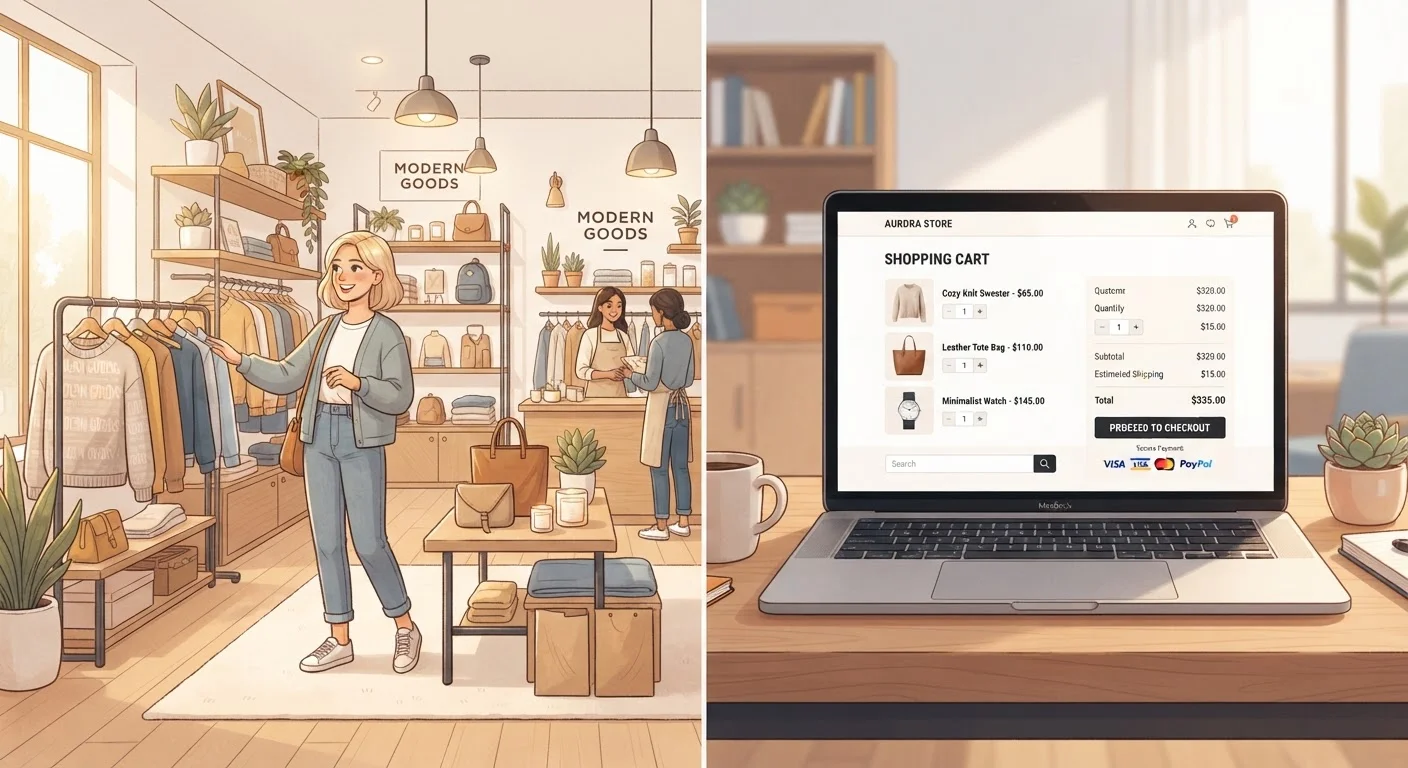
Neither channel is universally smarter. In-store shopping earns its place for tactile, time-sensitive, or high-stakes purchases where you need to see, try, or take something home today. Online ordering makes more sense when you're prioritizing selection, price transparency, or convenience on well-understood products. The best shoppers use both deliberately, matching the channel to what the purchase actually demands.
Anyone who wants to spend more intentionally and stop defaulting to one channel out of habit.
Why the Channel You Choose Actually Matters
Most shoppers have a default mode - they either head to the store or go straight to a browser without much thought. That habit costs money and time in ways that are easy to overlook. The channel you shop through shapes what information you have access to, how easy it is to compare options, how quickly you can return something, and whether you end up with what you actually needed.
This isn't about which experience is more enjoyable. It's about matching the method to the purchase. A pre-purchase checklist can help you slow down and ask the right questions regardless of which channel you're using.
Immediate possession - no waiting for delivery
When timing matters, in-store shopping eliminates shipping delays entirely. You leave with the product, which is particularly valuable for urgent or time-sensitive needs.
Try before you buy reduces return risk
Clothing, footwear, and furniture are easier to evaluate in person. Trying items on or inspecting quality directly prevents many of the mismatches that lead to costly returns.
Easier price comparison across many sellers online
Online shoppers can compare prices from multiple retailers in minutes without leaving their seat, making it harder for any single seller to charge above-market rates.
Wider selection and niche availability online
E-commerce platforms aren't constrained by shelf space, so they typically offer more size options, colorways, and specialized products than physical stores can stock.
In-store staff can answer product-specific questions
For complex purchases - appliances, tools, or electronics - a knowledgeable sales associate can surface relevant details faster than sifting through online reviews and spec sheets.
Online subscription ordering reduces friction for replenishment
Predictable household staples ordered online via auto-ship or subscription often cost less per unit and eliminate repeat trips to the store for routine items.
Where In-Store Shopping Has a Real Edge
Physical retail isn't just a relic - it provides genuine advantages in specific situations.
Fit and feel: Clothing, shoes, mattresses, and furniture are categories where tactile experience matters enormously. Sizing charts help, but they don't replace actually trying something on. For fashion purchases in particular, checking what to look for before buying clothes online illustrates just how many variables an in-person try-on resolves instantly.
Immediate need: If you need something today - a replacement part, a gift you forgot, groceries for tonight - in-store wins by default. Expedited shipping rarely matches walking out with the item in hand.
Fresh and perishable goods: Produce, meat, and prepared foods are categories where being able to inspect quality directly is meaningful. You can assess ripeness, check expiration dates, and choose your specific item rather than accepting what's picked for you.
High-cost, low-tolerance-for-error purchases: For appliances, electronics you'll rely on daily, or anything with a narrow return window, seeing the product and asking a staff member questions can prevent expensive mistakes.
When In-Store Price Matching Applies
Many large retailers offer price-matching policies that let you capture an online price while still buying in-store. This can eliminate the main cost argument for going online while preserving the advantages of immediate pickup and easier returns. Policies vary widely by retailer, so it's worth asking at the service desk before assuming it isn't available.
Where Online Orders Work in Your Favor
E-commerce wins in a different set of circumstances - and those circumstances are common enough that online channels have become the default for many shoppers.
Price transparency: It's genuinely easier to compare prices across multiple sellers online in a few minutes than it is to drive between stores. This matters most for commodity items - electronics, household supplies, or standardized products - where the item is identical regardless of where you buy it.
Selection depth: Physical stores are limited by shelf space. Online channels carry wider size ranges, more color options, and niche or specialty items that local retailers simply don't stock.
Convenience for replenishment: Predictable repeat purchases - cleaning supplies, personal care staples, pet food - are strong candidates for online ordering, especially through subscription or auto-ship arrangements that reduce per-unit cost.
Research-heavy categories: Online shopping lets you read specifications, customer reviews, and product comparisons without time pressure. This is valuable when you're buying something unfamiliar and need to build confidence before committing.
Online returns can be expensive and time-consuming
Return shipping fees, restocking charges, and the time spent repackaging and mailing items back can offset any price advantage found online - especially for heavier or oversized products.
In-store environments encourage impulse purchases
Physical retail layouts are deliberately designed to increase basket size. Shoppers who browse in-store regularly report spending more than planned, a pattern that compounds over time.
Online, you can't assess quality until delivery
Product photos and descriptions don't always reflect real-world quality. Color accuracy, material texture, and build quality are difficult to judge from a screen alone.
In-store selection is limited by physical space
Local stores carry a fraction of the variants available online, which means shoppers with specific size, style, or specification needs may not find what they're looking for.
Shipping costs and delays add friction online
Free shipping thresholds, delivery windows, and occasional fulfillment errors mean online orders don't always arrive on time or in the condition expected.
The Hidden Costs That Shift the Calculus
Neither channel is as straightforward as it appears on the surface.
~70%
Online shoppers who have made an impulse buy
Various consumer surveys suggest a majority of online shoppers report unplanned purchases, challenging the idea that digital channels are immune to impulse-buying dynamics.
16-30%
Typical online return rate by category
Return rates for online apparel purchases are frequently cited in retail industry analyses as significantly higher than in-store return rates, reflecting the fit-and-feel gap.
Online hidden costs: Shipping fees, return shipping charges, restocking fees, and the cost of your time spent managing a return can erode the price advantage you found online. Some categories - furniture, oversized items, and anything requiring assembly confirmation - carry meaningful return friction.
In-store hidden costs: Impulse purchases are significantly easier to make in a physical environment. Research consistently finds that shoppers spend more per trip in-store than planned, partly due to how retail layouts are designed to influence movement and attention. Understanding how store layouts shape buying behavior can help you shop on your own terms.
Reward structures also vary by channel. Some credit cards offer elevated cash back for online purchases; others favor in-store. If you use a rewards card, it's worth understanding how reward structures compare before assuming one channel pays better.
A Simple Framework for Deciding
Before you shop, ask three questions:
- Does fit, feel, or freshness matter? If yes, lean toward in-store.
- Is this a well-understood, standardized product? If yes, online comparison usually makes sense.
- What's the realistic return path if this doesn't work? Factor in time and cost, not just policy language.
For anything involving a meaningful spend, building a structured shopping list before you go - whether to a store or a website - reduces unplanned spending in both environments. And if you're evaluating brand choices once you've picked your channel, the question of when store brands are worth the switch is worth a separate look.
The goal isn't loyalty to a channel. It's spending with enough intention that you get what you actually need at a price that makes sense.