

Key Takeaways
Option A
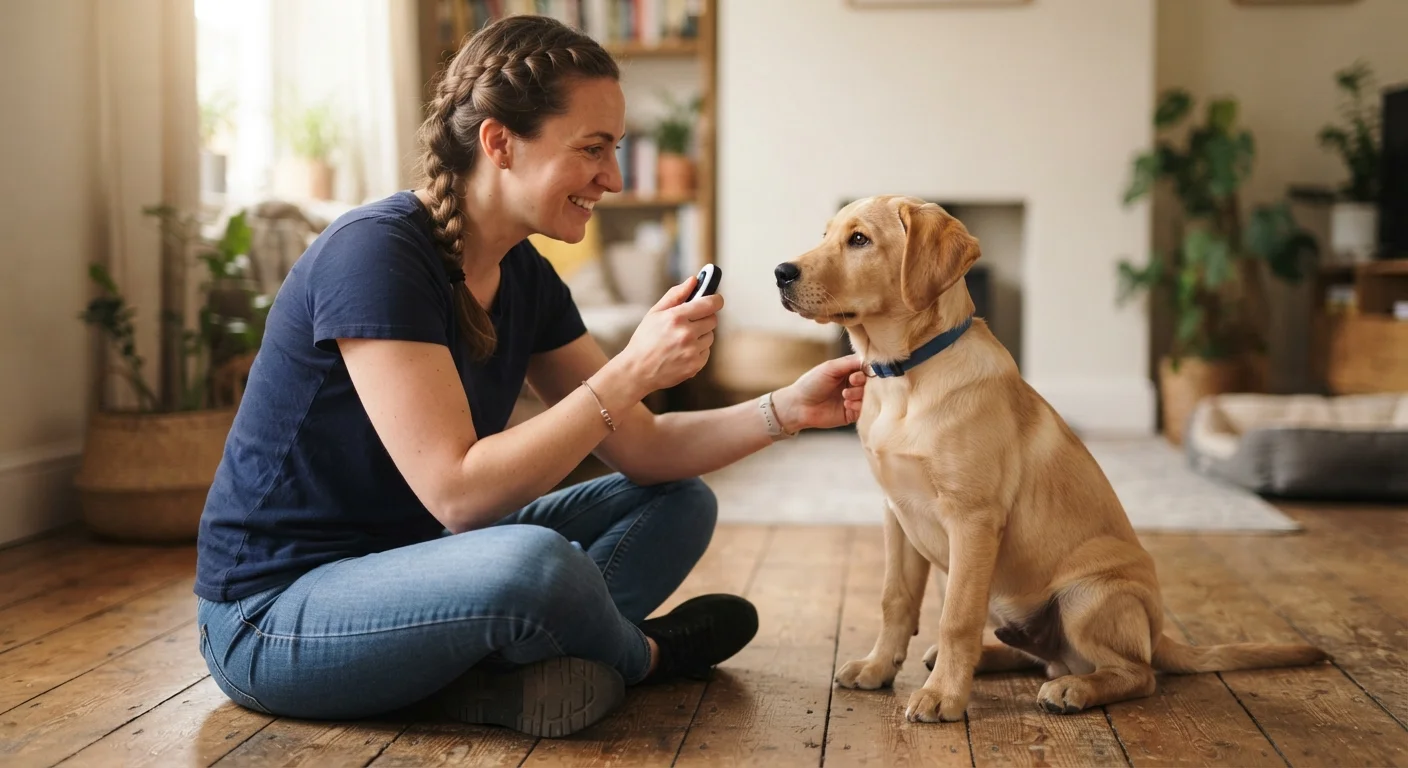
Clicker Training
The precise, consistent mechanical marker.
Best for: Owners who want a sharp, unambiguous signal and are willing to carry a small device during sessions.
Option B
Verbal Markers
The hands-free, always-available alternative.
Best for: Owners who prefer a marker they never have to remember to bring and who can maintain a consistent tone of voice.
If you want the most timing-precise marker possible
Clicker Training
The click is brief, distinct, and sounds identical every single time — eliminating tonal variation that can confuse a pet.
If you train in situations where your hands are often occupied
Verbal Markers
A verbal marker like 'Yes!' requires nothing in your hand and travels naturally into almost any real-world setting.
If you are training a cat or a small animal for the first time
Clicker Training
Cats and small animals tend to respond quickly to the novel, neutral sound of a clicker, which carries no pre-existing associations.
If your pet is noise-sensitive or easily startled
Verbal Markers
Some animals find the sharp click startling; a calm, soft spoken word keeps the learning experience stress-free.
If consistency across multiple household members is the priority
Clicker Training
A clicker sounds the same regardless of who uses it, reducing the variability that comes from different voices and tones.
The Shared Foundation: What a Marker Actually Does
Whether you pick up a clicker or say a short word, you are using what trainers call a conditioned reinforcer — a neutral signal that has been paired repeatedly with a reward until it carries predictive value on its own. The marker tells your pet: that exact behavior, in that exact moment, is what earned your reward.
This concept is rooted in classical conditioning. Before either tool works, it must be "loaded" — presented immediately before a treat several times so the pet forms a reliable association. Once loaded, precise timing matters enormously: a marker delivered even a second late can accidentally reinforce a different behavior. For a deeper look at the underlying science, see how positive reinforcement actually works.
| Criterion | Clicker Training | Verbal Markers |
|---|---|---|
| Consistency of signal | Identical every press | Varies with voice and mood |
| Equipment needed | Clicker device required | None — voice only |
| Timing precision | Very high (~0.1 sec click) | High if practiced, variable if not |
| Hands-free use | Difficult without accessories | Fully hands-free |
| Noise-sensitive pets | May startle some animals | Gentler and adjustable |
| Multi-trainer consistency | High — same sound regardless of user | Lower — voices differ |
| Cross-species versatility | Widely used across many species | Effective; requires tonal discipline |
Where Clicker Training Has a Real Edge
The clicker's primary advantage is acoustic consistency. The sound is short (roughly 0.1 seconds), tonally flat, and physically identical from press to press. It carries none of the emotional coloring that human voices inevitably add — excitement, frustration, fatigue. For pets learning precise physical skills, like agility courses or complex trick chains, that clarity can accelerate learning noticeably.
Clickers also create a cleaner signal in noisy environments such as dog parks, because the sound is distinct from ambient human speech. And because the click is unusual, it grabs attention without the pet needing to sort it out from other words they hear throughout the day.
~0.1 sec
Typical clicker sound duration
The brief, sharp click is short enough to mark a specific instant of behavior with high precision.
2–3 sessions
Average time to load a new marker
Most trainers report that consistent pairing of the marker with high-value rewards establishes the association within a few short sessions.
One practical limitation: you need a free hand. Clicker training can become awkward when you are managing a leash, multiple pets, or working with an animal in an enclosure. Some trainers attach a clicker to a wrist coil to solve the hand-free challenge. If you're still planning the overall setup of your sessions, this session-preparation guide covers equipment and environment decisions worth thinking through first.
Where Verbal Markers Hold Their Own
A verbal marker — commonly a short, crisp word like "Yes" or "Good" — is always with you. There is no device to forget, lose, or fumble at the critical moment. That convenience matters in real-world training, where the most teachable moments often appear without warning.
Verbal markers also allow for subtle gradations some trainers find useful. For instance, some use a high-pitched "Yes!" for high-value behaviors and a calmer "good" as a softer bridge. That flexibility is a double-edged sword, however: inconsistency in tone can muddy the signal for the animal.
Cats, who are often described as independent and difficult to engage, can be highly responsive to verbal markers when the word chosen has no pre-existing associations and is delivered consistently. Cat training fundamentals explores how timing and vocal cues apply specifically to feline learners.
For households where multiple family members train the same pet, verbal markers introduce variability — different voices, pitches, and pacing. This is solvable with practice and agreement on a standard word, but it requires coordination that a clicker automatically handles.
Making Your Choice — and Sticking With It
The honest answer is that either method works when applied correctly and consistently. Research in animal learning has not established one marker type as categorically superior for all species in all contexts. Your best choice is the one that fits your daily habits, your pet's sensory sensitivities, and the training environments you actually encounter.
A few practical considerations to guide your decision:
- Noise sensitivity: If your pet startles easily, introduce a clicker cautiously — muffle it in your pocket at first — or default to a verbal marker.
- Multi-trainer households: A clicker standardizes the signal; everyone presses the same button. Verbal markers work if every trainer commits to the same word and a neutral tone.
- Species: Clickers have an extensive track record across dogs, cats, birds, rabbits, and marine mammals. Verbal markers are also cross-species but require more conscious tonal control.
- Switching markers: If you decide to change methods after initial training, condition the new marker from scratch — pair it with rewards repeatedly before using it in real training.
For a broader view of how these choices fit into a full training plan, the complete pet training and behavior reference is a useful starting point. And if you're weighing structured instruction options alongside your marker choice, group classes vs. private instruction can help you think through learning formats.
This article is for general informational purposes. For guidance specific to your pet's health or behavioral needs, consult a qualified veterinarian or certified animal behaviorist.