

Key Takeaways
Our Verdict
Classic pieces consistently deliver better value over time because they remain wearable across seasons, occasions, and shifting style cycles. Trendy pieces still have a place — but they're best approached as low-cost experiments rather than significant investments. The most versatile wardrobes blend a strong classic foundation with a small, rotating selection of trend-forward accents.
| Best for | Recommended |
|---|---|
| Budget-conscious shoppers building long-term wardrobe value | Classic Pieces |
| Style enthusiasts who enjoy experimenting with what's current | Trendy Pieces (at lower price points) |
| Those dressing for professional or formal settings | Classic Pieces |
| Shoppers who want a refreshed look each season without a full closet overhaul | Mixed Approach |
The Real Cost of Getting This Wrong
Most of us have experienced closet regret — a jacket that felt essential in October and felt embarrassing by March. The fashion industry moves fast, and without a clear framework for what to spend money on, it's easy to accumulate a wardrobe full of clothes and still feel like you have nothing to wear.
The distinction between classic pieces (items with enduring silhouettes, neutral or versatile color palettes, and broad wearability) and trendy pieces (items tied to a specific moment in fashion's cycle) is one of the most practical concepts in everyday dressing. Getting this right has real financial implications — a well-chosen classic coat worn for a decade costs far less per wear than three trend-driven coats replaced every few years.
This isn't about being boring or avoiding personality. It's about building a smart foundation. As our guide to neutrals in your wardrobe explains, a strong base actually gives you more freedom to play with bolder choices on top.
Classic vs. Trendy: How They Compare
Before deciding where to spend, it helps to see both options clearly side by side. The table below covers the factors that matter most to everyday shoppers.
| Classic Pieces | Trendy Pieces | |
|---|---|---|
| Longevity | 5–10+ years of wearability | Typically 1–2 seasons |
| Cost per wear | Low — spread over many uses | High — limited wearable window |
| Versatility | Works across occasions and seasons | Often occasion- or season-specific |
| Upfront price | Higher investment often justified | Ranges widely; often affordable |
| Style novelty | Familiar, understated appeal | High excitement and freshness |
| Resale or secondhand value | Retains value better over time | Depreciates quickly |
| Risk of regret | Low — enduring silhouettes age well | Higher — tied to a specific moment |
One pattern stands out immediately: classic pieces require more upfront investment but consistently outperform on longevity, versatility, and overall cost efficiency. Trendy pieces score higher on excitement and novelty — which is genuinely valuable, but at the right price point.
What Makes Something Truly Classic?
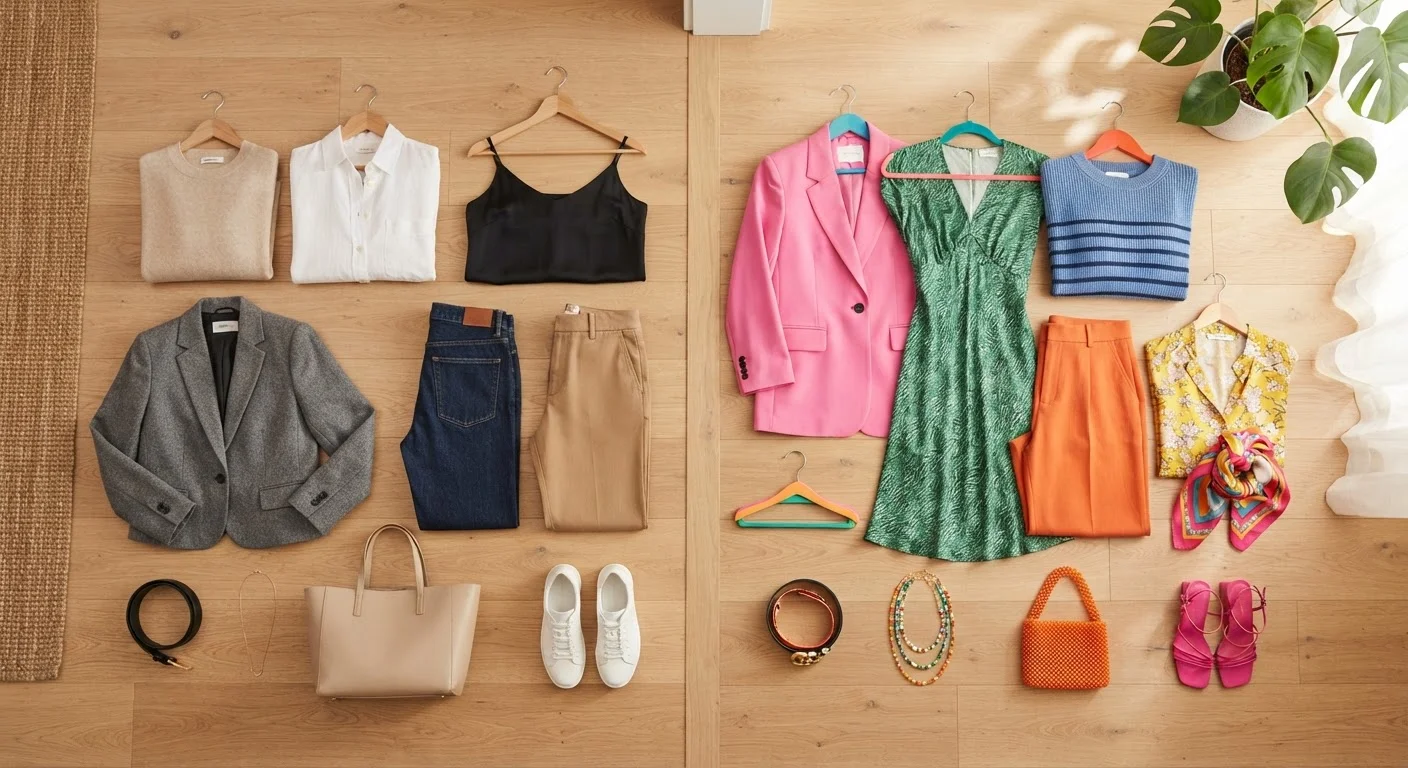
A piece earns the "classic" label when it satisfies a few reliable criteria. First, silhouette stability: straight-leg trousers, crew-neck sweaters, tailored blazers, and wrap dresses have appeared in wardrobes across decades without looking dated. Second, color neutrality: navy, camel, black, white, and gray coordinate naturally with most other clothing. Third, fabrication quality: natural fibers like cotton, wool, and linen tend to hold their shape and appearance longer than synthetic blends.
Classic pieces also share a quality of occasion flexibility — a well-cut white button-down can move from a work meeting to a weekend brunch to a dinner reservation with minimal effort. That kind of range is something trend pieces rarely offer. If you want practical help identifying and organizing these staples, our guide to seasonal wardrobe transitions walks through how to assess what you own and what gaps to fill.
A Simple Test for 'Classic' Status
Before buying a piece you think might be a classic, search for it in photos from five to ten years ago. If a very similar version appeared then and still looks appropriate today, that's a strong signal of staying power. Straight-leg jeans, white Oxford shirts, and structured trench coats all pass this test consistently. If you can't find it in older wardrobes, it's likely more trend than timeless.
When Trendy Pieces Are Worth It (and When They're Not)
Trendy pieces aren't the enemy — context matters. Micro-trends like a specific shoe silhouette or an oversized lapel are best explored at lower price points: a secondhand find, an affordable option from a discount retailer, or even a rental. If you enjoy the trend after a season of wearing it, it may signal a genuine preference worth investing in. If it sits unworn after two months, you've lost relatively little.
Where trend spending goes sideways is when shoppers pay classic-piece prices for trend-driven items. A heavily embellished coat in a neon colorway may cost as much as a quality camel wool coat — but the camel coat will still be wearable in five years. The neon option almost certainly won't. It's worth reading our comparison of thrift shopping vs. fast fashion for more on how sourcing affects both cost and quality when chasing current looks.
Don't Pay Classic Prices for Trend Items
One of the most common wardrobe mistakes is spending heavily on a trend piece because it feels exciting in the moment. A high price tag can create a false sense of long-term value — but construction and design tied to a specific micro-trend won't age well regardless of what you paid. Save your bigger budget for items with proven staying power, and keep trend spending capped at what you'd comfortably consider disposable.
That said, trend pieces serve real emotional and creative purposes. Expressing personality, celebrating a cultural moment, or simply enjoying the fun of fashion — these are legitimate reasons to experiment. Just do it affordably.
Building a Wardrobe That Works Over Time
A practical starting point: aim for a wardrobe that is roughly 70–80% classic foundation pieces and 20–30% current or personal accent pieces. This isn't a rigid rule — it's a mental model that prevents the closet from becoming a graveyard of one-season wonders.
When evaluating a potential purchase, a few questions help cut through marketing noise: Will I wear this in three years? Does it work with at least five other things I already own? Would I be comfortable paying this price for something I might only wear a handful of times? These questions apply the same logic as cost-per-wear analysis used in personal finance — not unlike the way long-term thinking shapes investment decisions.
Caring for what you buy matters just as much as what you buy. Our guide to making clothes last covers the laundry and storage habits that protect the value of every piece in your closet. And if you're building from scratch on a limited budget, see our tips for assembling a work wardrobe affordably for a prioritized, practical approach.