

Key Takeaways
Neutral Colors
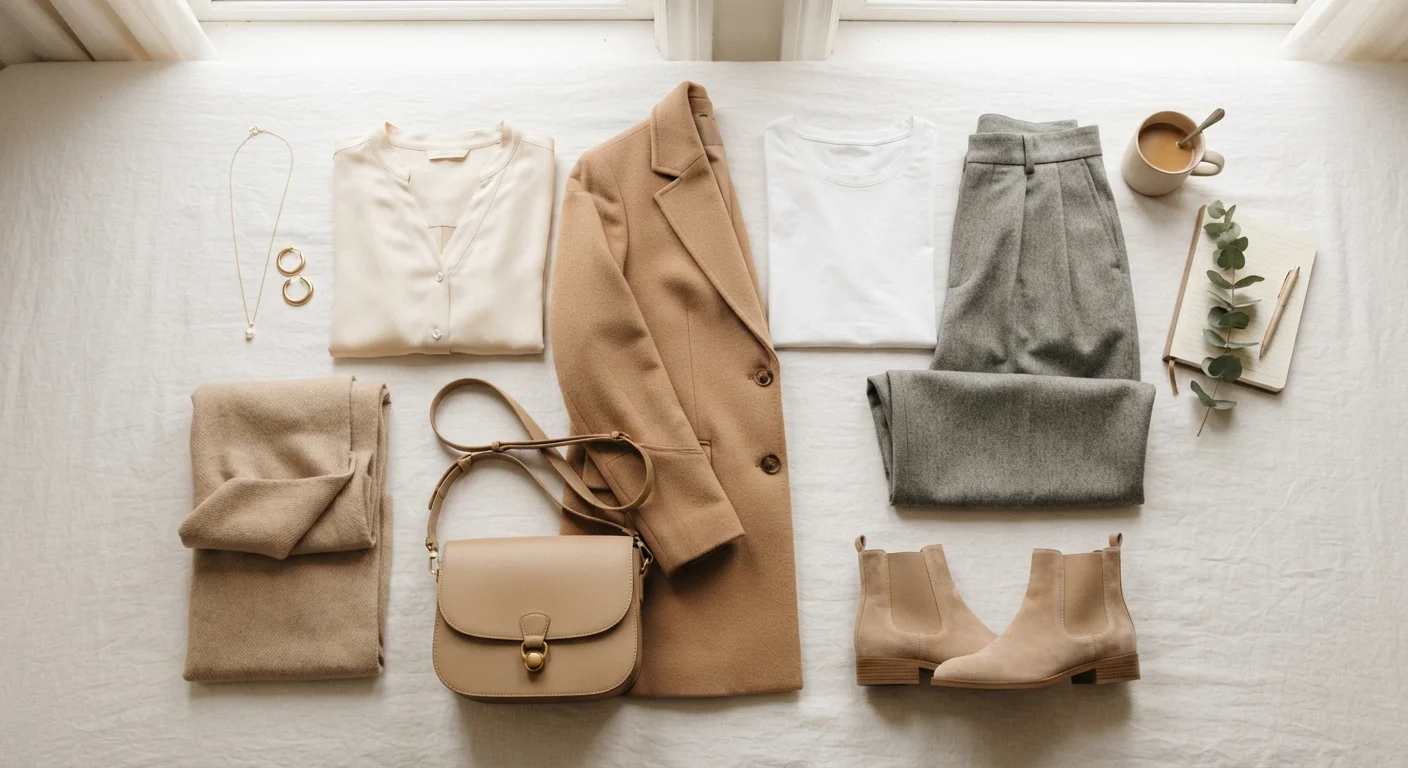
Neutral colors are shades that don't compete with other colors — they complement almost everything without clashing. Classic neutrals include white, black, grey, navy, camel, beige, tan, and cream. Because they lack strong color saturation, neutrals act as a visual anchor in any outfit, making them exceptionally easy to mix and match.
In color theory, true neutrals (white, black, grey) have no hue. However, fashion extends the term to include low-saturation earth tones like tan, camel, and navy, which function similarly in styling contexts.
What Actually Counts as a Neutral?
The word "neutral" gets used loosely, so it helps to define it clearly. In wardrobe terms, a neutral is any color that pairs harmoniously with a wide variety of other colors without creating visual conflict. The traditional core neutrals are white, black, and grey — shades with no true hue. Fashion expands this to include navy, beige, camel, tan, ivory, and cream, all of which behave like neutrals in practice because of their low color intensity.
Some style guides also extend the category to include warm browns, khaki, and even a muted olive — shades that, while technically hued, function as grounding tones in most outfit combinations. The working test is simple: if a color reads as a background rather than a statement, it's functioning as a neutral.
Warm vs. Cool Neutrals: A Quick Guide
Warm neutrals include cream, ivory, camel, tan, and warm beige — they carry yellow or orange undertones. Cool neutrals include bright white, charcoal, slate grey, and true navy — they carry blue or grey undertones. Most wardrobes benefit from a mix of both families, but being aware of the distinction helps you avoid subtle clashes when layering multiple neutrals together.
Knowing where your pieces land on the neutral spectrum helps when you're building outfits systematically — something the classic vs. trendy pieces guide explores in depth for building a lasting closet.
Why Stylists Build Around Neutrals
Professional stylists rely on neutrals for one straightforward reason: versatility multiplies outfit options. A single camel blazer can layer over a white tee, a navy blouse, or a floral dress. A pair of grey trousers works with nearly every color in your closet. When the foundational pieces of a wardrobe are neutral, every new addition — whether it's a colorful print or a bold accessory — integrates more easily.
This logic is the backbone of capsule wardrobe planning, where a modest number of well-chosen pieces covers a wide range of occasions. If you're working with a limited clothing budget, neutrals offer the strongest return: fewer pieces required, more combinations possible. For a practical application of this principle, the guide to building a work wardrobe on a budget offers concrete strategies.
3–5x
Outfit combinations per neutral piece
Fashion stylists commonly estimate that each well-chosen neutral garment can generate three to five distinct outfit combinations when paired with existing wardrobe items.
~60%
Of closet items often go unworn
Research from wardrobe consultancy studies has repeatedly found that a significant share of owned clothing goes unworn; a neutral-anchored approach directly counters this by maximizing piece utility.
Top 3
Most-worn garment colors globally
Industry wardrobe surveys consistently show black, white, and blue (navy) rank among the most frequently worn colors across demographics and climates.
Mixing Neutrals: How to Keep It Looking Intentional
One common concern is that combining multiple neutrals — cream pants with a beige top and tan shoes — will look monotone or unfinished. The solution is texture and tonal contrast. When you vary the surface of fabrics (a crisp cotton shirt against a soft wool coat, for example), the eye reads the combination as deliberate rather than accidental.
A few reliable pairings:
- White + camel: Clean and warm, works across casual and smart-casual settings.
- Charcoal + navy: A sophisticated dark-neutral combination that reads as polished without being formal.
- Cream + tan + warm brown: Tonal dressing in the warm-neutral family — a popular approach that feels cohesive and editorial.
For those who want to add print to a neutral base, understanding pattern mixing is a natural next step — neutrals make patterned pieces easier to incorporate without overwhelming an outfit.
Test Before You Commit
When shopping for neutrals, hold potential pieces next to items you already own. Warm and cool neutrals can subtly clash in side-by-side comparisons even when each looks fine in isolation. Checking compatibility in natural light before purchasing saves wardrobe regret later.
Common Pitfalls — and How to Avoid Them
Even with neutrals, a few missteps come up regularly. The most common: treating all neutrals as identical. A warm ivory and a cool bright white can clash if they sit next to each other without intention. Similarly, a warm camel and a cool grey can feel slightly off-key unless balanced by a third element or separated by strong contrast.
Another pitfall is relying so heavily on neutrals that the wardrobe starts to feel flat and uninspiring. Neutrals work best as a system, not a rule — they're designed to be a foundation, not a ceiling. A single accent color, whether in a scarf, bag, or shoe, can re-energize an all-neutral outfit immediately.
Finally, fit matters as much as color. Neutral pieces in poor fits can disappear visually; the same shades in well-fitted garments read as considered and intentional. When you transition between seasons and reassess your wardrobe, it's a good moment to check fit alongside color — the seasonal wardrobe transitions guide is a helpful resource for that process.
If you're navigating dress codes that require specific color and formality calibrations, dress codes decoded explains how neutrals slot into each occasion level.