

Key Takeaways
Skin Type
Skin type refers to the natural characteristics of your skin determined largely by how much sebum (oil) your sebaceous glands produce and how well your skin retains moisture. The four commonly recognized types are oily, dry, combination, and sensitive. Knowing your skin type helps you choose products and habits that work with your skin rather than against it.
Skin type is influenced by genetics, hormones, and environmental factors; it can shift with age, climate, or health changes, making periodic reassessment worthwhile.
What Science Says About Skin Types
Your skin type isn't a marketing label — it's rooted in biology. The key driver is your sebaceous glands, which produce sebum, a waxy, oily substance that lubricates and protects the skin. How much sebum your glands produce, combined with your skin's ability to retain water (called transepidermal water loss, or TEWL), determines how your skin looks and feels on a daily basis.
Genetics play a significant role in setting your baseline, but hormones, climate, and age all push that baseline up or down over time. That's why a teenager might have oily skin that gradually shifts to combination or normal by their thirties. Understanding this helps take the guesswork out of product choices and routine-building.
For a deeper look at how your skin's protective barrier fits into this picture, see our article on understanding your skin barrier.
~50%
Adults who self-report sensitive skin
Studies published in dermatology literature consistently find that roughly half of adults in Western countries describe their skin as sensitive, making it one of the most commonly reported skin characteristics.
3
Core routine steps for any skin type
Dermatologists broadly agree that a foundational routine — cleanse, moisturize, SPF — applies universally, with formulation differences accounting for individual skin type needs.
The Four Main Skin Types — What Each One Actually Means
Most skin fits into one of four categories, though overlap is common:
- Oily: Overactive sebaceous glands produce excess oil throughout the day, leading to shine, enlarged pores, and a higher likelihood of breakouts. Oily skin is often more resilient and slower to develop fine lines.
- Dry: Lower sebum production and/or a compromised moisture barrier cause the skin to feel tight, look dull, and sometimes flake. Dry skin can be more prone to fine lines and sensitivity.
- Combination: The T-zone (forehead, nose, and chin) is oily while cheeks remain normal to dry. This is the most common skin type, and it often requires a nuanced routine that addresses both zones.
- Sensitive: The skin reacts more readily to ingredients, temperature changes, or environmental stressors with redness, stinging, or itching. Sensitive skin can coexist with any of the other three types.
Not sure which category fits you? The skin types explained guide walks through each type in detail, including how they look and feel throughout the day.
How to Build a Routine Around Your Skin Type
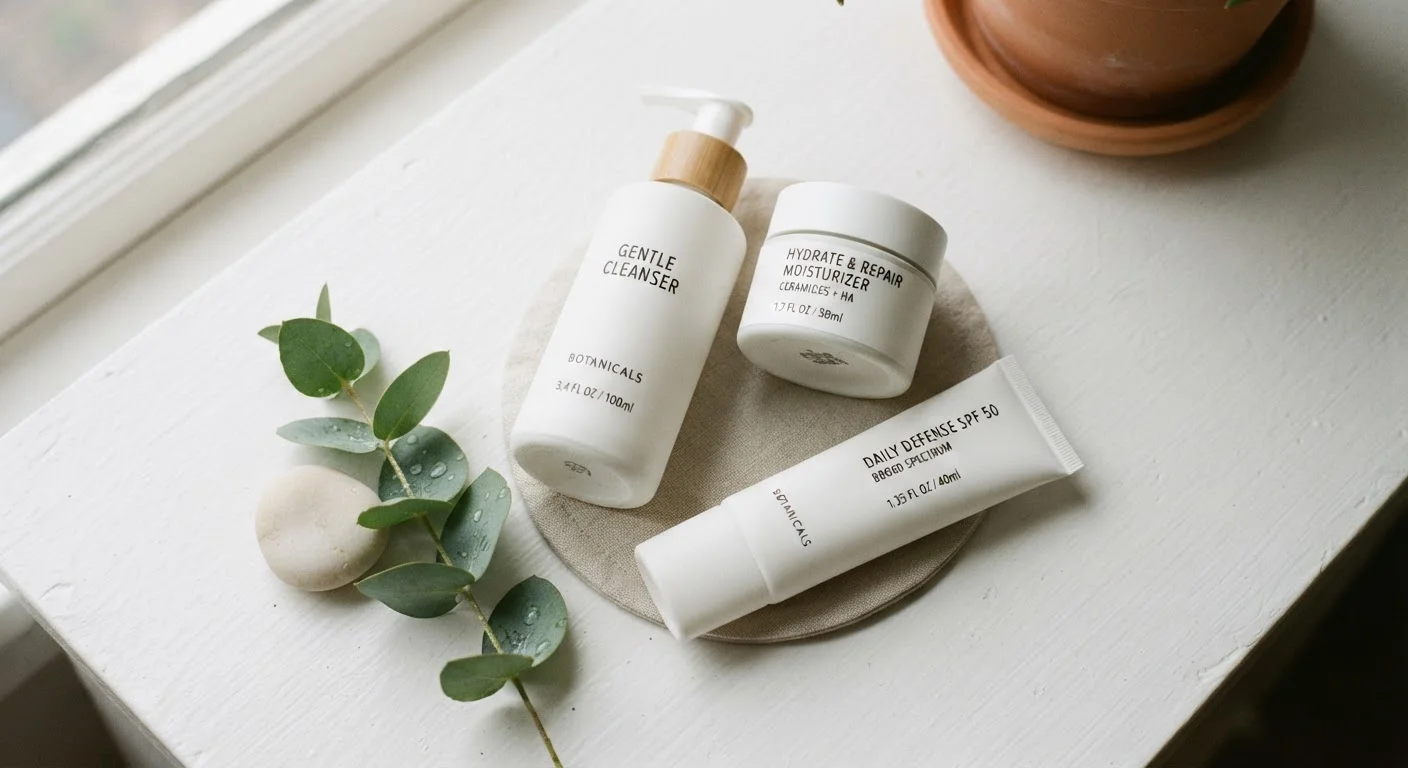
Once you know your type, building a routine becomes much more straightforward. The core steps — cleanse, moisturize, and apply SPF — apply to everyone, but the formulations shift based on what your skin needs.
Try the Bare-Face Test at Home
Wash your face with a gentle cleanser, pat dry, and leave skin completely bare for 30–60 minutes. Observe what happens: all-over shine suggests oily, tightness or flaking suggests dry, shine only in the T-zone suggests combination, and redness or discomfort suggests sensitivity. This simple method gives you a reliable baseline before investing in new products.
Oily skin benefits from gel or foaming cleansers, lightweight (often gel-based) moisturizers, and oil-free SPF. Avoid heavy creams that can clog pores. Dry skin does well with creamy, hydrating cleansers and richer moisturizers containing ingredients like ceramides or hyaluronic acid. Combination skin often requires a gentle cleanser that won't strip dry areas, and sometimes different products for different zones. Sensitive skin calls for fragrance-free, minimal-ingredient formulas and patch-testing any new product before full use.
For a full walkthrough, our everyday skincare routine guide offers a simple, adaptable framework anyone can follow. And once you have the basics down, layering products in the right order ensures your routine actually delivers results.
This article is for general informational purposes only and is not a substitute for professional dermatological advice. If you have persistent skin concerns, consult a licensed dermatologist.