

Key Takeaways
Why a Maintenance Log Is Worth the Two Minutes It Takes
Most drivers rely on memory or stickers on the windshield to track oil changes and tire rotations. That works - until it doesn't. A maintenance log replaces guesswork with a reliable record of everything done to your vehicle: when, at what mileage, and by whom. It's a small habit with compounding benefits over the life of the car.
Service history documents are part of the broader paper trail that protects you as an owner. As we cover in our guide on keeping good vehicle records, organized paperwork can make a real difference during warranty claims, disputes, and resale negotiations. A log is the core of that documentation system.
~$1,200
Average annual vehicle maintenance and repair cost per driver
According to AAA research, U.S. drivers spend an average of around $1,200 per year on vehicle maintenance and repairs - making organized records a financially meaningful tool.
Up to 3x
More likely to identify repeat repair issues
Industry mechanics consistently report that documented service history allows them to spot recurring issues or patterns far more quickly than when no records exist.
Best Practices for Keeping an Effective Log
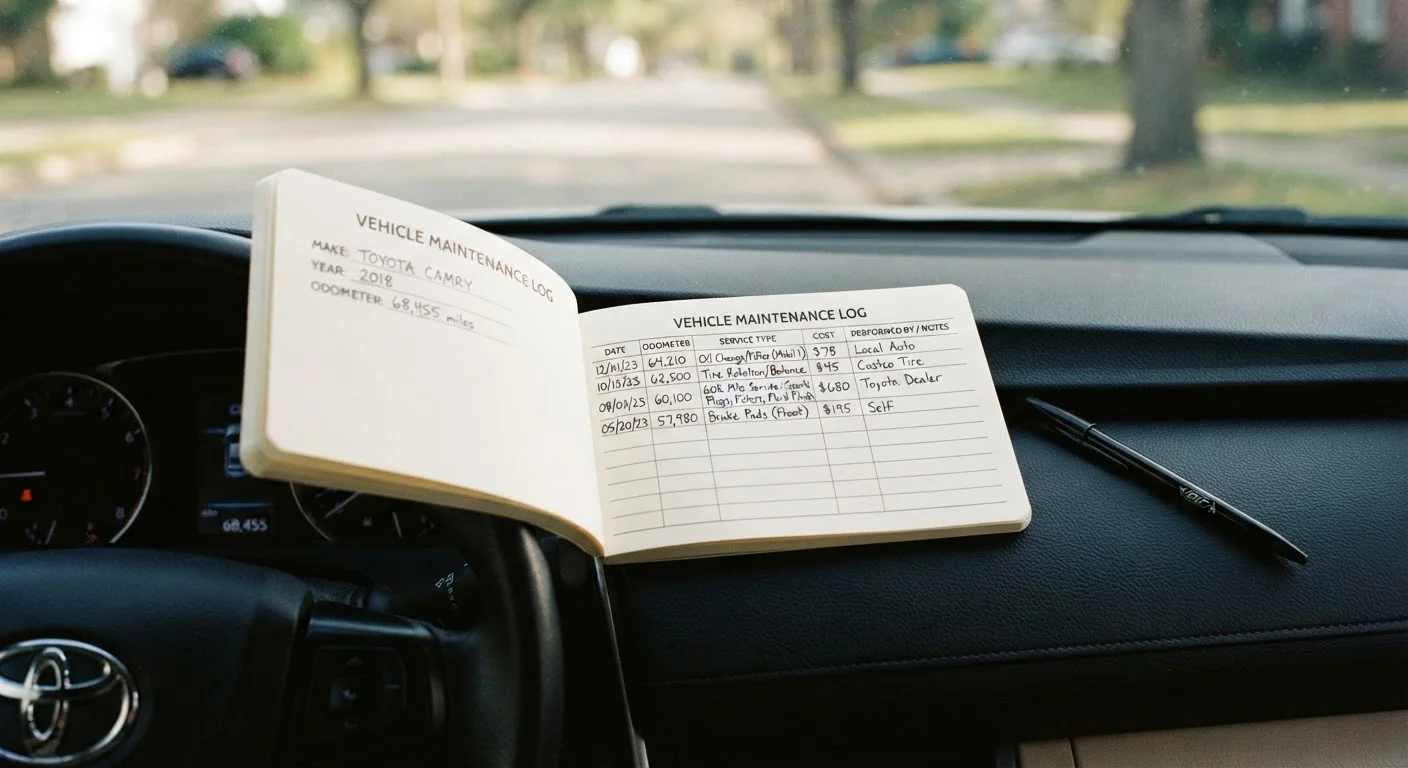
The format matters less than the consistency. Whether you use a spiral notebook in the glove box, a phone app, or a simple spreadsheet, these practices will make your log genuinely useful rather than just a paper exercise.
Record the odometer reading with every single entry.
Mileage-based intervals - not just calendar time - govern most maintenance schedules. Without mileage data, your log can't tell you when the next service is actually due. Your odometer reading is one of the two numbers that define your car's service identity.
Log every service, not just major ones.
Cabin air filters, wiper blades, and tire rotations are easy to forget, yet they show up in a buyer's evaluation or a mechanic's diagnosis. A gap-free record is more credible and more useful than a selective one. Don't overlook the commonly skipped services like coolant flushes and spark plug replacements.
Include who performed the work and any parts used.
If a repair needs to be revisited, knowing which shop did the work - or which replacement part was installed - gives both you and future mechanics a head start. It also substantiates warranty-related conversations.
Note any symptoms or concerns raised during the visit.
Mechanics sometimes flag issues that don't require immediate action. Writing those down creates a watchlist so you can monitor whether a concern worsens between visits - rather than hearing about it for the first time years later when it has become a costly problem.
Keep receipts attached or referenced alongside each entry.
A log entry is stronger evidence when paired with a corresponding receipt or invoice. For resale purposes, a buyer can verify your claims rather than just take your word for them.
Getting Started Without Overthinking It
The biggest obstacle to keeping a maintenance log is the false belief that you need a perfect system before you begin. You don't. Start with your next service - write down the date, mileage, and what was done. That entry alone is more than most vehicle owners have on paper.
For context on what services to track, our complete guide to routine car maintenance walks through every major maintenance area from fluids and filters to brakes and belts. And if you're deciding whether to handle some tasks yourself, our breakdown of DIY vs. shop maintenance can help you weigh the trade-offs.
Sync Your Log With Your Owner's Manual
Your owner's manual lists the manufacturer's recommended service intervals for your specific vehicle. Cross-referencing your log against these intervals is the most reliable way to stay on schedule. If you've lost your manual, most automakers publish them online through their official support portals.
This article provides general informational guidance for vehicle owners and is not a substitute for advice from a qualified mechanic or automotive professional.