

Key Takeaways
Vehicle Maintenance Schedule
A vehicle maintenance schedule is a manufacturer-specified timeline outlining when particular services - such as oil changes, tire rotations, and fluid replacements - should be performed on your car. These intervals are expressed in either miles driven or months elapsed, whichever comes first. Following the schedule keeps your car running safely and efficiently while protecting your warranty coverage.
Modern vehicles often use an Oil Life Monitoring (OLM) system that calculates service intervals based on driving conditions, engine load, and temperature - replacing fixed mileage rules with dynamic alerts.
What a Maintenance Schedule Actually Is
Every vehicle leaves the factory with a predetermined service plan built around two variables: miles driven and time elapsed. Your maintenance schedule lists specific services tied to those thresholds - and the rule is straightforward: act on whichever limit you reach first.
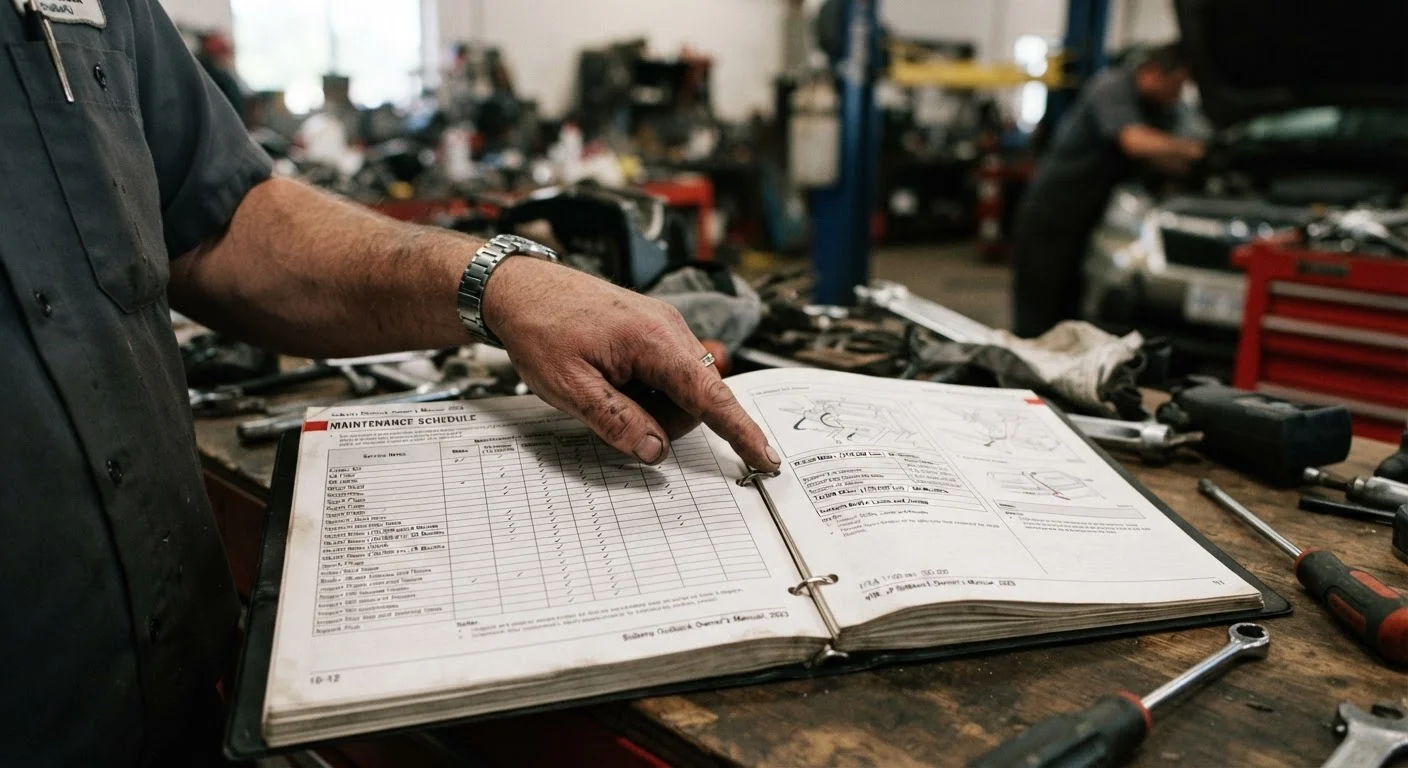
The schedule lives in your owner's manual, typically in its own clearly labeled chapter. It tells you not just what needs attention but when - and that timing matters because mechanical components degrade through both use and age, regardless of how many miles appear on the odometer.
Think of it as a preventive road map rather than a reactive repair list. The goal is to replace or replenish before something fails, not after. For a broader view of how this fits into overall car ownership, see The Complete Guide to Routine Car Maintenance.
~$80B
Annual U.S. spending on preventable vehicle repairs
Industry estimates suggest a significant share of major repair costs are tied to deferred or skipped routine maintenance.
5,000-10,000 mi
Typical modern oil change interval
Advances in synthetic oil and engine technology have roughly doubled the interval compared to the old 3,000-mile guideline for most vehicles.
1 in 3
Drivers who delay scheduled maintenance
Surveys by automotive research groups consistently find that a large minority of drivers go beyond recommended service intervals before acting.
Key Service Milestones and What They Cover
While exact intervals vary by make, model, and engine type, most schedules cluster services around recognizable checkpoints:
- Every 5,000-10,000 miles: Oil and filter change, tire rotation, and a general visual inspection. The right oil type matters - learn the difference between conventional, synthetic, and synthetic-blend motor oils to make an informed choice.
- Every 15,000-30,000 miles: Air filter replacement, cabin air filter, brake inspection, and battery condition check.
- Every 30,000-60,000 miles: Transmission fluid, coolant flush, spark plug replacement (timing varies widely by plug type), and drive belt inspection.
- Every 60,000-100,000 miles: Timing belt replacement (if applicable - not all engines use one), fuel system service, and suspension component inspection.
Services that rarely make headlines - coolant flushes, transmission fluid changes, spark plugs - are among the most commonly skipped. Our article on routine maintenance tasks that are often overlooked covers these in detail.
Use Both Triggers - Miles and Months
A vehicle driven very little still needs regular service. Engine oil breaks down chemically over time even without high mileage, and rubber components like belts and hoses age regardless of use. If your owner's manual lists '7,500 miles or 12 months,' service is due when either condition is met - not only when you hit the mileage mark.
Severe vs. Normal Driving Conditions
Automakers publish two sets of intervals in most owner's manuals: one for normal conditions and one for severe conditions. Many drivers assume they fall under normal use - but the severe category is more common than it sounds.
Severe conditions include frequent short trips, extended idling, towing, driving in extreme temperatures, and operating on unpaved roads. Under these circumstances, fluids degrade faster and components work harder, so shorter intervals are warranted.
If you're unsure which category applies to your driving habits, err toward the severe schedule or consult a qualified mechanic. The cost of slightly more frequent maintenance is almost always lower than the cost of a premature repair.
Why Documentation Is Part of the Schedule
Following the schedule is only half the equation - recording that you followed it is equally important. Service records establish a verifiable history of care, which carries real weight during warranty claims and at resale.
A buyer reviewing a used vehicle with documented, consistent maintenance has measurably more confidence in that car than one with no paper trail. Keeping a maintenance log is a straightforward habit that pays off in multiple ways. And as part of a broader ownership review, tracking your service history fits naturally into a yearly car ownership financial health checklist.
“The owner's manual is arguably the most underused document in a driver's possession. The manufacturer has done the engineering - the driver just has to follow through.”
— Cars & Driving Editorial Team, Editorial guidance on vehicle maintenance and ownership
Whether you handle routine tasks yourself or rely on a professional, understanding the trade-offs between DIY maintenance and shop visits helps you make smarter decisions about your time and money.