

| Colors used for warning lights | Red, amber/yellow, green, blue, white (SAE International instrument cluster standards) |
| Red light urgency | Stop driving safely as soon as possible |
| TPMS required since | 2008 (all U.S. passenger vehicles) (NHTSA TPMS Final Rule) |
| OBD-II required since | 1996 (all U.S. passenger vehicles) (EPA/CARB OBD-II mandate) |
| Check engine light causes | Hundreds of possible DTCs - only a scan tool confirms the exact fault |
| Low oil pressure action | Pull over immediately and shut off engine (Manufacturer universal guidance) |
How Dashboard Warning Lights Work
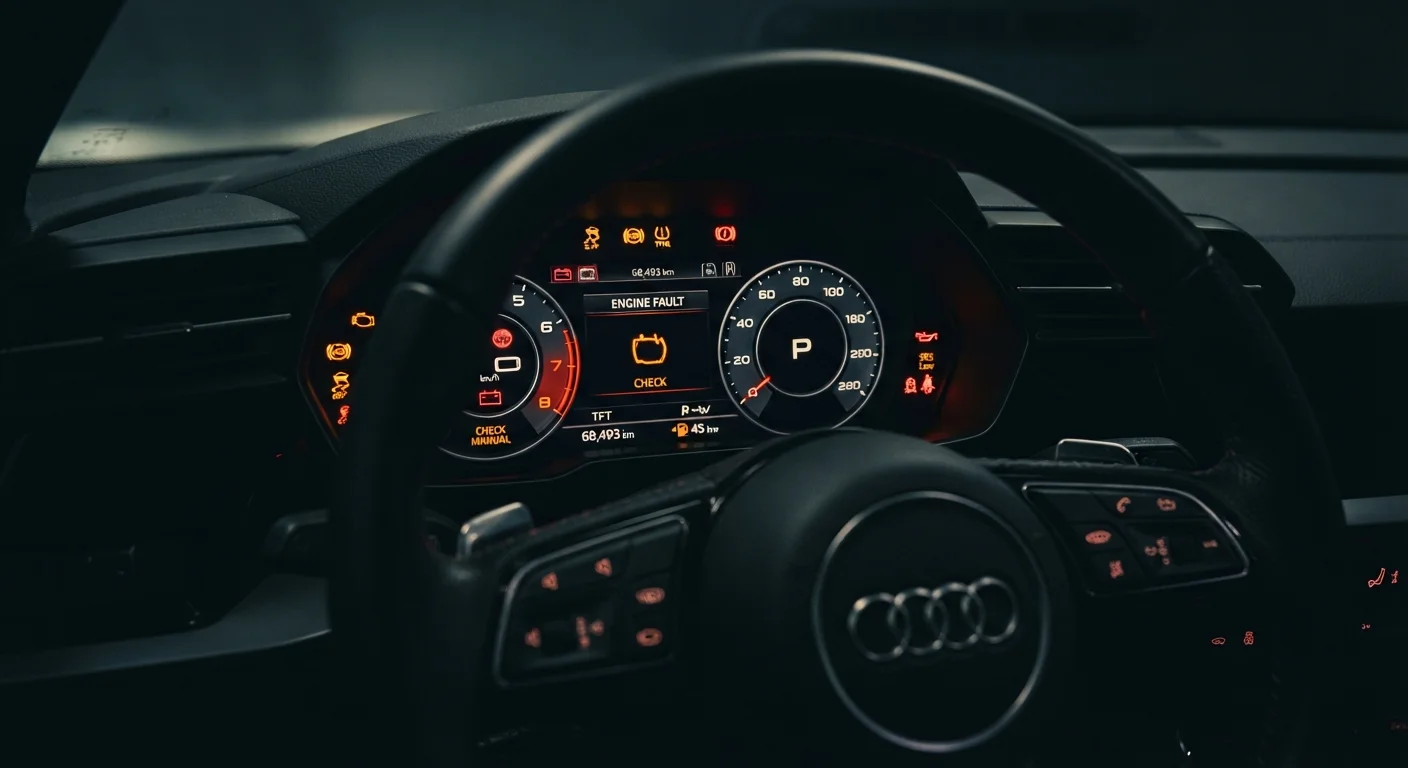
Modern vehicles use a standardized color-coding system for dashboard indicator lights, though the exact icons vary by manufacturer. Understanding the color hierarchy is the first step to reading any warning correctly.
- Red lights signal serious conditions requiring immediate attention - continuing to drive can cause significant damage or create a safety hazard.
- Amber or yellow lights indicate a fault that needs attention soon but typically allows you to drive to a repair facility safely.
- Green and blue lights are informational - confirming that a system like high beams or turn signals is active.
All U.S. passenger cars sold since 1996 are equipped with OBD-II, which continuously monitors dozens of systems and stores a diagnostic trouble code (DTC) whenever something falls outside acceptable parameters. That code is what a mechanic retrieves when diagnosing a warning light.
| Colors used for warning lights | Red, amber/yellow, green, blue, white (SAE International instrument cluster standards) |
| Red light urgency | Stop driving safely as soon as possible |
| TPMS required since | 2008 (all U.S. passenger vehicles) (NHTSA TPMS Final Rule) |
| OBD-II required since | 1996 (all U.S. passenger vehicles) (EPA/CARB OBD-II mandate) |
| Check engine light causes | Hundreds of possible DTCs - only a scan tool confirms the exact fault |
| Low oil pressure action | Pull over immediately and shut off engine (Manufacturer universal guidance) |
The Most Common Warning Lights and What They Signal
Check Engine Light (Malfunction Indicator Lamp)
This amber engine-shaped symbol is the most frequently misunderstood light on any dashboard. It can represent hundreds of different faults - from a loose gas cap to a misfiring cylinder or failing catalytic converter. A steady check engine light means schedule a diagnostic soon. A flashing check engine light signals an active misfire that can damage the catalytic converter - reduce speed and avoid hard acceleration until you can reach a shop. See our maintenance schedule guide for context on why regular service helps prevent many MIL triggers.
Oil Pressure Warning (Red Oil Can Symbol)
This is a red-level emergency. Low oil pressure means the engine's lubrication system has failed - continuing to run the engine can destroy it within minutes. Pull over safely, shut off the engine, and check the oil level only after the engine cools. Do not restart and drive. Call for assistance.
Temperature Warning (Red Thermometer or "TEMP")
Indicates the engine coolant has exceeded its safe operating temperature. Pull over, turn off the engine, and allow it to cool completely before inspecting coolant levels. Never open the radiator cap on a hot engine. Learn to check coolant safely in our fluid levels guide.
Battery / Charging System (Red Battery Symbol)
This light signals the vehicle's charging system is not maintaining adequate voltage - typically a failing alternator or a battery near the end of its service life. The vehicle may continue running briefly on battery reserve, but electrical systems will begin failing. Drive directly to a shop if conditions allow; otherwise pull over safely.
Brake Warning Light (Red Exclamation Mark in Circle)
If this appears while driving and the parking brake is fully released, it usually indicates low brake fluid - which can signal a leak or worn brake pads. Have the brake system inspected promptly. Do not ignore this light.
TPMS Light (Horseshoe Symbol with Exclamation Mark)
The TPMS light illuminates when one or more tires drop roughly 25% below the recommended pressure. Check all four tires with a gauge and inflate to the specification found on the driver's door jamb sticker - not the number molded into the tire sidewall.
ABS Warning ("ABS" in a Circle)
Indicates a fault in the ABS module. Standard braking typically remains functional, but the anti-lock feature that prevents wheel lockup during hard stops may be disabled. Have this inspected soon.
Traction Control / ESC Light (Car with Wavy Lines)
A flashing ESC light means the system is actively working to prevent a skid - this is normal on slippery roads. A steady light means the system has been manually disabled or has detected a fault. If you didn't disable it intentionally, have it checked.
Your Owner's Manual Is the Definitive Reference
Dashboard symbols are not fully universal - some manufacturers use proprietary icons that differ from common depictions. Your vehicle's owner's manual includes the exact symbol legend for your make and model. If a light appears and you're unsure of its meaning, consult the manual before driving further or attempting any inspection.
When to Pull Over Immediately vs. Drive to a Shop
Not every warning light demands the same response. Use this framework:
| Stop Immediately | Drive to Shop Soon |
|---|---|
| Oil pressure warning (red) | Check engine light (steady amber) |
| Engine temperature warning (red) | TPMS light |
| Brake warning (red, parking brake off) | ABS warning |
| Check engine light (flashing) | Battery/charging warning |
If you're ever uncertain whether a light is safe to drive through, the conservative choice is always to pull over safely and consult your owner's manual or call a qualified mechanic. Being a well-informed driver goes beyond reading lights - see our guide to defensive driving for the broader picture of staying safe on American roads.
This article provides general educational information about dashboard warning lights and is not a substitute for professional mechanical diagnosis. Always consult a qualified mechanic when a warning light appears and you are uncertain of the cause or severity.