

Key Takeaways
Defensive Driving
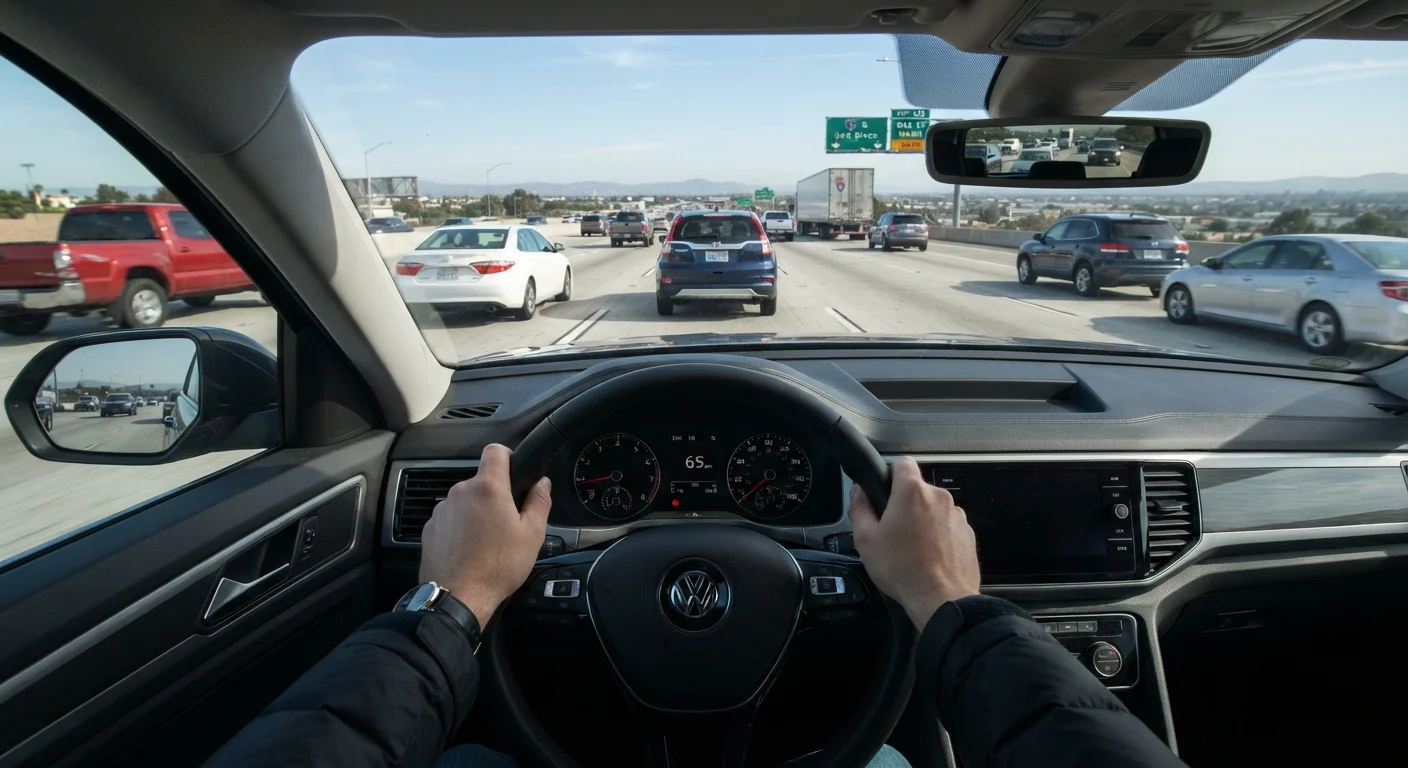
Defensive driving is a set of proactive habits and mental strategies that help drivers anticipate hazards before they become emergencies. Rather than simply reacting to what's happening right now, a defensive driver continuously scans the road ahead, accounts for the behavior of other drivers, and adjusts their own actions to maintain a safety buffer. The goal is to reduce collision risk even when other road users make mistakes.
The National Safety Council defines defensive driving as driving to save lives, time, and money, in spite of the conditions around you and the actions of others - a framing that places responsibility on the driver's awareness rather than on external compliance alone.
Proactive vs. Reactive: The Core Distinction
Most drivers consider themselves safe as long as they obey signals, stay in their lane, and avoid obvious risks. That describes reactive driving - responding to what is directly in front of you. Defensive driving operates on a fundamentally different premise: you are responsible for managing your own safety regardless of what other drivers do.
A defensive driver doesn't wait for a car to drift into their lane before adjusting. They notice the drifting pattern early and create space. They don't brake hard when someone cuts them off; they've already left enough room to absorb the gap. This distinction - anticipation versus reaction - is what separates drivers who consistently avoid near-misses from those who experience them regularly.
This mindset pairs directly with honest awareness of your own limitations. Fatigue, distraction, and overconfidence are all factors that erode your ability to anticipate. For a broader look at how distraction myths compound this problem, see Distracted Driving Myths That Put People at Risk.
Start With One Habit at a Time
Defensive driving is a skill set, not a single behavior. If the full list feels overwhelming, start with one habit - like scanning further ahead or increasing your following distance - and practice it deliberately until it becomes automatic. Build from there. Small, consistent improvements compound into meaningfully safer driving over time.
The Practical Habits That Define Defensive Driving
Defensive driving isn't abstract - it translates into specific, repeatable behaviors behind the wheel:
- Scanning further ahead: Look 10-15 seconds down the road, not just at the bumper in front of you. This gives you time to process hazards before they become urgent.
- Managing space: Maintain a minimum three-second following distance under normal conditions, and increase it in rain, heavy traffic, or low light. Space is your primary safety buffer.
- Checking mirrors systematically: Know where every nearby vehicle is at all times. Blind spots are real and must be actively managed - not assumed clear.
- Controlling your speed relative to conditions: Posted speed limits are maximums for ideal conditions. Wet roads, fog, and heavy traffic may require significantly lower speeds to maintain safe stopping distances.
- Avoiding assumption: Never assume another driver will yield, signal, or stop. At intersections especially, confirm before proceeding.
These habits apply across all road environments. For a side-by-side look at how demands shift between settings, see Highway Driving vs. City Driving: How the Skills Differ.
94%
Crashes attributed to human error
According to NHTSA research, approximately 94% of serious crashes involve a critical human error as a contributing factor.
3 seconds
Minimum recommended following distance
Traffic safety authorities widely recommend a minimum three-second gap between vehicles under normal driving conditions, with more distance advised in adverse weather.
~38,000
Annual U.S. road fatalities
NHTSA data shows roughly 38,000 people die in motor vehicle crashes on U.S. roads annually, a figure that underscores the real-world stakes of driving behavior.
Why Other Drivers Are Always Part of the Equation
One of the most important - and often overlooked - aspects of defensive driving is accepting that you share the road with people who are distracted, fatigued, impaired, or undertrained. NHTSA data consistently shows that human error is the critical reason in the overwhelming majority of crashes. Defensive driving is partly a strategy for surviving other people's mistakes.
This means you should routinely account for the possibility that a driver will run a yellow light when you're crossing an intersection, that a merging vehicle may not check their mirror, or that a pedestrian may step off the curb unexpectedly. None of this is paranoia - it's calibrated realism.
Many of these habits are never formally covered in standard driver's education. They're learned (often the hard way) through experience. The article The Road Safety Habits New Drivers Are Never Formally Taught addresses this gap directly.
When Conditions Demand More from You
Defensive driving becomes especially critical when road conditions degrade. Rain, snow, fog, and nighttime driving all reduce visibility and extend stopping distances in ways that catch reactive drivers off guard. Wet roads in particular are a major factor in weather-related crashes - understanding how hydroplaning occurs and when to reduce speed isn't optional knowledge. See Driving in Rain: Where Most Accidents Actually Happen for a grounded breakdown.
Your vehicle's condition is also part of the equation. Bald tires, worn brakes, or an ignored dashboard warning can undermine every defensive skill you've developed. Staying on top of vehicle health is a structural component of road safety - not a separate concern. For guidance on dashboard indicators that require attention, see What Your Dashboard Warning Lights Actually Mean.
Defensive driving is ultimately part of a broader, lifelong approach to road safety. For a comprehensive overview of safe driving habits across all conditions and scenarios, Safe Driving in America: A Complete Overview is a useful reference.
“The goal of defensive driving is to reduce risk by anticipating dangerous situations despite adverse conditions or the mistakes of others. It is skill-building, not just rule-following.”
— National Safety Council, Leading U.S. nonprofit safety organization