

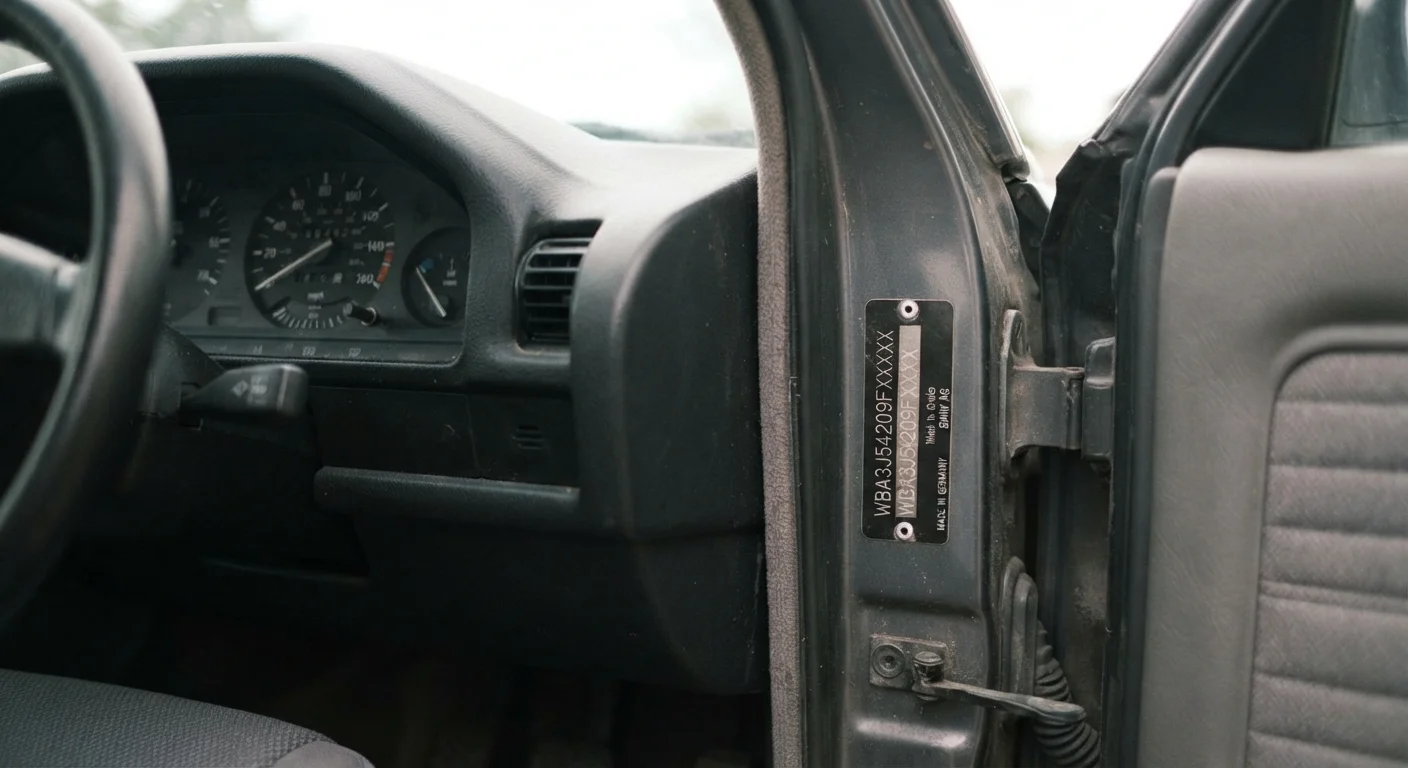
What the VIN Actually Is
The Vehicle Identification Number (VIN) is a 17-character alphanumeric code assigned to every motor vehicle manufactured for sale in the United States after 1981. Think of it as your car's permanent fingerprint - it never changes regardless of how many times the vehicle is sold, titled, or repaired.
Each character in a VIN carries specific meaning. The first three characters form the World Manufacturer Identifier (WMI), indicating the country of assembly and the manufacturer. Characters four through eight describe the vehicle's attributes - body style, engine type, restraint systems, and model. The ninth character is a check digit, a mathematically derived value the government uses to detect fraudulent VINs. Characters ten through seventeen encode the model year, plant of manufacture, and the vehicle's unique sequential production number.
You'll find your VIN in several places: stamped on a plate visible through the lower corner of the windshield on the driver's side, on a sticker inside the driver's door jamb, and on the vehicle's title, registration, and insurance card. When any of these don't match, that's a serious red flag worth investigating before completing any transaction. For a deeper look at how the VIN appears on ownership documents, see Reading Your Car's Title: What Every Field Actually Means.
What the Odometer Tells You - and What It Doesn't
The odometer records the total distance a vehicle has traveled, displayed in miles in the United States. Unlike the VIN, the odometer reading changes constantly and plays a central role in determining a vehicle's maintenance needs, market value, and insurance profile.
~452,000
Estimated annual odometer fraud victims in the US
According to the National Highway Traffic Safety Administration (NHTSA), odometer fraud affects hundreds of thousands of used-car buyers each year.
$1 billion+
Estimated annual consumer losses to odometer fraud
NHTSA has cited figures in this range when describing the financial impact of mileage tampering on American consumers.
Odometer readings matter most at three points: at the time of a scheduled service (mileage-based intervals trigger oil changes, tire rotations, and major inspections), during a private-party or dealer sale, and when filing an insurance claim. Under the federal Truth in Mileage Act, sellers are legally required to provide an accurate odometer disclosure when transferring vehicle ownership. Knowingly falsifying mileage - a practice called odometer fraud or "clocking" - is a federal crime.
However, raw mileage alone doesn't tell the whole story. A vehicle with 90,000 highway miles often shows less mechanical wear than one with 60,000 miles of stop-and-go city driving. That's why mileage is most useful when paired with a complete service history. Keeping a Maintenance Log: A Simple Habit That Pays Off explains why a documented record makes that mileage meaningful rather than just a number.
Digital Odometers Can Still Be Tampered With
Many drivers assume that digital odometers are fraud-proof, but specialized equipment can alter electronic readings just as mechanical odometers could be rolled back. A VIN-based vehicle history report showing service records, inspections, and prior odometer disclosures is a more reliable cross-check than the dashboard reading alone. If reported mileage across service records far exceeds what the dashboard shows, treat that as a serious warning sign.
How These Two Numbers Work Together
The VIN and odometer reading function as a pair throughout a vehicle's life. When a mechanic runs a VIN lookup, they pull recalled parts, past collision reports, and title history - all timestamped against odometer readings recorded at each service or incident. This cross-reference lets buyers, sellers, insurers, and mechanics verify whether a vehicle's history is consistent or has suspicious gaps.
Maintaining organized records that tie service events to both the date and mileage protects your investment. Keeping Good Vehicle Records: Why It Pays and What to Save outlines exactly what paperwork is worth holding onto. For understanding which mileage milestones trigger which services, Your Car's Maintenance Schedule, Explained is a practical companion reference.
When buying a used vehicle, always request a VIN-based vehicle history report from a recognized reporting service and compare the odometer reading on the report against the dashboard reading and the seller's title disclosure. Discrepancies - even small ones - deserve a direct explanation before any money changes hands.