

Key Takeaways
Option A
The Posted Speed Limit
The legal maximum under ideal conditions.
Best for: Setting an enforceable upper boundary when road, weather, and visibility conditions are favorable.
Option B
The Safe Speed
The contextually appropriate speed for actual conditions.
Best for: Protecting drivers, passengers, and others when real-world factors fall short of ideal - rain, fog, traffic, curves, or fatigue.
If you're driving in clear daylight on a straight, dry highway with light traffic
The Posted Speed Limit
Under genuinely ideal conditions, the posted limit reflects appropriate guidance for that road type and is safe to use as your reference point.
If you're driving in rain, fog, snow, or other reduced-visibility conditions
The Safe Speed
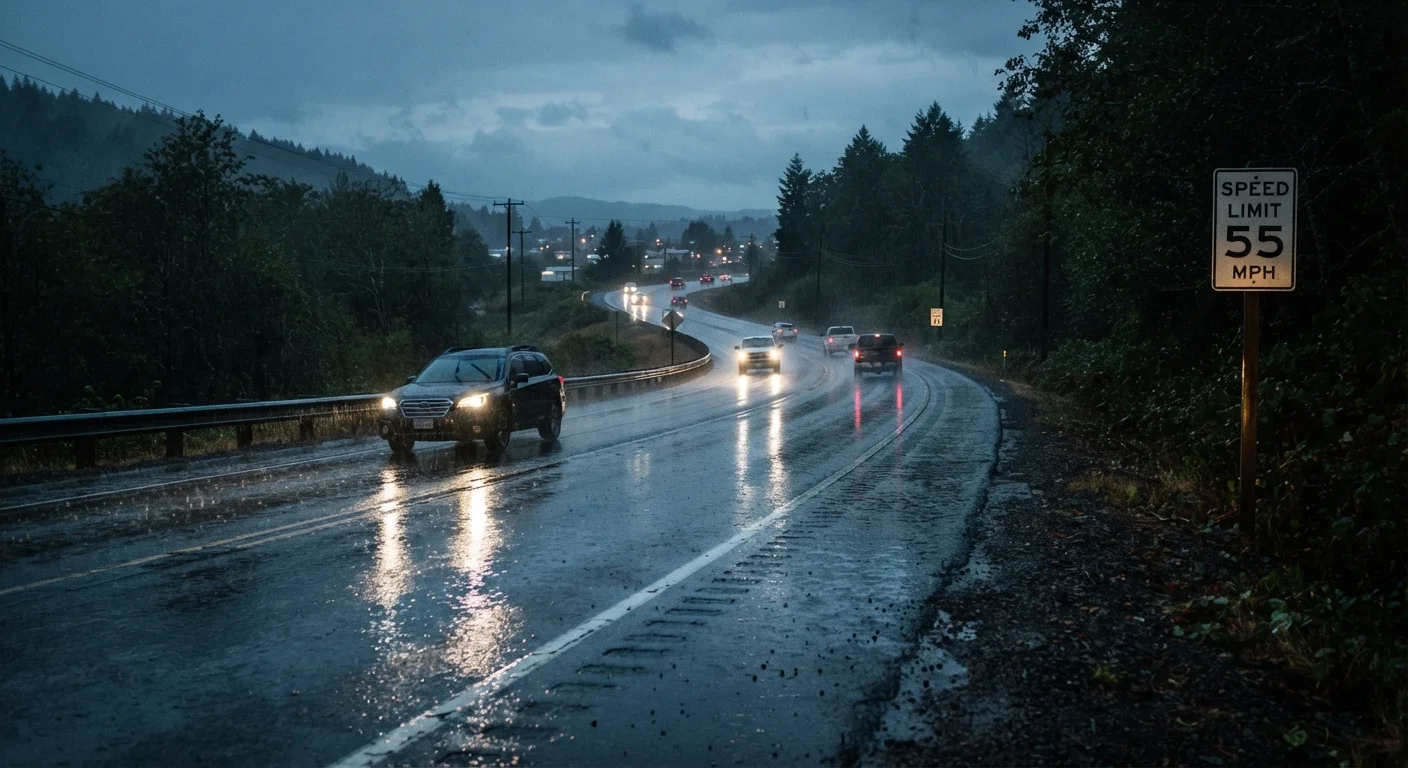
Wet or low-visibility roads dramatically increase stopping distances and reduce reaction time - the posted limit may be dangerously fast in these conditions.
If you're navigating heavy traffic, sharp curves, or school zones
The Safe Speed
Congestion, tight geometry, and pedestrian presence all compress the margin for error far below what a posted limit assumes.
If you're driving at night on unfamiliar roads
The Safe Speed
Headlights only illuminate so far ahead; driving within your sight distance - even if that means going below the limit - is a well-established safety practice.
What Speed Limits Actually Represent
Speed limits in the United States are established through an engineering and traffic analysis process. The posted number typically reflects what's considered a reasonable maximum speed under ideal daytime conditions on that specific road type - dry pavement, good visibility, normal traffic flow, and an alert, sober driver.
That's an important qualifier most drivers never think about. The limit isn't a recommendation for all conditions; it's a legal ceiling derived from the geometry of the road, sight distances, and typical traffic patterns. When conditions degrade, the legal maximum and the genuinely safe speed diverge - sometimes significantly.
Under U.S. traffic law, drivers are generally required to drive at a speed that is reasonable and prudent given current conditions, even if that speed is below the posted limit. This principle appears in the traffic codes of most states and is sometimes called the "basic speed law." It means a driver traveling at the speed limit during a heavy rainstorm may still be cited - or found liable in a crash - if that speed was deemed unreasonable for those conditions.
| Criterion | Posted Speed Limit | Safe Speed |
|---|---|---|
| Definition | Legal maximum under ideal conditions | Appropriate speed for actual current conditions |
| Set by | Traffic engineers and state/local law | Driver judgment based on environment |
| Changes with weather? | No - fixed on the sign | Yes - drops significantly in rain, fog, snow |
| Changes with traffic? | No | Yes - congestion reduces the safe margin |
| Legal obligation | Cannot exceed it | Must not exceed it even if below posted limit |
| Primary purpose | Establish enforceable upper boundary | Prevent crashes in real-world conditions |
When Conditions Lower What Safe Means
Several real-world factors can push the safe speed well below the posted number. Understanding each one helps drivers recalibrate instinctively rather than waiting for danger to appear.
Precipitation and Wet Roads
Rain reduces tire traction and significantly extends stopping distances. At highway speeds, hydroplaning - where tires lose contact with the road surface - becomes a real risk on standing water. The National Highway Traffic Safety Administration (NHTSA) consistently identifies wet pavement as a major contributing factor in crashes. Slowing down meaningfully in rain isn't overcautious; it's physically necessary.
Reduced Visibility
Fog, heavy snow, glare, or darkness can cut a driver's usable sight distance to a fraction of what the road's posted limit assumes. A fundamental safety principle - sometimes called "driving within your headlights" - holds that you should be able to stop within the distance you can see ahead. If you can't, you're effectively driving blind into whatever the road holds next. See also: how night driving demands more than headlights.
Heavy Traffic and Following Distance
The more vehicles around you, the less reaction time you have. At 65 mph, a car travels about 95 feet per second. A two-second following gap - often described as minimum safe spacing - compresses under congestion. Reducing speed creates space and time. Tailgating is far more dangerous than most drivers recognize - and higher speeds make it worse.
Road Geometry: Curves and Grades
Speed limits on straight sections don't apply to tight curves ahead unless a separate advisory sign is posted. Sharp bends on mountain roads, exit ramps, and rural routes all have physics-defined limits that can be far lower than the posted highway speed. Unfamiliarity with a road makes this more dangerous, not less.
Advisory Speed Signs vs. Regulatory Signs
Yellow advisory speed signs - commonly posted on curves, ramps, and intersections - are not legally enforceable limits, but they reflect engineering-derived recommendations for that specific geometry. Ignoring them, especially in wet or icy conditions, meaningfully increases crash risk. Treating advisory signs as serious guidance rather than suggestions is considered standard defensive driving practice.
The Other Side: Driving Too Slowly
Adjusting speed for conditions is sound practice - but it has a counterpart risk. Driving significantly below the flow of traffic without a legitimate safety reason creates its own hazard. Erratic speed differentials between vehicles increase the likelihood of rear-end collisions and force sudden lane changes.
Most states have minimum speed laws on certain road types, and driving unreasonably slowly can itself result in a citation. The goal isn't to go as slowly as possible - it's to travel at the speed that matches both conditions and the surrounding traffic environment. On a highway versus a city street, what that looks like is very different.
The practical standard: slow down meaningfully when conditions warrant it, but remain aware of traffic around you and merge smoothly back to a reasonable speed once conditions improve.
~70%
Weather-related crash deaths on wet pavement
According to FHWA data, a large proportion of weather-related traffic fatalities occur on wet roads rather than snow or ice, underlining the danger of speed choices in rain.
95 ft/sec
Distance traveled per second at 65 mph
At highway speeds, a vehicle covers roughly 95 feet every second - illustrating how quickly reaction time windows close in traffic or adverse conditions.
Building the Habit of Speed Judgment
Most drivers learn the rules of the road through licensing tests - which cover posted limits but rarely teach contextual speed judgment. Developing this skill takes deliberate practice and self-awareness. Road safety habits that new drivers are never formally taught often include exactly this kind of situational calibration.
A useful mental habit: before choosing a speed, ask what am I actually able to stop for right now? Factor in pavement, visibility, traffic, fatigue, and familiarity with the road. The posted sign answers a different question - what's the legal maximum here under good conditions? Both questions matter. Only one of them keeps you safe in the moment.
For a broader look at how speed management fits within overall driving safety, see the complete overview of safe driving in America.
This article is for general informational purposes only and does not constitute legal or safety advice. Traffic laws vary by state; consult your state's vehicle code or a qualified professional for guidance specific to your situation.