

Key Takeaways
Watts, Volts, and Amps
Volts, amps, and watts are three measurements that describe how electricity flows through a device. Volts measure electrical pressure, amps measure the flow rate of that electricity, and watts measure the total power consumed - calculated by multiplying volts by amps. Together, they tell you how much energy a device needs to operate safely.
The relationship is expressed as P = V × I, where P is power in watts, V is voltage in volts, and I is current in amperes. This formula is the foundation of basic electrical circuit analysis.
Why These Numbers Are Worth Understanding
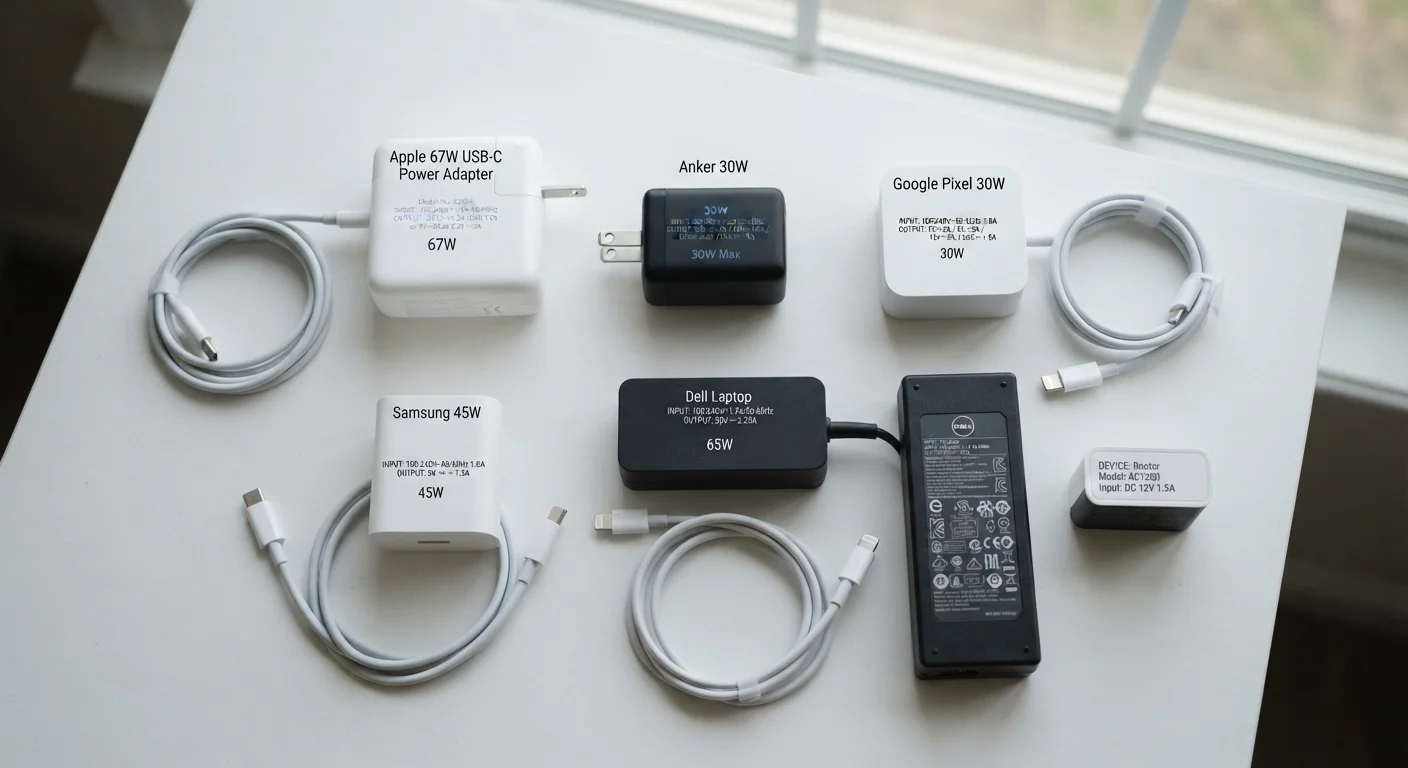
Flip over almost any charger, power adapter, or appliance and you'll find a label packed with numbers: 5V, 2.4A, 18W, 120V~60Hz. Most people ignore these entirely - until something goes wrong. A device stops charging, a charger runs unusually hot, or an appliance trips a circuit breaker.
Understanding what volts, amps, and watts actually measure takes about five minutes and saves you from both safety hazards and wasted money. It also helps you compare chargers, interpret appliance specs, and make sense of your electricity bill. For a broader look at electronics terminology, see the Electronics Label Glossary - this article goes deep on just these three terms.
120V
Standard U.S. household outlet voltage
North American electrical infrastructure operates at 120 volts AC, 60Hz - distinct from the 220-240V standard used across most of Europe and Asia.
15-20A
Typical home circuit breaker amperage
Most standard U.S. residential circuits are rated for 15 amps; kitchen and bathroom circuits are commonly 20 amps to handle higher-draw appliances.
~16¢
Approximate average U.S. cost per kilowatt-hour
The U.S. Energy Information Administration tracks residential electricity prices, which vary significantly by state and season.
The Three Measurements, Explained Simply
Volts: Electrical Pressure
Think of electricity like water moving through a pipe. Voltage is the pressure pushing that water. Higher pressure means more force behind each unit of electricity. U.S. household wall outlets supply 120 volts; your phone charger likely steps that down to 5 or 9 volts before it reaches the battery.
Amps: Flow Rate
Amps (short for amperes) measure how much electricity is actually flowing - the volume of water passing through the pipe per second. A charger rated at 2 amps delivers twice the current of a 1-amp charger, which generally means faster charging, assuming the voltage is the same.
Watts: Total Power
Watts combine both measurements into one useful number: Watts = Volts × Amps. A 5-volt charger delivering 2 amps provides 10 watts of power. Watts are what your electricity meter tracks and what determines how quickly a charger replenishes a battery. When a device label says "18W fast charging," that single number summarizes the full power delivery picture.
Quick Check Before Plugging In
Before connecting any charger or adapter, confirm that the output voltage matches the device's input voltage requirement. Wattage and amperage mismatches are usually self-correcting (devices draw only what they need), but a voltage mismatch can cause permanent damage. The voltage rating is almost always the most critical number to verify.
Reading Real-World Device Labels
Labels on consumer electronics follow a consistent pattern once you know the shorthand. Here's what common entries mean:
- Input vs. Output: Chargers show both. Input is what the charger draws from the wall; output is what it delivers to your device. Never confuse the two.
- "~" symbol: Indicates alternating current (AC), used by wall outlets. A straight line indicates direct current (DC), used by batteries and most device internals.
- Voltage ranges (e.g., 100-240V): The device works anywhere in the world. A fixed voltage (e.g., "120V only") means it's region-specific.
- Hz (hertz): The frequency of AC power. The U.S. uses 60Hz; most other countries use 50Hz. Most modern electronics tolerate both automatically.
Understanding port labels pairs naturally with this knowledge - see how USB-C and other connectors handle power delivery for context on how these specs apply to specific cable types.
Practical Implications for Everyday Decisions
These aren't just academic numbers. Here's where they affect decisions you actually make:
Electricity Costs
A device's wattage directly determines its contribution to your bill. A gaming console drawing 150W running four hours a day uses 600 watt-hours - or 0.6 kilowatt-hours (kWh) - daily. At a national average near 16 cents per kWh, that's roughly $35 per year just for that one device. Multiply that logic across your household and the numbers add up quickly.
Circuit Capacity
Home circuits have amp limits - typically 15 or 20 amps per circuit. If the combined wattage of everything plugged into one circuit exceeds that limit (calculated as amps × 120 volts), the breaker trips. This is the most common reason a circuit overloads. The guide to home electrical circuits explains how circuits are organized and what their limits mean practically.
Battery and Charging Decisions
Wattage determines charging speed, but it interacts with battery chemistry in ways that affect long-term health. Common battery myths often involve misunderstandings about power delivery - knowing the basics here helps you evaluate those claims more critically.
When in Doubt, Consult an Electrician
If you're evaluating whether a circuit can handle a new appliance - especially a large one like an air conditioner, dryer, or EV charger - the safest step is to consult a licensed electrician. Calculating theoretical load is straightforward, but real-world wiring condition, circuit age, and local code requirements all factor into what's actually safe. This article provides general educational information, not installation or safety advice.