

Why Insulation Type Matters as Much as Thickness
Most homeowners think about insulation in terms of a single number - the R-value, which measures resistance to heat flow. But choosing the wrong material for a given location can undermine that number entirely. Moisture absorption, installation geometry, fire rating requirements, and whether a space is conditioned or unconditioned all determine which insulation type actually performs.
This guide maps each major insulation material to the spaces where it genuinely belongs - and flags where it falls short. If you're evaluating a home you're considering buying, the home inspection report will often note inadequate or damaged insulation; knowing these basics helps you interpret those findings accurately.
The Four Main Types and Their Natural Habitats
Fiberglass Batts
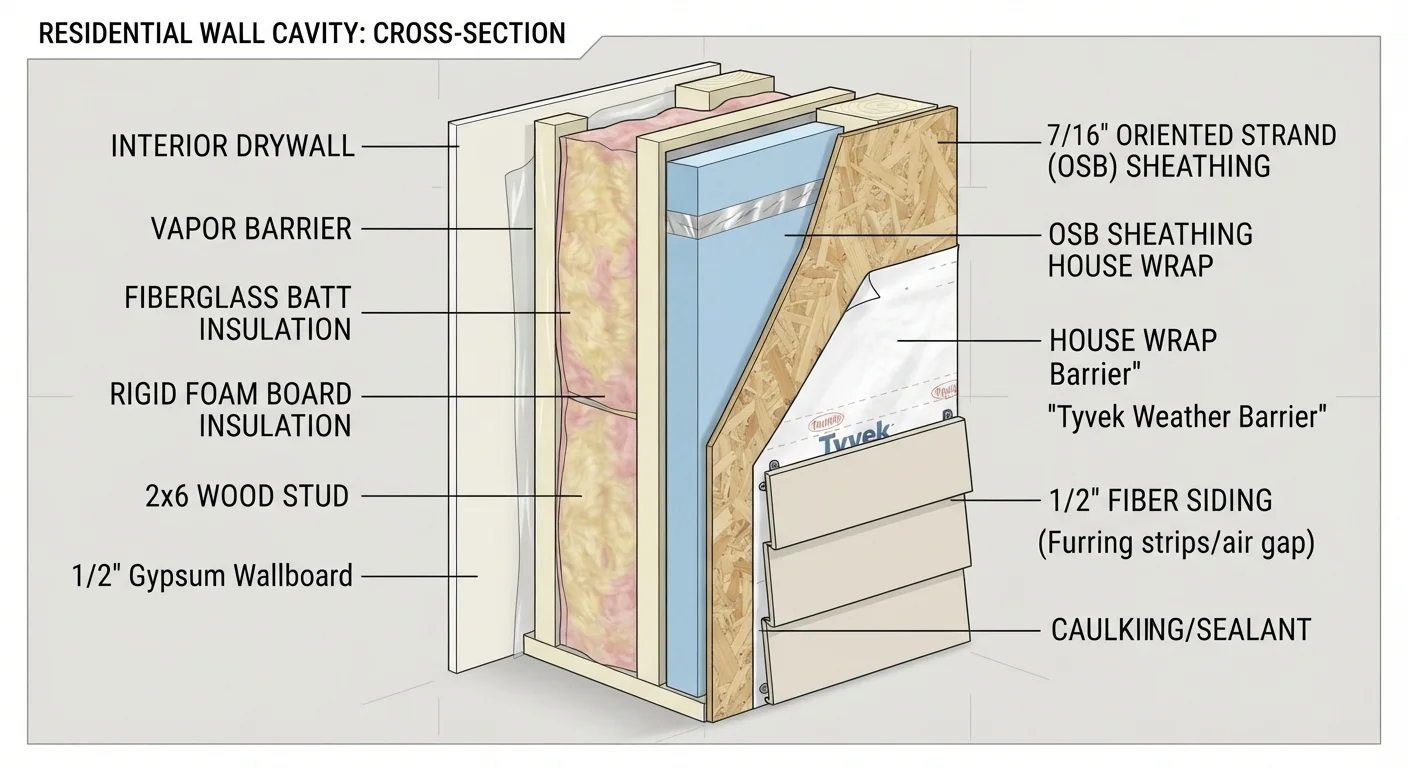
The pink or yellow rolls you've seen at the hardware store. Fiberglass batts are designed for open, standard-dimension wall cavities and floor joists where they can be friction-fit without gaps. They work well in above-grade exterior walls, interior partition walls for sound, and between floors. They do not work well in irregular spaces or anywhere with significant air movement, because fiberglass is air-permeable - moving air carries heat right through it.
Blown-In Cellulose
Made from recycled paper treated with fire retardant, cellulose is loose-fill material installed with a blowing machine. It's ideal for attic floors (where it can be layered to substantial depth), existing closed wall cavities via small drill holes, and anywhere that can't be opened up easily. Cellulose is denser than fiberglass and resists air movement better, but it can settle over time and absorbs moisture if not properly air-sealed first.
Spray Polyurethane Foam (SPF)
Spray foam comes in two variants. Open-cell foam is lighter and vapor-permeable - useful in interior applications and climate zones where walls need to dry inward. Closed-cell foam is dense, rigid when cured, and acts as both insulation and air barrier - it belongs in rim joists, crawl space walls, roof decking undersides, and any location where moisture intrusion or air leakage is the primary concern. Spray foam must be installed by a licensed professional; improper mixing ratios can leave it soft and off-gassing. See how crawl spaces and attics differ in their moisture dynamics in our guide on attic vs. crawl space energy and moisture.
Rigid Foam Board
Rigid boards - EPS, XPS, or polyisocyanurate - are cut-to-fit panels that add a continuous thermal break with no stud interruptions. They belong on exterior sheathing, basement walls, under slab foundations, and as interior basement wall furring. Because studs conduct heat (thermal bridging), rigid board on the outside of the framing often outperforms more insulation stuffed between studs. Polyiso has the highest R-value per inch of the three but performs less well in very cold temperatures.
R-value
A measure of an insulation material's resistance to heat flow. Higher R-values indicate greater insulating power per inch of thickness.
Thermal bridging
Heat transfer through a more conductive element - like a wood or metal stud - that bypasses the insulation in a wall cavity. Continuous rigid board on exterior sheathing helps interrupt this path.
Vapor permeability
The ability of a material to allow water vapor to pass through it. Open-cell spray foam is permeable; closed-cell is not, making it a vapor barrier in addition to an insulator.
Air sealing
Filling gaps, cracks, and penetrations in the building envelope to stop air movement. Air sealing and insulation work together - insulation alone cannot compensate for significant air leaks.
Rim joist
The framing member that caps the ends of floor joists at the foundation level. Rim joists are common sources of air leakage and are well-suited to spray foam or cut-and-cobble rigid foam insulation.
Room-by-Room Placement Guide
Insulation decisions vary significantly by location in the home:
- Attic floor (vented attic): Blown-in cellulose or fiberglass loose-fill. Depth matters more than product here - most climate zones require R-38 to R-60.
- Attic rafters (unvented/conditioned attic): Closed-cell spray foam or rigid board between and over the rafters to prevent moisture condensation on the roof deck.
- Exterior above-grade walls (new construction): Fiberglass or mineral wool batts in the cavity, plus continuous rigid board on the exterior for thermal bridging control.
- Exterior walls (retrofit, closed cavity): Blown-in cellulose or injected foam via drill-and-fill method.
- Rim joists: Cut-and-cobble rigid foam sealed with spray foam, or two-part spray foam kit. This is one of the highest-return air-sealing opportunities in any house.
- Basement walls: Rigid foam board (XPS or EPS) on the interior face, or closed-cell spray foam directly on the wall. Fiberglass batts against basement walls trap moisture and should be avoided.
- Crawl space: If conditioned (sealed), closed-cell foam on walls; if vented, batts between floor joists above - though sealed crawl spaces generally perform better in most U.S. climates.
Mineral Wool (Rockwool): Worth Knowing
Mineral wool batts - made from volcanic rock or steel slag - are a durable alternative to fiberglass in wall cavities. They're naturally fire-resistant, don't absorb moisture, and perform better than fiberglass in exterior walls where some vapor movement occurs. They're generally priced higher than fiberglass but offer meaningful performance advantages in high-moisture or fire-risk zones.
Before You Decide: A Few Practical Checks
Insulation decisions don't happen in isolation. Air sealing - caulking and foaming gaps around penetrations, electrical boxes, and top plates - must happen before or alongside insulation work, or the thermal performance you're paying for will leak away. Insulation keeps heat from conducting through materials; it doesn't stop heat from moving through air gaps.
Permits and code requirements vary by jurisdiction. In many states, insulation work tied to a larger renovation requires inspection. Always verify local requirements before starting work, and for spray foam or significant structural work, hire a licensed contractor rather than treating it as a weekend project.
Finally, consider the bigger financial picture. Energy-efficient improvements can affect home value and, in some cases, financing options. General guidance on home loan structures is available in our overview of fixed-rate vs. adjustable-rate mortgages if you're rolling upgrades into a purchase or refinance.
This article is for general informational purposes only. Insulation, energy code compliance, and moisture control requirements vary by location, climate zone, and building type. Consult a licensed building professional or energy auditor before making significant changes to your home's building envelope.