

Key Takeaways
Compound Interest
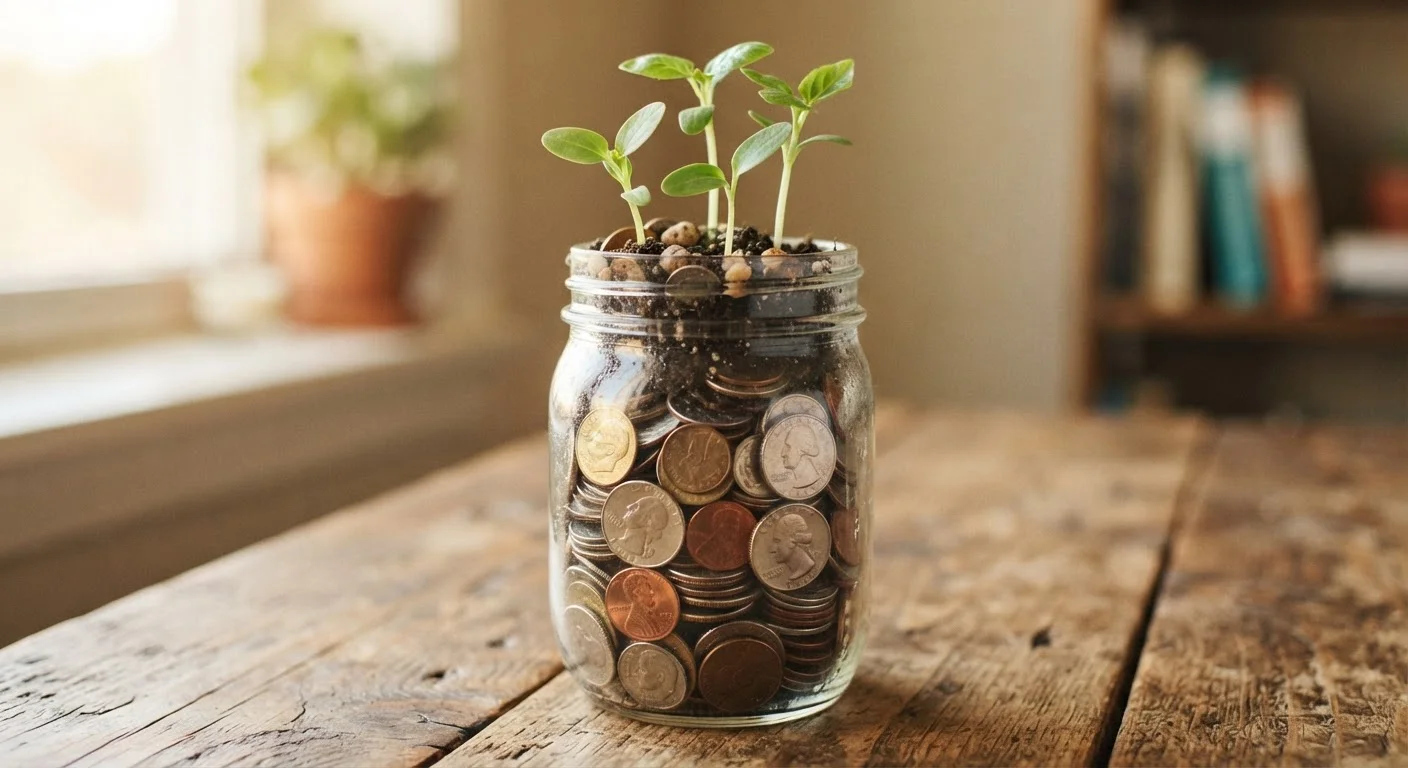
Compound interest is the process by which interest is earned not only on an original sum of money, but also on the interest that has already accumulated. Over time, this creates a snowball effect where your balance grows at an accelerating pace. It applies to both savings and debt — meaning it can work for you or against you depending on the situation.
Compounding frequency matters: interest compounded daily will produce a slightly higher return than the same rate compounded monthly or annually, due to the more frequent addition of earned interest to the principal.
How Compound Interest Actually Works
At its core, compound interest means your money earns a return — and then that return starts earning a return of its own. Consider a savings account with a 5% annual interest rate. In year one, a $1,000 deposit earns $50, bringing the balance to $1,050. In year two, the 5% is applied to the full $1,050, earning $52.50 instead of $50. That $2.50 difference seems trivial, but the same logic repeated over 30 years produces dramatic results.
This is fundamentally different from simple interest, which only ever applies to the original principal. With simple interest, you'd earn the same $50 every year. With compound interest, each year's growth becomes part of the base for the next calculation. The gap between the two methods widens significantly as time passes.
Compounding is not exclusive to savings accounts. It operates in investment vehicles, retirement accounts, and — importantly — in debt. Understanding how it works in both directions is a foundational piece of financial literacy covered in resources like wealth-building concepts every adult should understand.
~$10,800
Value of $1,000 compounded at 8% annually for 30 years
Illustrative calculation using the standard compound interest formula; actual returns depend on the product and rate.
20%+
Typical annual percentage rate on credit card debt
According to Federal Reserve consumer credit data, average credit card interest rates have exceeded 20% APR in recent periods, making compound interest costly for cardholders carrying balances.
Why Time Is the Most Important Variable
Compounding is often called a long-term phenomenon because its most dramatic effects are only visible over extended periods. The growth curve is exponential rather than linear — meaning the largest gains come in the later years, after interest has been accumulating on interest for a long time.
Consider two hypothetical savers. One begins saving at age 25, contributing regularly for 20 years and then stops. The other waits until age 45 and contributes for the same 20 years. Assuming identical rates of return, the earlier saver typically ends up with a significantly larger balance at retirement — despite stopping contributions earlier — simply because their money had more time to compound.
This relationship between time and growth is why financial educators consistently emphasize starting contributions as early as possible, even if the amounts are small. As explored in why saving more doesn't always mean growing wealth faster, it is not always the size of a contribution that matters most — it is how long that contribution has to grow.
Start Small, But Start Now
You don't need a large lump sum to benefit from compounding. Even modest recurring contributions — made consistently over many years — can grow significantly due to the exponential nature of compound growth. The most important action is simply to begin, then stay consistent.
Where Compounding Shows Up in Everyday Finance
Compound interest operates across a wide range of common financial products, and recognizing where it appears helps you make more informed decisions.
- High-yield savings accounts and certificates of deposit (CDs): These accounts apply compounding interest to your deposited balance, typically on a daily or monthly basis. The stated APY reflects compounding, making it more useful for comparison than the raw interest rate alone.
- Retirement and investment accounts: When investments generate dividends or gains that are reinvested, the same compounding logic applies. Index funds held in retirement accounts are a commonly discussed vehicle for harnessing long-term compounded growth.
- Credit card debt: Unpaid credit card balances compound — often daily — at high interest rates. A balance left to grow this way can become significantly harder to pay off over time. The Debt & Credit hub offers practical guidance on managing these obligations.
- Mortgages: While mortgages use amortization rather than pure compounding, interest still accrues on the remaining principal each period. Understanding this dynamic is covered in detail in how a mortgage actually works.
Putting Compound Interest to Work
Knowing the concept is only useful if it informs behavior. A few consistent habits help ensure compounding works in your favor rather than against you.
Contribute regularly. Even small, recurring additions amplify compounding's effect, because each new deposit begins its own compounding journey. Automating contributions removes the temptation to skip months.
Avoid withdrawing early. Every withdrawal interrupts the compounding chain. Leaving savings undisturbed — particularly in long-term accounts — preserves the compounding base.
Prioritize high-interest debt reduction. When compound interest works against you on debt, paying it down aggressively limits the damage. Carrying a balance on high-rate credit products can offset gains made elsewhere.
Align your savings vehicle with your goal timeline. Compounding rewards patience, but not every goal has a 30-year horizon. Matching your savings approach to your timeline ensures you're using the right tools for the right purpose.
This article is for general informational and educational purposes only. It does not constitute personalized financial, investment, or tax advice. Consult a qualified financial professional before making decisions about your own savings or investment strategy.