

Key Takeaways
Brake System
A vehicle's brake system is the collection of mechanical and hydraulic components that slow or stop the car when you press the brake pedal. It converts the force of your foot into friction that acts on the wheels. Most modern passenger vehicles use disc brakes on at least the front wheels, often all four.
Modern braking systems typically incorporate an Anti-lock Braking System (ABS), which prevents wheel lockup during hard stops by rapidly modulating brake pressure - significantly improving steering control during emergency braking.
How Your Brake System Actually Works
Every time you press the brake pedal, you set off a rapid chain of hydraulic events. The pedal pushes a piston inside the master cylinder, pressurizing brake fluid that travels through steel lines and rubber hoses to each wheel. That pressure activates calipers (on disc brakes) or wheel cylinders (on drum brakes), forcing friction material against a spinning surface to slow the vehicle.
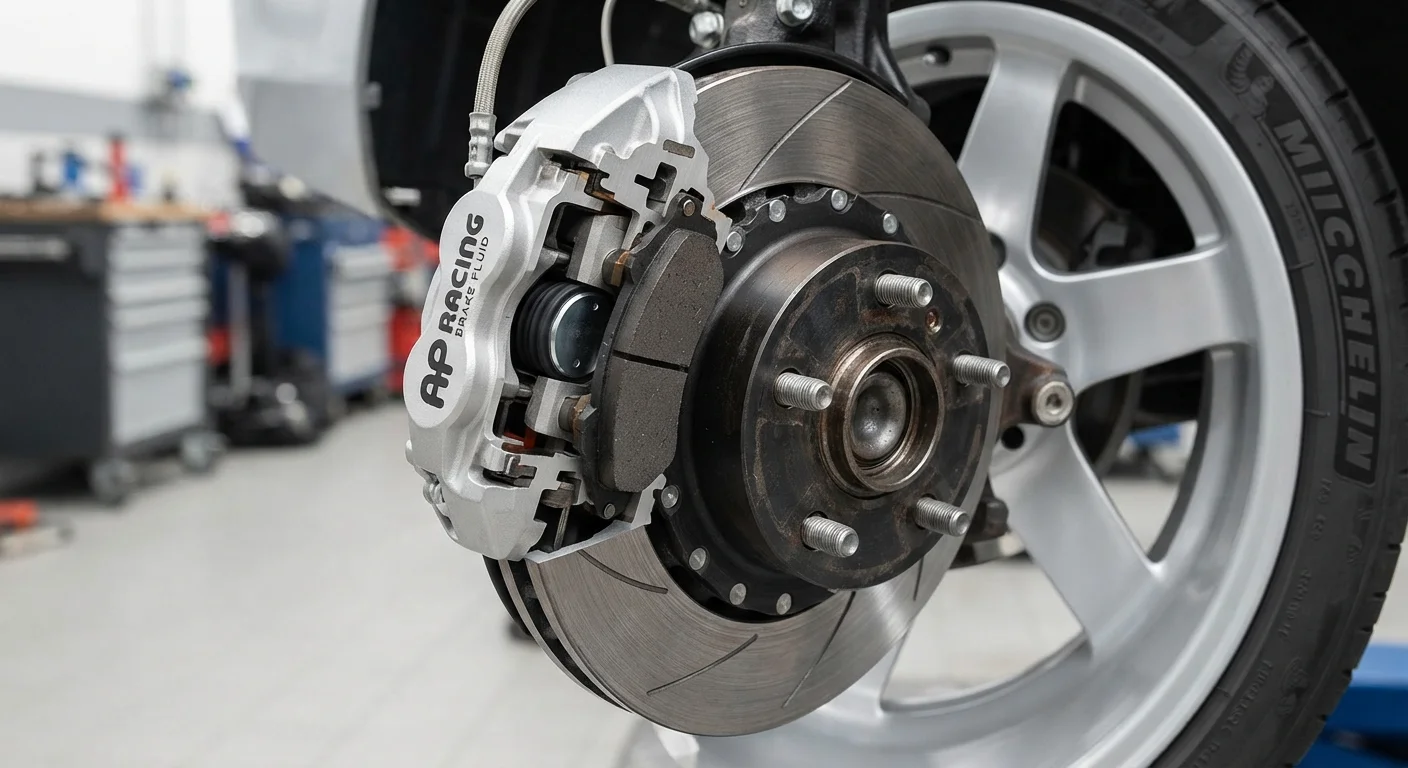
On disc brakes - standard on most modern vehicles - a flat metal rotor spins with the wheel. The caliper squeezes brake pads against both sides of that rotor. On drum brakes, which appear on many rear axles, curved brake shoes press outward against the inside of a drum. Both systems accomplish the same goal through the same principle: converting kinetic energy into heat through controlled friction.
For a broader look at how braking fits into overall vehicle care, see the Complete Guide to Routine Car Maintenance.
25,000-65,000 mi
Typical brake pad service life range
Service life varies widely based on driving habits, vehicle type, and brake pad material, according to industry maintenance guidelines.
~3-4 mm
Minimum recommended pad thickness
Most automotive technicians recommend inspection or replacement when pad material falls to 3-4 mm; many pads start at 10-12 mm new.
2-3 years
Recommended brake fluid change interval
Many vehicle manufacturers and service professionals recommend flushing brake fluid every two to three years due to moisture absorption over time.
The Key Components and What They Do
Understanding each part helps you interpret what a mechanic tells you - and recognize early warning signs on your own.
- Brake pads: The consumable friction material that clamps against the rotor. Most include a metal wear indicator that produces a squealing sound when the pad is near the end of its service life.
- Rotors (discs): Flat, circular metal plates that rotate with the wheel. They can warp from excessive heat or develop grooves from worn-down pads. Resurfacing or replacement restores a flat, smooth contact surface.
- Calipers: Hydraulically actuated clamps that hold the brake pads and squeeze them against the rotor. Sticking calipers can cause uneven braking or premature pad wear.
- Master cylinder: The heart of the hydraulic system, converting pedal force into fluid pressure. A failing master cylinder often presents as a sinking or spongy pedal.
- Brake fluid: The hydraulic medium that transmits pressure. It is hygroscopic - meaning it absorbs moisture from the air - which lowers its boiling point over time and can degrade performance. Checking your own fluid levels is a straightforward habit that can flag problems early.
- ABS module: The anti-lock braking system uses wheel-speed sensors to detect lockup and rapidly pulse brake pressure, maintaining steering control during emergency stops.
Do a Quick Visual Check at Home
On most vehicles, you can see the brake pad through the wheel spokes without removing anything. Look for the pad pressing against the rotor - if the friction material appears thinner than a quarter-inch (about 3 mm), it's time for a professional inspection. Make this a habit each time you check your tire pressure.
Warning Signs You Should Never Ignore
Your brakes communicate wear in clear ways. Learning to read these signals early can prevent a minor service from becoming a major repair - a pattern covered in detail in our article on why neglecting small repairs leads to big bills.
ABS Does Not Shorten Stopping Distance
A common misconception is that ABS makes a car stop faster. Its primary function is to prevent wheel lockup so the driver retains steering control during an emergency stop - not to reduce the distance needed to stop. On loose gravel or deep snow, ABS can actually result in slightly longer stopping distances than locked wheels in some conditions.
- Squealing or squeaking: The most common first sign of pad wear. May also occur briefly when brakes are cold or damp - if it persists, schedule an inspection.
- Grinding: Metal-on-metal contact, meaning pads are likely fully worn. Continuing to drive risks scoring the rotor and damaging the caliper.
- Vibration or pulsating pedal: Often indicates a warped rotor. Felt as a rhythmic shudder through the pedal or steering wheel under braking.
- Pulling to one side: A stuck caliper, uneven pad wear, or a brake hose restriction can cause the vehicle to drift during braking.
- Soft or spongy pedal: Points to air in the lines or low fluid - both compromise hydraulic pressure and require immediate attention.
Good brake health also depends on the tires beneath your vehicle. Tire care from the ground up explains how tire condition directly affects stopping distance.
Maintenance Intervals and Professional Inspection
Brake pad life varies widely - typically between 25,000 and 65,000 miles - depending on driving style, vehicle weight, and whether you drive primarily in city or highway conditions. Aggressive stop-and-go driving accelerates wear significantly compared to steady highway miles.
A practical maintenance approach includes:
- Visually checking pad thickness at every tire rotation (roughly every 5,000-7,500 miles).
- Having a qualified mechanic measure rotor thickness during annual service visits.
- Replacing brake fluid per your owner's manual - commonly every two to three years.
- Addressing any warning sounds, lights, or pedal changes promptly rather than waiting for the next scheduled service.
Brake repair involving calipers, brake lines, or the master cylinder should always be performed by a qualified technician. These are safety-critical components where improper service can have serious consequences. For a broader checklist of services that quietly protect your vehicle, see routine maintenance tasks that are often overlooked.
This article is for general informational purposes only. Always consult a qualified mechanic for diagnosis and repair of your vehicle's brake system.