

Key Takeaways
Start here
What Is a Capsule Wardrobe?
Understand the logic
Why It Works: The Case for Fewer, Better Pieces
Take action
How to Build Your Capsule Wardrobe
Sustain it
Keeping Your Capsule Fresh Over Time
What Is a Capsule Wardrobe?
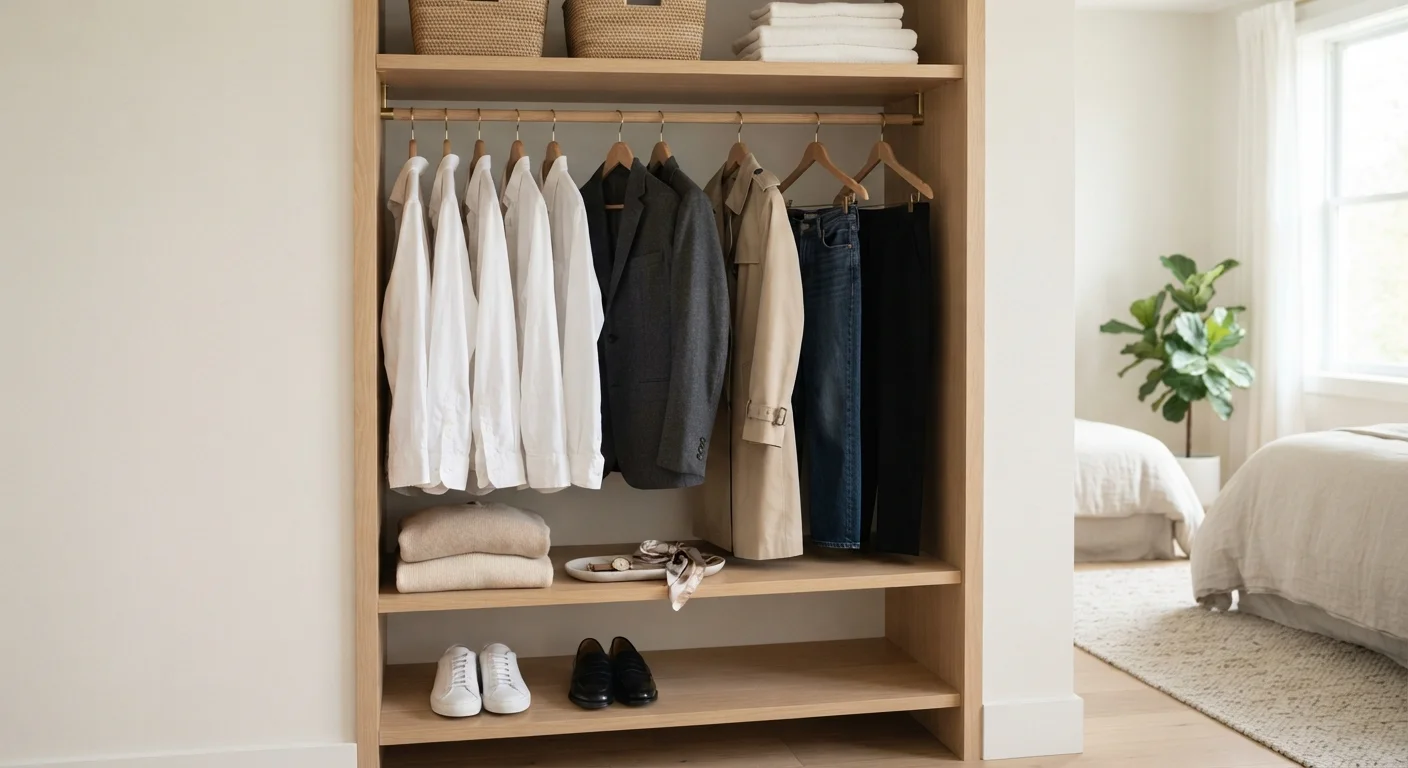
A capsule wardrobe is a curated collection of essential clothing pieces — typically 25 to 50 items — chosen because they're versatile, well-made, and work together seamlessly. The idea is that every piece earns its space by pairing with multiple others, so you can build a wide variety of outfits from a compact closet.
The concept was popularized in the 1970s by London boutique owner Susie Faux, who advocated for a small set of quality classics supplemented by seasonal additions. It's since become a go-to framework for anyone who wants to dress well without the stress of a stuffed, underused closet.
Capsule wardrobe
A small, intentionally chosen set of clothing items — usually 25 to 50 pieces — where every item works with multiple others to create many outfit combinations.
Versatile piece
A garment that can be worn in multiple contexts or styled multiple ways, such as a white shirt that works with jeans, trousers, or a skirt.
Wardrobe audit
The process of reviewing everything you own to determine what fits, what gets worn, and what should be donated or removed before adding anything new.
Classic silhouette
A clothing shape or cut that has remained in style for decades and isn't strongly associated with a specific trend era — think straight-leg trousers or a tailored blazer.
Neutral palette
A color scheme built around tones like black, white, navy, grey, and camel that are easy to mix and rarely clash with one another.
A capsule wardrobe isn't about deprivation — it's about making every item count. Whether your lifestyle leans casual, professional, or somewhere in between, the same core principles apply: choose pieces that fit well, reflect your actual daily life, and mix with what you already own.
Why It Works: The Case for Fewer, Better Pieces
The math on a capsule wardrobe is compelling. Ten items that each pair with five others create far more outfit combinations than thirty items that rarely work together. Fewer choices also means less time spent staring at your closet each morning.
Beyond convenience, a capsule approach can shift how you spend. Instead of frequent impulse purchases that rarely get worn, you invest in pieces that go the distance. This connects directly to smart budgeting — the Budgeting Basics principle of intentional spending applies just as much to your wardrobe as to any other category.
The three-pairing test
Before buying any new piece, ask yourself: does this item pair naturally with at least three things I already own? If you can't picture those combinations clearly, the item may not earn its place in a capsule wardrobe. This simple mental check prevents most impulse purchases.
Versatility comes largely from color strategy. When the majority of your pieces share a compatible palette — think navy, white, black, camel, and grey — they mix and match almost automatically. Our deep dive into neutral colors in your wardrobe explains exactly why stylists lean on this approach.
Classic silhouettes also hold their value longer than trend-driven shapes. Understanding the difference between a timeless piece and a fleeting trend is a skill worth developing early — it saves money and decision fatigue down the line. Our guide to classic vs. trendy pieces walks through how to tell them apart.
How to Build Your Capsule Wardrobe
Building a capsule wardrobe is a process, not a single shopping trip. Here's a practical sequence that works for most people:
- Audit what you own first. Pull everything out and assess honestly. What fits well? What do you actually reach for? What has sat unworn for a year? Items in the first category are your capsule starting points.
- Define your lifestyle needs. A teacher, a remote worker, and someone in a client-facing role all need different balances of casual and polished pieces. Be honest about how you actually spend your days, not how you wish you did.
- Identify the gaps. Once you know what you have and what your life requires, list specific missing items. A targeted shopping list that actually works prevents impulse purchases that don't serve the whole.
- Shop gradually and deliberately. Fill one or two gaps at a time. Prioritize fit and fabric quality over price alone — a well-constructed garment in a classic cut will outlast a cheaper trendy alternative many times over.
Avoid the 'fresh start' trap
It can be tempting to donate everything and shop for a completely new wardrobe at once — but this approach is expensive and often results in a different version of the same problem. Build gradually from what you own, filling genuine gaps rather than replacing wholesale.
If your capsule needs to stretch across professional and casual settings, check out our guidance on building a work wardrobe on a tight budget for strategies on prioritizing professional pieces without overspending. And for decoding exactly what different occasions call for, our dress codes guide is a handy reference.
Keeping Your Capsule Fresh Over Time
A capsule wardrobe isn't a one-time project — it's a living system. Reassess seasonally: what's worn out, what no longer fits, what's genuinely missing? For a structured approach to rotating pieces in and out with the seasons, our guide on seasonal wardrobe transitions offers a step-by-step method.
When refreshing, apply the same filter you used when building: does this new piece pair with at least three items I already own? If the answer is no, it's probably not a true capsule addition — even if it's beautiful on the hanger.
Over time, maintaining a capsule wardrobe develops your eye for quality and fit, makes getting dressed genuinely easier, and ensures that what's in your closet actually reflects the life you lead. That's a goal worth building toward — one piece at a time.
Capsule wardrobes look different for everyone
There's no universal list of items that every capsule wardrobe must include. Your collection should reflect your actual lifestyle, climate, body, and aesthetic — not a generic checklist found online. Use published lists as inspiration, not prescription, and adapt them to suit your real daily needs.